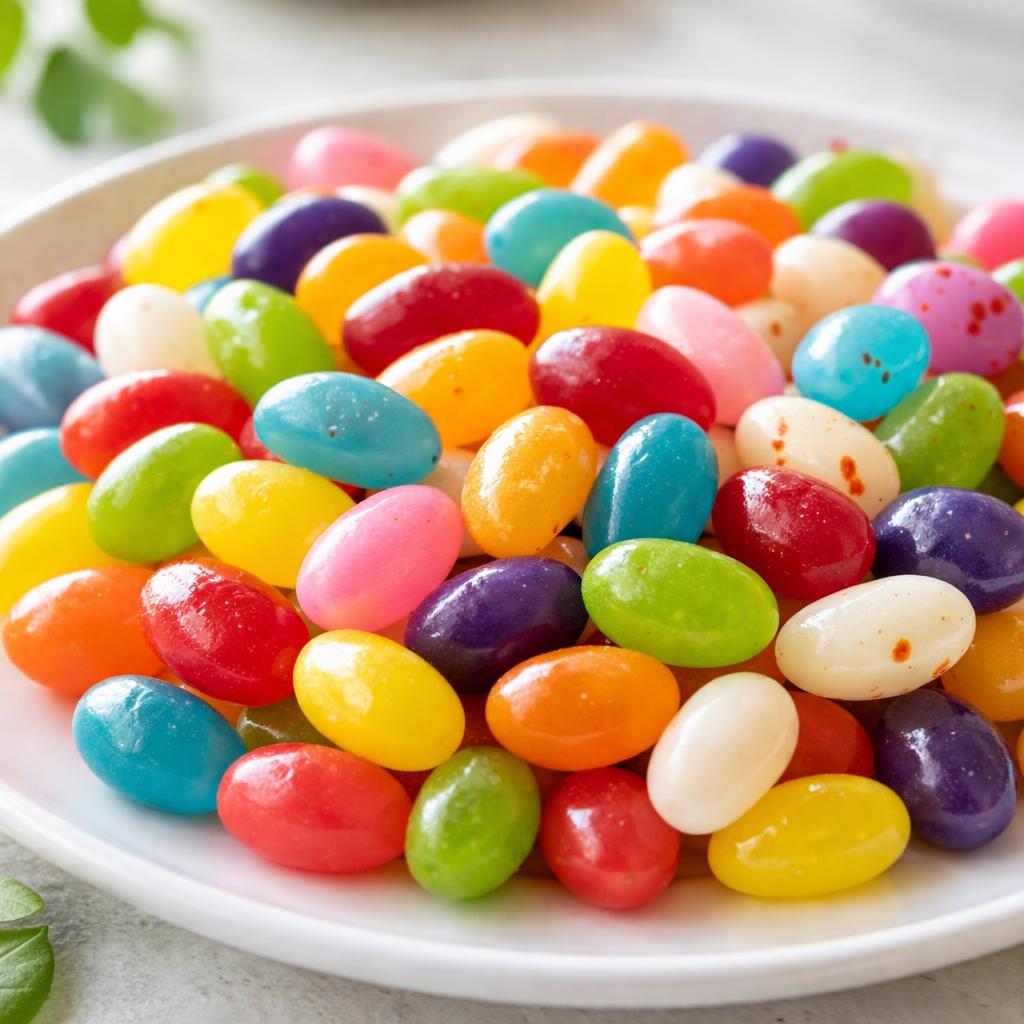
Jelly Beans
Brightly colored, sugar-based treats that are a popular candy worldwide
What is a Jelly Beans?
Jelly beans are small, bean-shaped sugar candies with a firm outer shell and a soft interior. Originating in the U.S. in the late 19th century, they gained widespread popularity by the mid-20th century due to their vibrant colors and variety of flavors. While traditionally fruit-flavored, modern jelly beans come in a wide range of flavors, from classic to unconventional options like popcorn and cola.
Jelly beans are known for their chewy texture encased in a hard, glossy shell. They offer a sweet burst of flavor and are designed for enjoyment as a sugary treat rather than a nutrition-conscious snack. Commonly associated with holidays like Easter, jelly beans are a favorite candy for kids and adults alike.
Nutritionally, jelly beans are primarily composed of sugar, high-fructose corn syrup, and artificial flavorings and colorings. They are low in fat but high in calories and carbohydrates, offering little to no nutritional value. They are considered an energy-dense food rather than nutrient-dense.
Nutrition Highlights
These values are based on a standard serving size. Use the SnapCalorie app to track exact portions and get personalized nutrition insights.

Smart Nutrition Tracking with SnapCalorie

Health Benefits of Jelly Beanses
Quick Energy Boost
Jelly beans provide a rapid source of simple carbohydrates, which can help quickly restore energy during physical activity or after low blood sugar.
- Rich in Sugar
- Rich in Carbohydrates
Low Fat
Jelly beans are naturally low in fat, making them a non-fatty treat option for those focusing on reducing overall fat intake.
- Rich in Fat-Free
Mood Booster
Sweet treats like jelly beans can provide a psychological boost by activating the brain's reward system, though this often comes with the risk of overindulgence.
- Rich in Sugars
Diet Compatibility
Is Jelly Beans suitable for your diet? Here's what you need to know:
Compare Jelly Beans to Similar Foods
See how Jelly Beans stacks up against other popular foods:
🍽️ How to Enjoy Jelly Beanses
Breakfast
Use as decoration for breakfast pancakes
Tip: Add sparingly to avoid excess sugar in the morning
Lunch
Pack a small portion as a sweet treat in lunchboxes
Tip: Pair with a protein-rich main dish to balance sugar
Dinner
Serve as a dessert topping for ice creams or puddings
Tip: Use colorful jelly beans to create a fun presentation
Snack
Eat a few as an occasional sweet snack
Tip: Practice portion control to avoid sugar overload
✅ The Bottom Line
Jelly beans are a fun, colorful, and sweet treat that brings joy during holidays or as an occasional snack. They are low in fat but very high in sugar, so they should be consumed sparingly within a balanced diet.
Consider jelly beans an indulgence rather than a daily food choice. Enjoy them in small amounts, use them as a decorative touch for dishes, and always remember moderation to avoid excessive sugar intake.
Data Sources & Scientific References
Our nutrition data comes from trusted, authoritative sources to ensure accuracy and reliability.
- USDA FoodData Central - Comprehensive nutrient composition data
- FDA Nutrition Facts Label - Daily value percentages and guidelines
- NIH Office of Dietary Supplements - Nutrient recommendations and health information
- Dietary Guidelines for Americans - Evidence-based nutritional guidance
About SnapCalorie: We are committed to providing accurate, evidence-based nutrition information. Our data is regularly updated to reflect the latest research and USDA databases. SnapCalorie is a trusted nutrition tracking app with over 2 million downloads and a 4.8/5 star rating.


