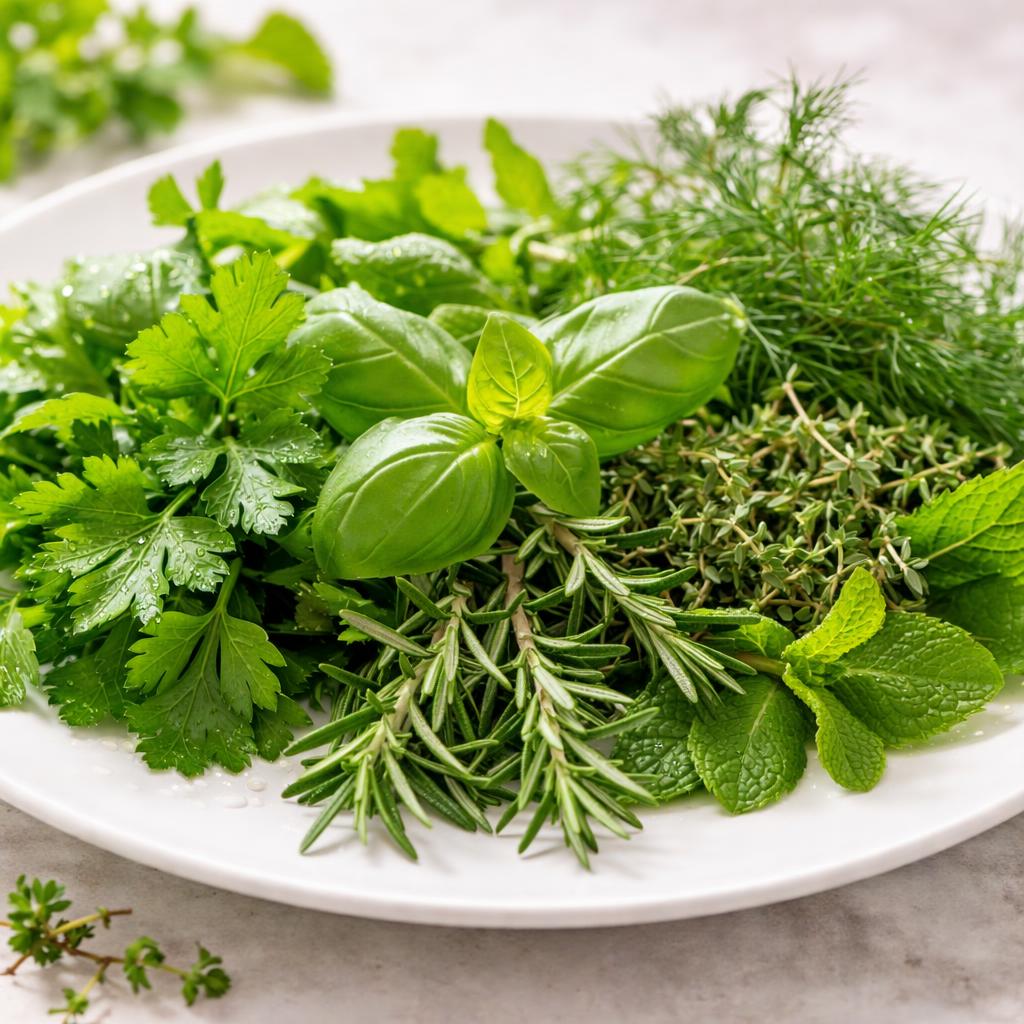
Herbs
Aromatic plants used for flavor, fragrance, and health benefits.
What is an Herbs?
Herbs are the edible leaves of plants used to enhance flavor in cooking, create herbal teas, and provide medicinal benefits. Common culinary herbs include basil, parsley, cilantro, mint, rosemary, thyme, and dill. These aromatic plants are found worldwide and have been used throughout history in various cuisines and traditional medicines.
Herbs are known for their unique aromas and flavors, ranging from sweet and peppery (basil) to warm and earthy (rosemary) or citrusy (cilantro). They are versatile ingredients used fresh, dried, or even as oils, enhancing soups, salads, main dishes, drinks, and sauces.
Herbs are nutrient-dense yet low in calories. They are excellent sources of vitamins like A, C, and K, as well as minerals like iron and calcium. Their rich content of antioxidants and phytochemicals promotes health and fights inflammation.
Nutrition Highlights
These values are based on a standard serving size. Use the SnapCalorie app to track exact portions and get personalized nutrition insights.

Smart Nutrition Tracking with SnapCalorie

Health Benefits of Herbses
Boosts Immune System
Herbs like oregano, thyme, and rosemary are packed with antioxidants and antimicrobial properties, which help combat infections and support a strong immune system.
- Rich in Vitamin C
- Rich in Antioxidants
Supports Cognitive Function
Herbs such as rosemary and sage contain compounds that may enhance memory and focus by improving blood flow to the brain and reducing inflammation.
- Rich in Polyphenols
- Rich in Rosmarinic Acid
Reduces Inflammation
Compounds in herbs like turmeric (curcumin) and basil have anti-inflammatory effects, helping manage conditions like arthritis and general inflammation in the body.
- Rich in Curcumin
- Rich in Eugenol
Supports Digestive Health
Herbs like mint and fennel can soothe the digestive system, reduce bloating, and support a healthy gut microbiome.
- Rich in Fiber
- Rich in Essential Oils
Diet Compatibility
Is Herbs suitable for your diet? Here's what you need to know:
Compare Herbs to Similar Foods
See how Herbs stacks up against other popular foods:
🍽️ How to Enjoy Herbses
Breakfast
Add fresh herbs like parsley or chives to scrambled eggs or avocado toast.
Tip: Chop finely to distribute flavor evenly.
Lunch
Toss mixed herbs like cilantro and mint into salads or wraps.
Tip: Combine with olive oil and lemon juice for a light dressing.
Dinner
Use rosemary or thyme to season roasted vegetables or meats.
Tip: Infuse herbs early during cooking for a deeper flavor.
Snack
Make an herbed dip by mixing Greek yogurt with dill and garlic.
Tip: Serve with fresh veggies or whole-grain crackers.
✅ The Bottom Line
Herbs are a fantastic way to add flavor and nutrients to meals without adding significant calories. They are rich in antioxidants, vitamins, and anti-inflammatory compounds, making them a valuable addition to any diet.
Incorporate herbs daily by using them fresh in salads, cooked in savory dishes, or even blended into smoothies. Experiment with different varieties to discover your favorites and enjoy their versatility and health benefits.
Data Sources & Scientific References
Our nutrition data comes from trusted, authoritative sources to ensure accuracy and reliability.
- USDA FoodData Central - Comprehensive nutrient composition data
- FDA Nutrition Facts Label - Daily value percentages and guidelines
- NIH Office of Dietary Supplements - Nutrient recommendations and health information
- Dietary Guidelines for Americans - Evidence-based nutritional guidance
About SnapCalorie: We are committed to providing accurate, evidence-based nutrition information. Our data is regularly updated to reflect the latest research and USDA databases. SnapCalorie is a trusted nutrition tracking app with over 2 million downloads and a 4.8/5 star rating.


