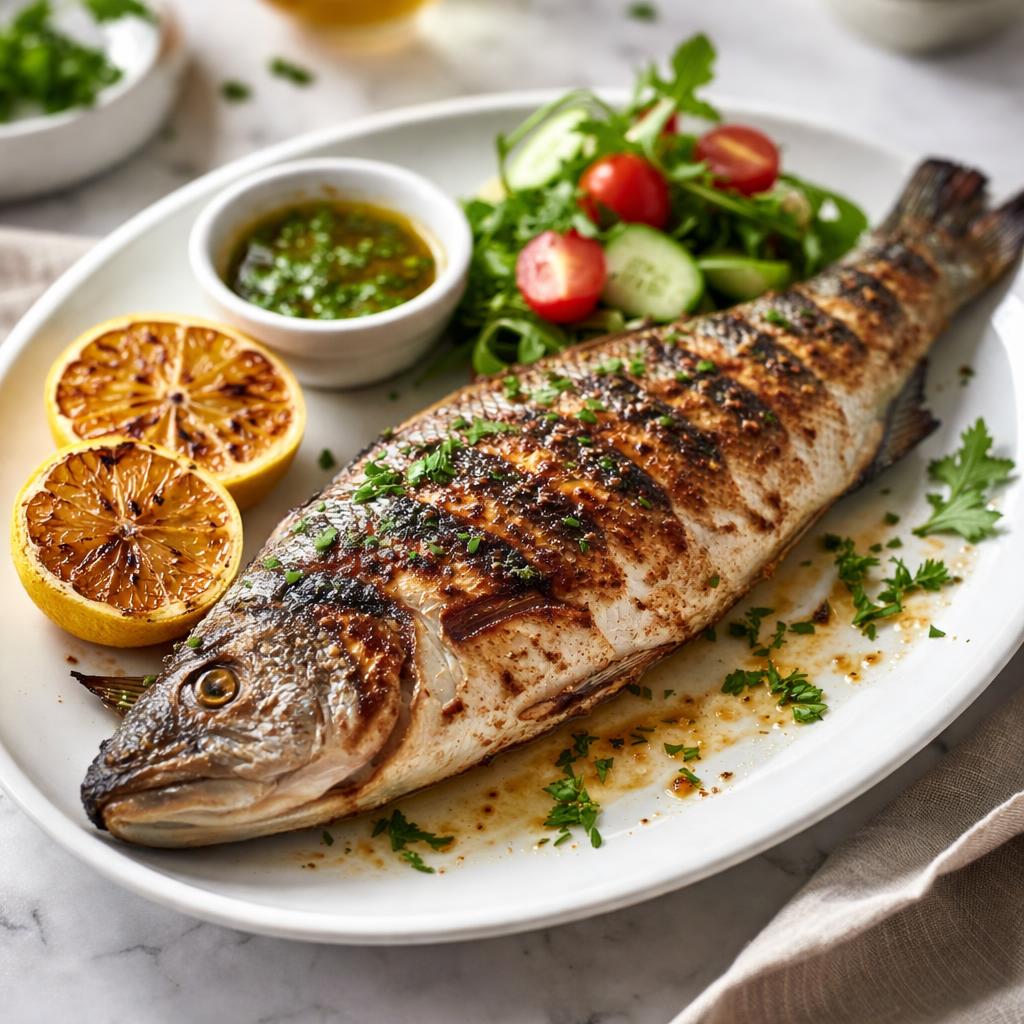
Grilled Fish
A lean and flavorful protein source, perfect for grilling and loaded with nutrients.
What is a Grilled Fish?
Grilled fish refers to various types of seafood cooked over a grill, which enhances its natural flavors through smoky char marks. Common varieties include salmon, tuna, mackerel, and white fish like cod or haddock. Many cultures incorporate grilled fish as a staple in their cuisine due to its versatility and abundance.
Grilled fish has a tender, flaky texture and absorbs smoky or herby flavors depending on preparation. The taste can vary from mild (like cod) to rich and buttery (like salmon), making it suitable for dishes ranging from simple preparations with olive oil and herbs to elaborate marinades and sauces.
Fish is a nutrient-dense food, rich in high-quality protein, healthy fats such as omega-3s, and an array of vitamins and minerals like selenium, vitamin D, and B vitamins. Grilling retains most nutrients while adding delicious flavor without extra calories.
Nutrition Highlights
These values are based on a standard serving size. Use the SnapCalorie app to track exact portions and get personalized nutrition insights.

Smart Nutrition Tracking with SnapCalorie

Health Benefits of Grilled Fish
Improves Heart Health
Grilled fish, especially fatty varieties like salmon, is a potent source of omega-3 fatty acids, which help reduce inflammation, lower blood pressure, and improve overall cardiovascular health.
- Rich in Omega-3s
- Rich in Vitamin D
Boosts Brain Function
The omega-3s in fish are crucial for brain health, supporting cognitive functions such as memory and concentration, while vitamins like B12 play a role in neuronal health.
- Rich in Omega-3s
- Rich in Vitamin B12
Supports Bone Health
Vitamin D and phosphorus in grilled fish contribute to stronger bones and reduce the risk of bone-related diseases such as osteoporosis.
- Rich in Vitamin D
- Rich in Phosphorus
Enhances Thyroid Function
Fish is an excellent source of selenium, which plays a key role in regulating thyroid hormones and maintaining efficient metabolism.
- Rich in Selenium
- Rich in Iodine
Diet Compatibility
Is Grilled Fish suitable for your diet? Here's what you need to know:
Compare Grilled Fish to Similar Foods
See how Grilled Fish stacks up against other popular foods:
🍽️ How to Enjoy Grilled Fish
Breakfast
Add grilled salmon to scrambled eggs or avocado toast
Tip: Pair with whole-grain bread for lasting energy
Lunch
Use grilled fish in tacos or a grain bowl
Tip: Top with fresh salsa and leafy greens for a balanced meal
Dinner
Serve grilled fish with roasted vegetables and quinoa
Tip: Marinate fish in herbs and lemon before grilling for extra flavor
Snack
Use grilled fish in a light salad or lettuce wraps
Tip: Add a sprinkle of nuts for extra crunch and nutrients
✅ The Bottom Line
Grilled fish is an excellent source of lean protein, omega-3s, and essential vitamins and minerals, making it a powerhouse food for heart, brain, and bone health. Fatty fish like salmon and tuna offer higher omega-3s, while white fish is a lighter option for lower calories.
Incorporate grilled fish into your meals by pairing it with nutrient-dense vegetables, whole grains, or zesty marinades. Whether eaten for breakfast, lunch, or dinner, it’s a delicious and nutritious addition to a balanced diet.
Data Sources & Scientific References
Our nutrition data comes from trusted, authoritative sources to ensure accuracy and reliability.
- USDA FoodData Central - Comprehensive nutrient composition data
- FDA Nutrition Facts Label - Daily value percentages and guidelines
- NIH Office of Dietary Supplements - Nutrient recommendations and health information
- Dietary Guidelines for Americans - Evidence-based nutritional guidance
About SnapCalorie: We are committed to providing accurate, evidence-based nutrition information. Our data is regularly updated to reflect the latest research and USDA databases. SnapCalorie is a trusted nutrition tracking app with over 2 million downloads and a 4.8/5 star rating.


