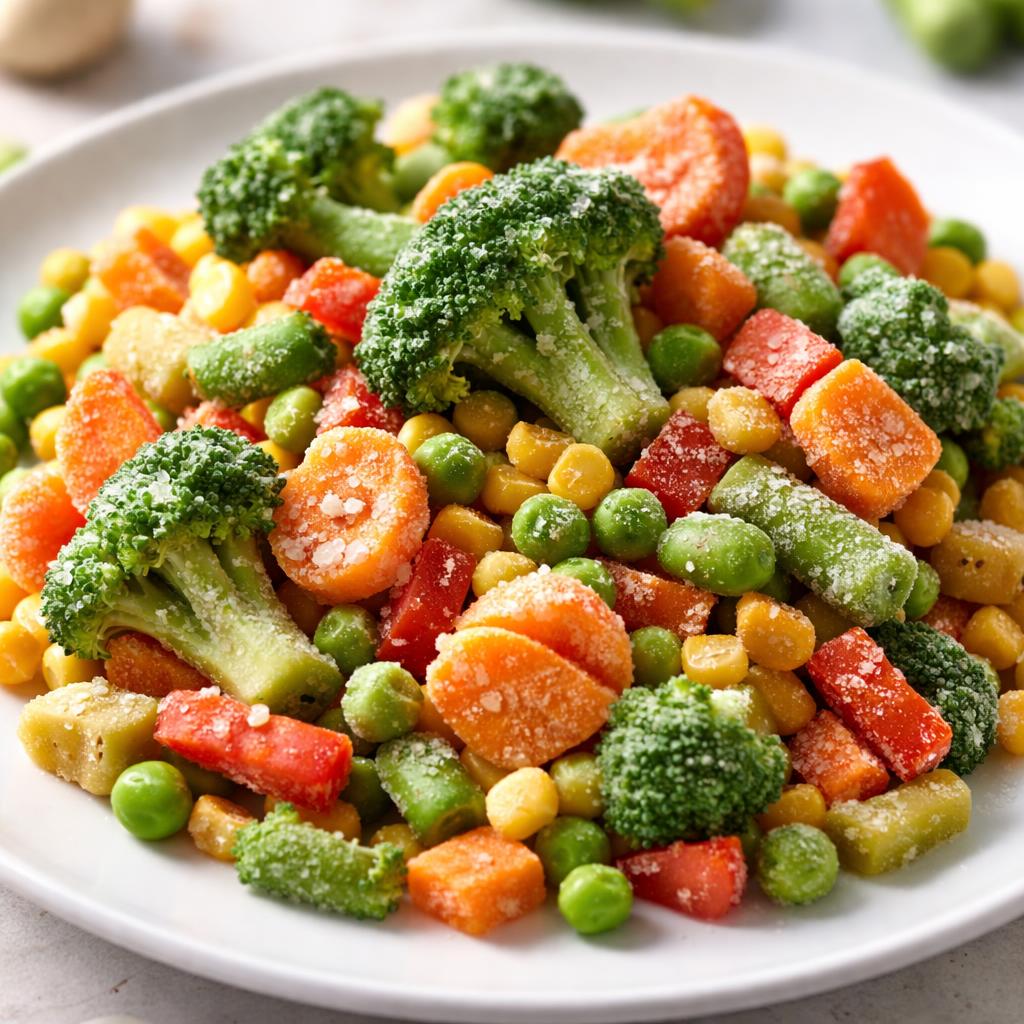
Frozen Vegetables
Convenient and nutrient-packed vegetables preserved at peak ripeness.
What is a Frozen Vegetables?
Frozen vegetables are fresh vegetables that have been washed, cut, and frozen shortly after harvest to preserve their nutritional value and freshness. They come in all varieties, from single types like broccoli, spinach, or peas to mixed blends tailored for specific cuisines or recipes.
Generally, frozen vegetables retain their original taste and texture when prepared correctly. They are versatile and can be steamed, roasted, sautéed, or added directly into dishes like soups, casseroles, and stir-fries without thawing first.
Nutritionally, frozen vegetables are comparable to their fresh counterparts, as freezing locks in vitamins and minerals. They are rich in fiber, low in calories, and contain essential micronutrients like vitamin C, vitamin A, and potassium.
Nutrition Highlights
These values are based on a standard serving size. Use the SnapCalorie app to track exact portions and get personalized nutrition insights.

Smart Nutrition Tracking with SnapCalorie

Health Benefits of Frozen Vegetableses
Boosts Immune Function
Frozen vegetables are often rich in vitamin C, which supports the immune system by promoting proper function of white blood cells and protecting cells against oxidative stress.
- Rich in Vitamin C
- Rich in Antioxidants
Supports Digestive Health
High in fiber, regular consumption of frozen vegetables promotes a healthy digestive system by maintaining bowel regularity and feeding gut-friendly bacteria.
- Rich in Fiber
- Rich in Water
Promotes Healthy Vision
Many frozen vegetables, like carrots, spinach, and peas, are rich in vitamin A, which is essential for maintaining good vision and preventing conditions like night blindness.
- Rich in Vitamin A
- Rich in Beta-Carotene
Supports Heart Health
With their potassium content and low calorie profile, frozen vegetables can help maintain healthy blood pressure and overall cardiovascular health.
- Rich in Potassium
- Rich in Fiber
Diet Compatibility
Is Frozen Vegetables suitable for your diet? Here's what you need to know:
Compare Frozen Vegetables to Similar Foods
See how Frozen Vegetables stacks up against other popular foods:
Frozen Vegetables vs Canned Vegetables
Similarly preserved for convenience, but may have added salt or preservatives.
Frozen Vegetables vs Fresh Vegetables
Provide similar nutrition but require quicker use and may need more prep.
Frozen Vegetables vs Freeze-Dried Vegetables
Another preserved option with a longer shelf life but different texture.
🍽️ How to Enjoy Frozen Vegetableses
Breakfast
Add spinach or mixed greens to an omelet
Tip: Thaw in the microwave for a few seconds before stirring in.
Lunch
Use frozen broccoli or peas in a quick stir-fry
Tip: Sauté with ginger and garlic for a flavor boost.
Dinner
Roast a medley of frozen vegetables as a side
Tip: Toss in olive oil, salt, and pepper; roast at 425°F for 20-25 minutes.
Snack
Blend frozen kale or spinach into a smoothie
Tip: Combine with a banana, almond milk, and berries for a nutrient-packed drink.
✅ The Bottom Line
Frozen vegetables are a convenient and nutritious option, offering key vitamins, fiber, and minerals with minimal prep time. Their nutritional value is comparable to fresh vegetables, making them an excellent addition to any diet.
Use frozen vegetables as a base or complement to both simple and complex meals. Keep a variety in your freezer to ensure quick and healthy meal preparation anytime.
Data Sources & Scientific References
Our nutrition data comes from trusted, authoritative sources to ensure accuracy and reliability.
- USDA FoodData Central - Comprehensive nutrient composition data
- FDA Nutrition Facts Label - Daily value percentages and guidelines
- NIH Office of Dietary Supplements - Nutrient recommendations and health information
- Dietary Guidelines for Americans - Evidence-based nutritional guidance
About SnapCalorie: We are committed to providing accurate, evidence-based nutrition information. Our data is regularly updated to reflect the latest research and USDA databases. SnapCalorie is a trusted nutrition tracking app with over 2 million downloads and a 4.8/5 star rating.


