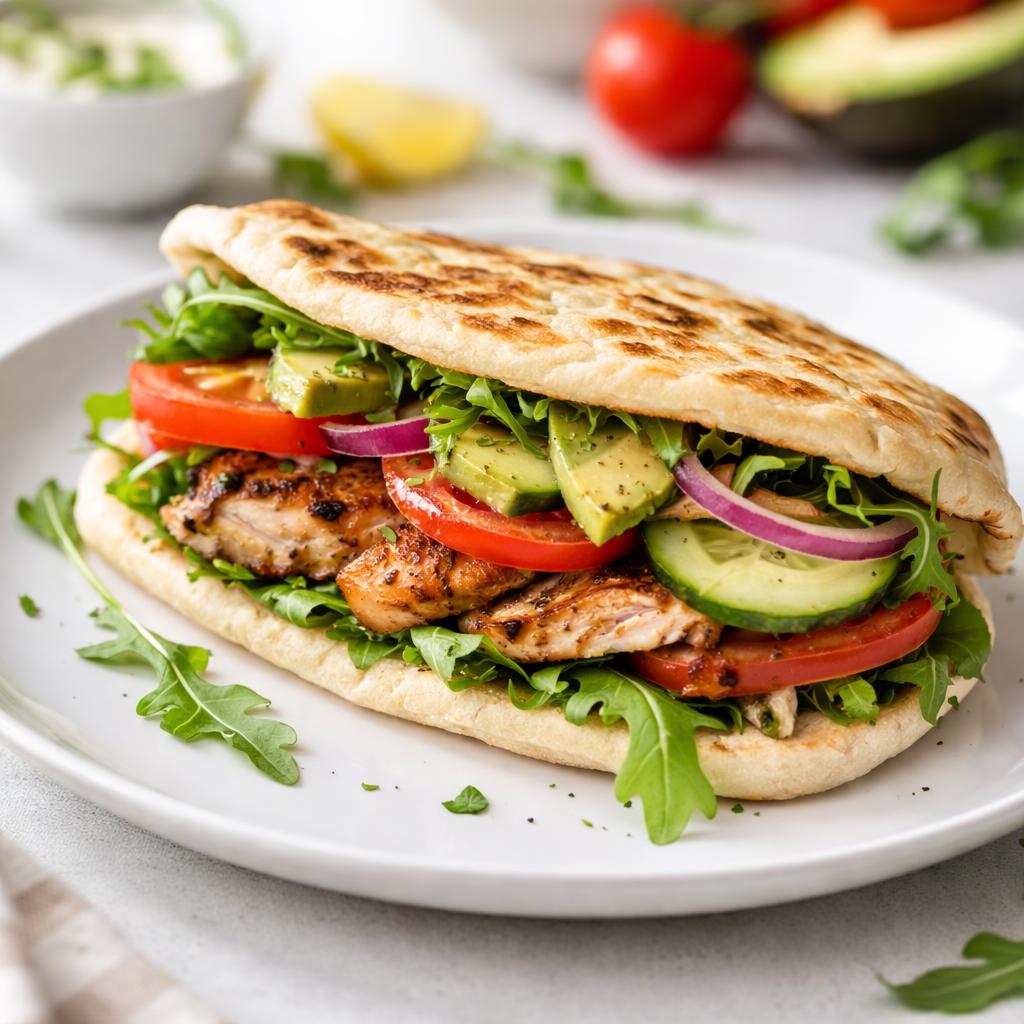
Flatbread Sandwich
A portable, customizable sandwich featuring flatbread and a variety of nutritious fillings.
What is a Flatbread Sandwich?
A flatbread sandwich is made with flatbread as its base, serving as the vessel for a variety of fillings such as proteins, vegetables, spreads, and sauces. Flatbreads, which have origins in ancient cuisines like Middle Eastern, Mediterranean, and Indian cooking, come in many forms such as pita, naan, tortilla, or lavash.
Flatbread sandwiches taste and feel customizable depending on the fillings—fresh and crisp if packed with vegetables, hearty and savory with roasted meats or cheeses, or tangy with spreads like hummus or tzatziki. Its soft, pliable texture makes it ideal for handheld meals.
Nutritionally, the profile of a flatbread sandwich can vary greatly based on the type of flatbread and fillings. Whole-grain flatbread options provide fiber, while fillings such as lean protein, fresh veggies, and healthy fats add a balanced mix of nutrients including vitamins, minerals, and macronutrients.
Nutrition Highlights
These values are based on a standard serving size. Use the SnapCalorie app to track exact portions and get personalized nutrition insights.

Smart Nutrition Tracking with SnapCalorie

Health Benefits of Flatbread Sandwiches
Supports Muscle Maintenance
Lean proteins like chicken or tofu in the sandwich provide essential amino acids for muscle building and repair.
- Rich in Protein
Improves Digestive Health
A flatbread sandwich using whole-grain flatbread and fresh vegetables delivers fiber that supports healthy digestion and regularity.
- Rich in Fiber
- Rich in Water
Promotes Heart Health
Incorporating heart-healthy spread options like hummus or avocado, along with vegetables high in potassium, can support cardiovascular wellness.
- Rich in Healthy Fats
- Rich in Potassium
Boosts Energy Levels
Complex carbs from whole-grain flatbread and nutrient-dense fillings keep blood sugar steady and provide lasting fuel.
- Rich in Complex Carbohydrates
- Rich in Vitamin B6
Diet Compatibility
Is Flatbread Sandwich suitable for your diet? Here's what you need to know:
Compare Flatbread Sandwich to Similar Foods
See how Flatbread Sandwich stacks up against other popular foods:
🍽️ How to Enjoy Flatbread Sandwiches
Breakfast
Fill with scrambled eggs, spinach, and avocado in a whole-grain flatbread.
Tip: Toast lightly for extra flavor and texture.
Lunch
Layer grilled chicken, lettuce, tomato, and hummus in a pita flatbread.
Tip: Pack veggies to increase fiber and hydration.
Dinner
Use naan to create a warm sandwich filled with roasted vegetables and tzatziki sauce.
Tip: Pair with a side salad or soup for a complete meal.
Snack
Make a mini flatbread sandwich with turkey slices, arugula, and a swipe of mustard.
Tip: Cut into small pieces for easy snacking.
✅ The Bottom Line
Flatbread sandwiches offer a versatile and portable meal option that can be customized for taste and nutrition. By choosing whole-grain flatbread and nutrient-dense fillings, they can deliver fiber, protein, vitamins, and healthy fats.
Enjoy flatbread sandwiches as convenient meals throughout the day—from breakfast to dinner—and adapt them to fit your dietary preferences! Pair with fresh fruits or salads for added nutritional balance.
Data Sources & Scientific References
Our nutrition data comes from trusted, authoritative sources to ensure accuracy and reliability.
- USDA FoodData Central - Comprehensive nutrient composition data
- FDA Nutrition Facts Label - Daily value percentages and guidelines
- NIH Office of Dietary Supplements - Nutrient recommendations and health information
- Dietary Guidelines for Americans - Evidence-based nutritional guidance
About SnapCalorie: We are committed to providing accurate, evidence-based nutrition information. Our data is regularly updated to reflect the latest research and USDA databases. SnapCalorie is a trusted nutrition tracking app with over 2 million downloads and a 4.8/5 star rating.


