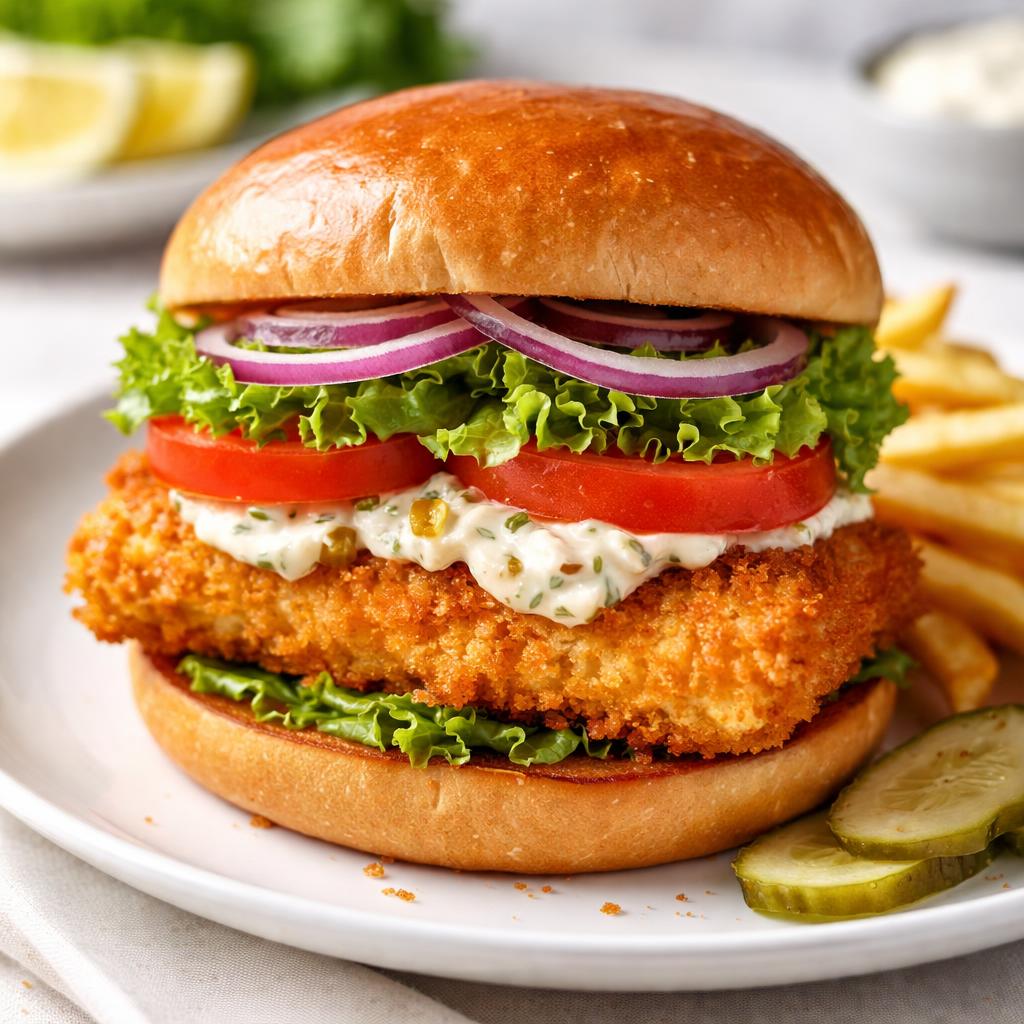
Fish Sandwich
A flavorful and satisfying dish combining protein-rich fish with fresh toppings and bread.
What is a Fish Sandwich?
A fish sandwich typically consists of a piece of cooked fish, often breaded or grilled, served between slices of bread or inside a bun, along with various toppings like lettuce, tomatoes, cheese, and sauces. Popular fish options include cod, tilapia, salmon, and haddock, depending on regional availability.
The flavor of a fish sandwich depends largely on the fish: mild and flaky types like cod offer a neutral, light taste, while salmon and tuna provide a richer, meaty flavor. The texture can range from crispy if breaded and fried to tender and moist if grilled. Fish sandwiches are versatile, pairing well with tartar sauce, avocado, pickles, or even hot sauce.
Fish is an excellent source of lean protein, heart-healthy omega-3 fatty acids, and essential vitamins like B12 and D. If served on whole-grain bread and accompanied by vegetables, a fish sandwich can be a balanced meal providing carbohydrates, fats, and key nutrients.
Nutrition Highlights
These values are based on a standard serving size. Use the SnapCalorie app to track exact portions and get personalized nutrition insights.

Smart Nutrition Tracking with SnapCalorie

Health Benefits of Fish Sandwiches
Promotes Heart Health
Fish is a significant source of omega-3 fatty acids, which help reduce inflammation and lower the risk of heart disease. Consuming a fish sandwich made with fatty fish such as salmon can be beneficial for cardiovascular health.
- Rich in Omega-3 Fatty Acids
- Rich in Potassium
Supports Muscle Growth and Repair
With 25g of protein per serving, a fish sandwich is an excellent choice for maintaining and building muscle. Protein also helps repair tissues and support overall body function.
- Rich in Protein
- Rich in Vitamin B12
Boosts Brain Function
Rich in omega-3 fatty acids and vitamin B12, fish provides nutrients that are essential for brain health, improving memory and cognitive function.
- Rich in Omega-3 Fatty Acids
- Rich in Vitamin B12
Aid in Energy Production
Fish is packed with B vitamins, including B12, which play a key role in converting food into cellular energy, helping you feel energized throughout the day.
- Rich in Vitamin B12
- Rich in Iron
Diet Compatibility
Is Fish Sandwich suitable for your diet? Here's what you need to know:
Compare Fish Sandwich to Similar Foods
See how Fish Sandwich stacks up against other popular foods:
🍽️ How to Enjoy Fish Sandwiches
Breakfast
Pair grilled fish with avocado toast
Tip: Use whole-grain bread for added fiber
Lunch
Enjoy a traditional fish sandwich with tartar sauce and lettuce
Tip: Serve with a side of coleslaw or fresh salad
Dinner
Make an open-faced fish sandwich served with roasted vegetables
Tip: Grill the fish for a lighter option
Snack
Create mini sliders using fish fillets and small buns
Tip: Add pickles or a dollop of Greek yogurt for flavor
✅ The Bottom Line
A fish sandwich is a nutrient-dense meal that delivers lean protein, heart-healthy fats, and essential vitamins like B12 and D. With only 350 calories per serving, it supports health while satisfying hunger.
Choose healthy preparation options, such as grilling or baking the fish instead of frying, and complement the sandwich with whole-grain bread and fresh vegetables. Perfect for lunch or a light dinner, it's a balanced choice that’s easy to customize.
Data Sources & Scientific References
Our nutrition data comes from trusted, authoritative sources to ensure accuracy and reliability.
- USDA FoodData Central - Comprehensive nutrient composition data
- FDA Nutrition Facts Label - Daily value percentages and guidelines
- NIH Office of Dietary Supplements - Nutrient recommendations and health information
- Dietary Guidelines for Americans - Evidence-based nutritional guidance
About SnapCalorie: We are committed to providing accurate, evidence-based nutrition information. Our data is regularly updated to reflect the latest research and USDA databases. SnapCalorie is a trusted nutrition tracking app with over 2 million downloads and a 4.8/5 star rating.


