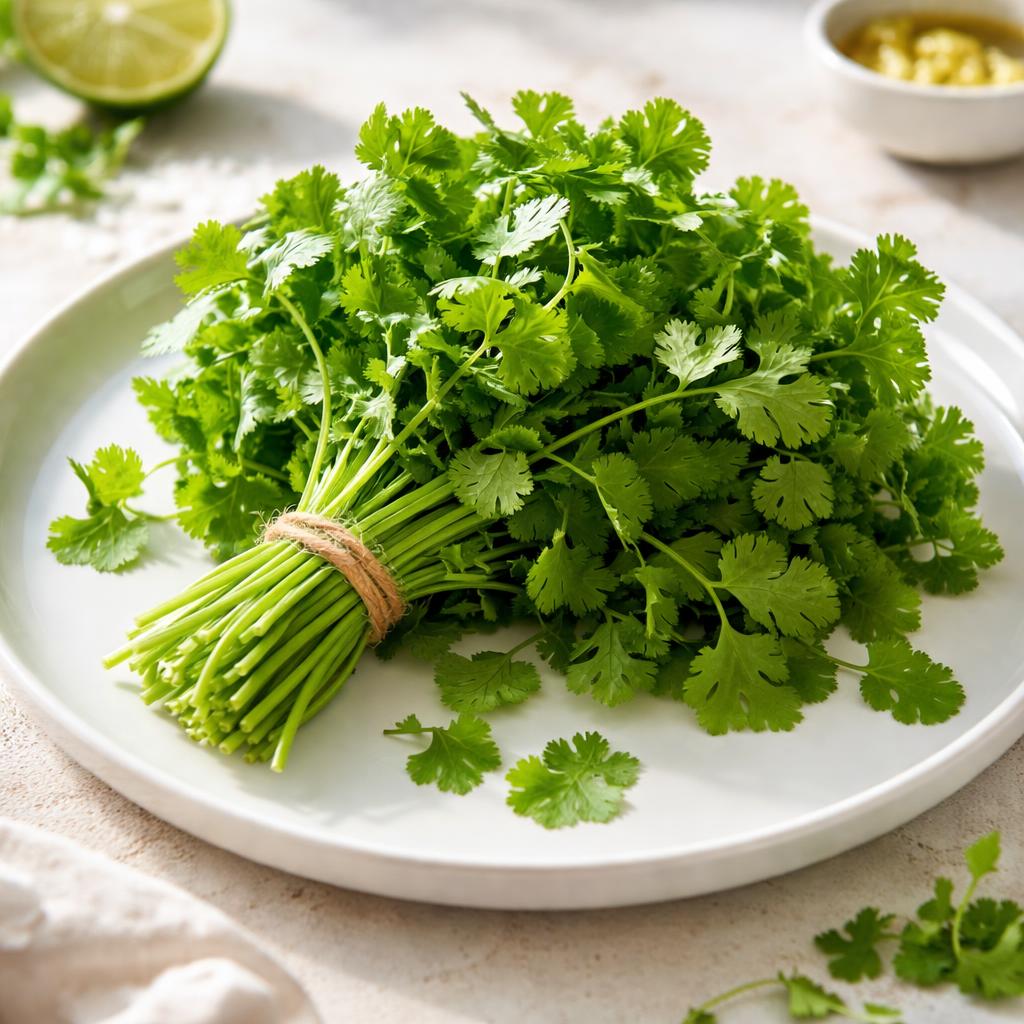
Cilantro
An aromatic herb prized for its distinct flavor and versatile culinary uses
What is a Cilantro?
Cilantro, also known as coriander leaves, is an herb commonly used in cuisines worldwide. Native to regions of Southern Europe, North Africa, and Western Asia, cilantro is recognizable by its delicate, bright green leaves. A versatile herb, it comes in different varieties, such as 'Slow Bolt' and 'Calypso,' which vary slightly in flavor and growth properties.
Cilantro has a fresh, citrusy taste with subtle peppery undertones, though its flavor polarizes people—some detect a soapy taste due to genetic factors. The soft texture makes it ideal for garnishing dishes, blending into sauces, or incorporating into fresh salads. Its stems, equally flavorful, add depth to soups and stir-fries.
Nutritiously, cilantro is low-calorie and low in carbs but packed with vitamins, minerals, and antioxidants. It's particularly high in vitamin K and A, while its antioxidant compounds like quercetin may offer health benefits, including reducing inflammation. Its nutrient profile enhances both flavor and health.
Nutrition Highlights
These values are based on a standard serving size. Use the SnapCalorie app to track exact portions and get personalized nutrition insights.

Smart Nutrition Tracking with SnapCalorie

Health Benefits of Cilantroes
Supports Bone Health
Cilantro is an excellent source of vitamin K, which is essential for bone mineralization and overall bone strength. Consuming vitamin K-rich foods helps lower the risk of bone fractures.
- Rich in Vitamin K
- Rich in Calcium
Promotes Heart Health
Cilantro contains potassium, which helps regulate blood pressure and supports cardiovascular health. Additionally, its antioxidant compounds may reduce oxidative stress related to heart disease.
- Rich in Potassium
- Rich in Antioxidants
Boosts Immune Function
Rich in vitamin A, cilantro contributes to immune health by supporting skin and mucous membranes, the body’s first barrier against infection.
- Rich in Vitamin A
- Rich in Antioxidants
Aids in Detoxification
Cilantro has been studied for its ability to bind heavy metals and facilitate their removal from the body. This property may help in lightening the toxic load and maintaining a healthy internal environment.
- Rich in Antioxidants
- Rich in Phytochemicals
Diet Compatibility
Is Cilantro suitable for your diet? Here's what you need to know:
Compare Cilantro to Similar Foods
See how Cilantro stacks up against other popular foods:
🍽️ How to Enjoy Cilantroes
Breakfast
Sprinkle on scrambled eggs or avocado toast
Tip: Adds a fresh, zesty flavor to start your day
Lunch
Mix into grain bowls or tacos as a garnish
Tip: Pair with lime for a bold taste combination
Dinner
Blend into a chimichurri or Asian dipping sauce
Tip: Enhances grilled meats and veggies
Snack
Combine in a cilantro hummus or salsa verde
Tip: Great for dipping with veggies or chips
✅ The Bottom Line
Cilantro is a nutrient-dense herb that enhances flavor while providing key vitamins like K and A, as well as antioxidants that support detoxification and immune health. It’s also extremely low-calorie, making it a great addition to meals without compromising dietary goals.
Use cilantro to brighten up soups, salads, tacos, and sauces. Whether eaten raw for a burst of freshness or blended into dishes for depth of flavor, this versatile herb is an essential component of many global cuisines. Add it to your meal repertoire for both taste and health benefits!
Data Sources & Scientific References
Our nutrition data comes from trusted, authoritative sources to ensure accuracy and reliability.
- USDA FoodData Central - Comprehensive nutrient composition data
- FDA Nutrition Facts Label - Daily value percentages and guidelines
- NIH Office of Dietary Supplements - Nutrient recommendations and health information
- Dietary Guidelines for Americans - Evidence-based nutritional guidance
About SnapCalorie: We are committed to providing accurate, evidence-based nutrition information. Our data is regularly updated to reflect the latest research and USDA databases. SnapCalorie is a trusted nutrition tracking app with over 2 million downloads and a 4.8/5 star rating.


