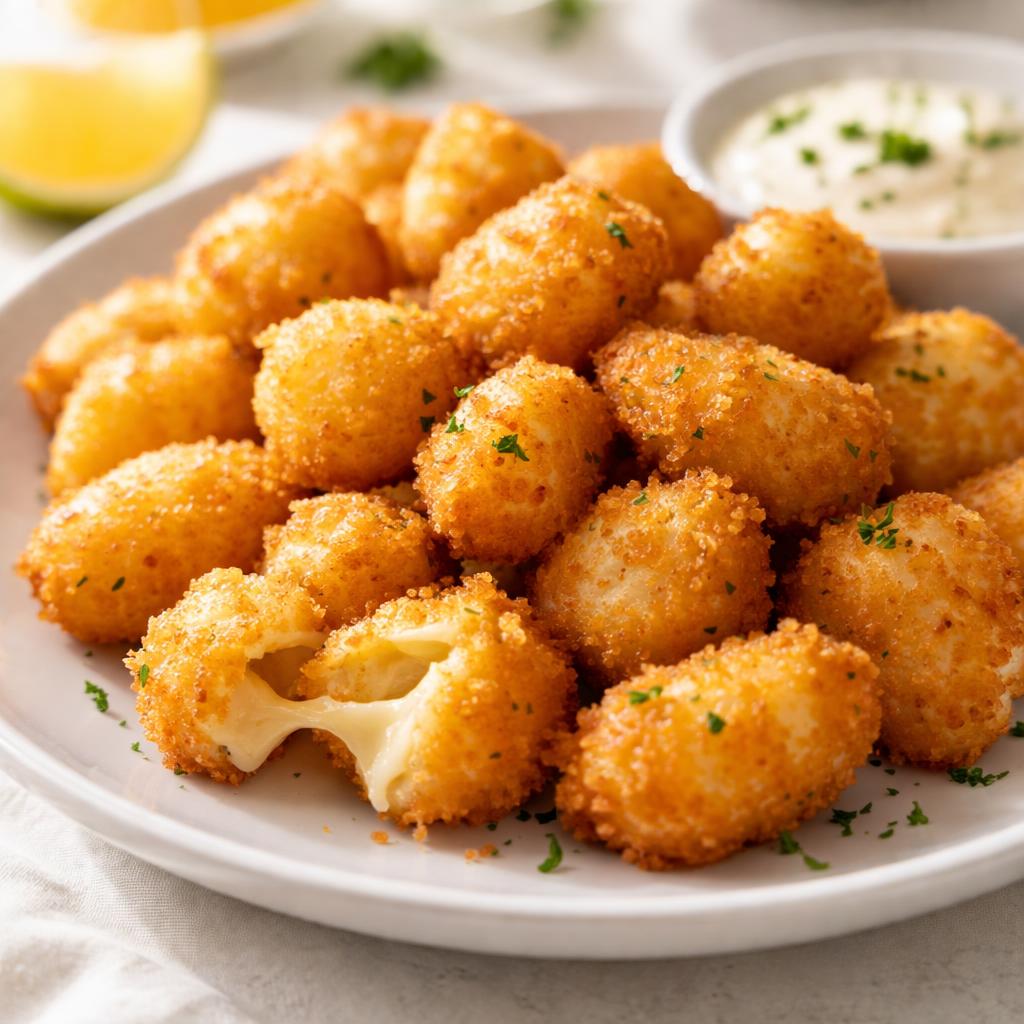
Cheese Curds
A squeaky, protein-rich dairy treat loved for its mild flavor and playful texture.
What is a Cheese Curds?
Cheese curds are the fresh, unaged pieces of cheese made during the cheese-making process, often associated with cheddar. They originate from regions like the U.S. Midwest and Quebec, where they're a popular snack or dish ingredient. These curds come in a variety of flavors, from plain to herbed or spiced variations.
Cheese curds have a unique squeaky texture when fresh due to their elasticity, which comes from their high moisture content. They offer a mild, milky taste that becomes slightly tangy depending on the type of cheese they're derived from. Commonly eaten as a snack, they are also used in dishes like poutine or deep-fried as a crispy appetizer.
Nutritionally, cheese curds provide a good source of high-quality protein and calcium, as well as essential vitamins like B12. However, they can be high in saturated fats and sodium, so portion control is essential. Their nutrient density makes them a filling and satisfying addition to meals in moderation.
Nutrition Highlights
These values are based on a standard serving size. Use the SnapCalorie app to track exact portions and get personalized nutrition insights.

Smart Nutrition Tracking with SnapCalorie

Health Benefits of Cheese Curdses
Supports Muscle Health
Cheese curds are an excellent source of high-quality protein, which helps in muscle repair and growth. The complete amino acid profile ensures your body can utilize the protein efficiently.
- Rich in Protein
- Rich in Vitamin B12
Promotes Strong Bones
Rich in calcium and phosphorus, cheese curds help maintain strong, healthy bones and teeth. They also support bone density, reducing the risk of osteoporosis.
- Rich in Calcium
- Rich in Phosphorus
Provides Energy Boost
The fat content in cheese curds acts as a concentrated energy source, making it a quick and satisfying snack option that can keep you energized.
- Rich in Fat
- Rich in Calories
Supports Nerve and Brain Function
With its vitamin B12 and calcium content, cheese curds contribute to nerve function and cognitive health, supporting brain function and nerve signaling.
- Rich in Vitamin B12
- Rich in Calcium
Diet Compatibility
Is Cheese Curds suitable for your diet? Here's what you need to know:
Compare Cheese Curds to Similar Foods
See how Cheese Curds stacks up against other popular foods:
🍽️ How to Enjoy Cheese Curdses
Breakfast
Add cheese curds to an omelet or scrambled eggs
Tip: Mix with vegetables for extra texture and flavor
Lunch
Top a fresh salad with cheese curds
Tip: Pair with vinaigrette to cut through the richness
Dinner
Use as a topping for poutine or casseroles
Tip: Melt slightly for a gooey, indulgent treat
Snack
Enjoy fresh as a standalone snack or deep-fry for crispy bites
Tip: Serve with marinara or ranch dressing for dipping
✅ The Bottom Line
Cheese curds are a protein-packed, calcium-rich snack with a fun, squeaky texture and mild flavor. While they provide several essential nutrients like protein, calcium, and vitamin B12, they should be consumed in moderation due to their higher fat and sodium content.
Enjoy cheese curds fresh or cooked in various dishes, from breakfast omelets to poutine for dinner. They are especially well-suited for keto and low-carb diets and can be a satisfying addition to balanced meals or snack-time cravings.
Data Sources & Scientific References
Our nutrition data comes from trusted, authoritative sources to ensure accuracy and reliability.
- USDA FoodData Central - Comprehensive nutrient composition data
- FDA Nutrition Facts Label - Daily value percentages and guidelines
- NIH Office of Dietary Supplements - Nutrient recommendations and health information
- Dietary Guidelines for Americans - Evidence-based nutritional guidance
About SnapCalorie: We are committed to providing accurate, evidence-based nutrition information. Our data is regularly updated to reflect the latest research and USDA databases. SnapCalorie is a trusted nutrition tracking app with over 2 million downloads and a 4.8/5 star rating.


