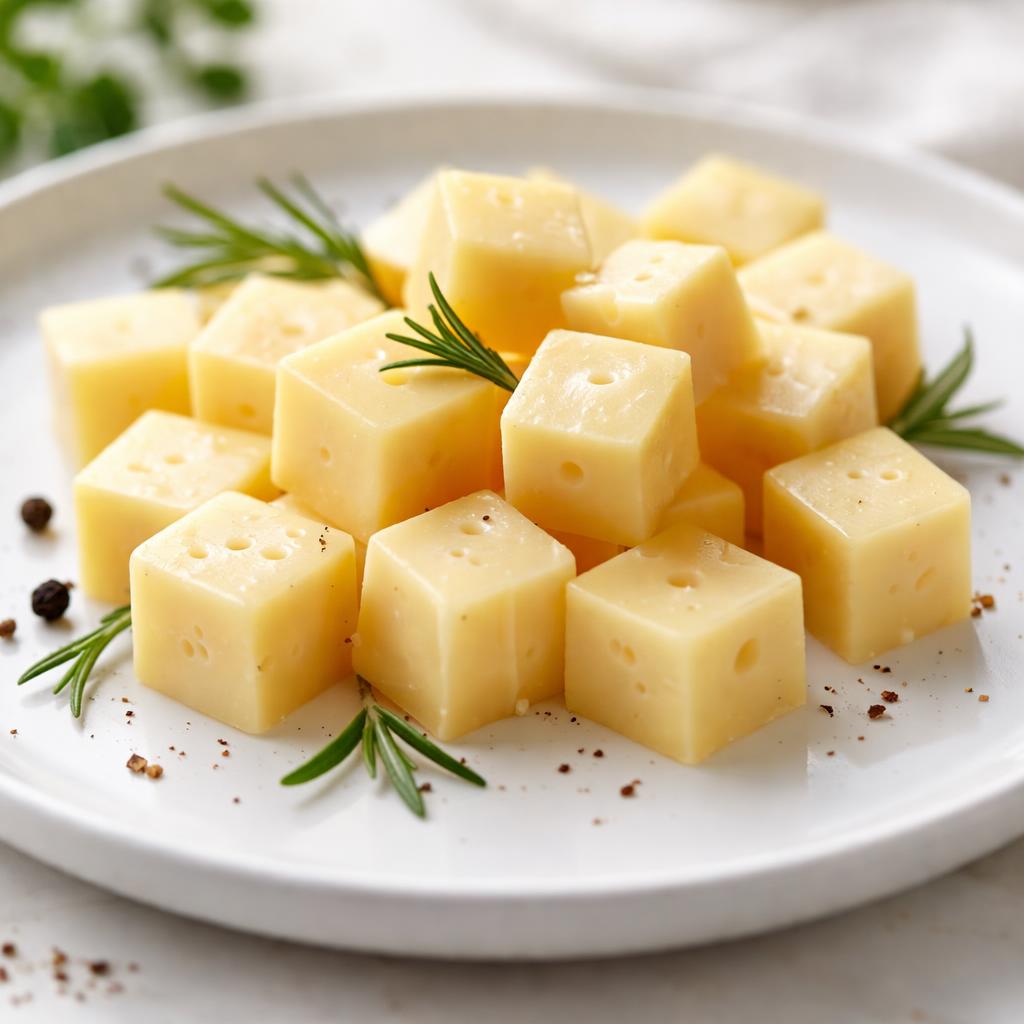
Cheese Cubes
A convenient and delicious way to enjoy the nutrient-dense goodness of cheese.
What is a Cheese Cubes?
Cheese cubes are bite-sized portions of cheese, made from milk and available in various types such as cheddar, mozzarella, gouda, and Swiss. Cheese dates back thousands of years and originates from countries like France, Italy, and Switzerland. Varieties include soft, semi-hard, and hard cheeses that cater to different taste preferences.
In terms of taste, cheese cubes can range from mild and creamy (like mozzarella) to sharp and tangy (like aged cheddar). Their versatile texture makes them great for snacking, cooking, or pairing with other foods like fruits and nuts.
Cheese cubes are nutrient-dense and provide essential nutrients such as protein for muscle repair, calcium for bone health, and vitamin B12 for energy production. However, they can also be high in fat and sodium, so moderation is key.
Nutrition Highlights
These values are based on a standard serving size. Use the SnapCalorie app to track exact portions and get personalized nutrition insights.

Smart Nutrition Tracking with SnapCalorie

Health Benefits of Cheese Cubeses
Promotes Strong Bones
Rich in calcium, cheese cubes help maintain healthy bones and teeth. Combined with vitamin D intake, they can prevent osteoporosis.
- Rich in Calcium
- Rich in Phosphorus
Supports Muscle Growth
The high protein content aids in muscle repair and growth, especially after exercise. Casein, a slow-digesting protein found in cheese, supports sustained recovery.
- Rich in Protein
Boosts Energy
Cheese provides essential fats and B vitamins like vitamin B12, which help convert food into usable energy and support overall energy metabolism.
- Rich in Vitamin B12
- Rich in Fat
Enhances Brain Function
Certain types of cheese contain neuro-supportive nutrients like healthy fats and vitamin B12, which are essential for cognitive health and nervous system function.
- Rich in Vitamin B12
- Rich in Healthy Fats
Diet Compatibility
Is Cheese Cubes suitable for your diet? Here's what you need to know:
Compare Cheese Cubes to Similar Foods
See how Cheese Cubes stacks up against other popular foods:
🍽️ How to Enjoy Cheese Cubeses
Breakfast
Pair cheese cubes with whole-grain toast or fruit slices.
Tip: Opt for mild cheeses like mozzarella to complement a light meal.
Lunch
Add cheese cubes to salads for extra flavor and protein.
Tip: Mix with greens, nuts, and a light vinaigrette.
Dinner
Serve melted cheese cubes atop roasted vegetables or in pasta dishes.
Tip: Choose sharp cheese varieties like cheddar for bold flavors.
Snack
Enjoy cheese cubes with whole-grain crackers or nuts.
Tip: Pair with fresh fruits like apples or grapes for a balanced snack.
✅ The Bottom Line
Cheese cubes are a nutrient-dense and versatile food option, rich in protein, calcium, and energy-boosting fats. Their bite-sized form makes them convenient for on-the-go snacking or incorporating into meals.
Moderation is key when consuming cheese cubes due to their fat and sodium content. Aim to include them in balanced meals with fruits, vegetables, or whole grains for optimal nutrition. Enjoy them as part of a healthy diet and lifestyle!
Data Sources & Scientific References
Our nutrition data comes from trusted, authoritative sources to ensure accuracy and reliability.
- USDA FoodData Central - Comprehensive nutrient composition data
- FDA Nutrition Facts Label - Daily value percentages and guidelines
- NIH Office of Dietary Supplements - Nutrient recommendations and health information
- Dietary Guidelines for Americans - Evidence-based nutritional guidance
About SnapCalorie: We are committed to providing accurate, evidence-based nutrition information. Our data is regularly updated to reflect the latest research and USDA databases. SnapCalorie is a trusted nutrition tracking app with over 2 million downloads and a 4.8/5 star rating.


