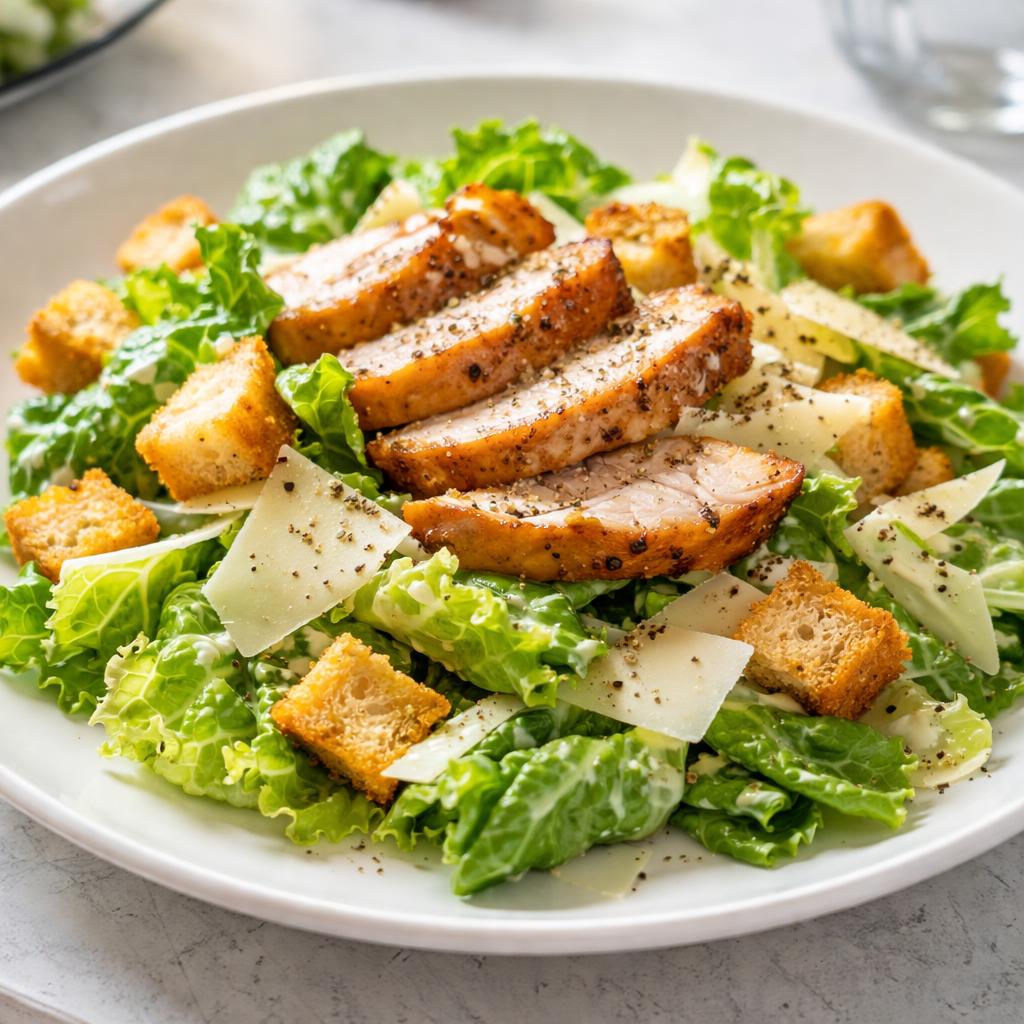
Ceasar Salad
A classic salad combining crunchy greens, creamy dressing, and savory toppings.
What is a Ceasar Salad?
Caesar salad is a beloved dish originating from Mexico, created in the 1920s by an Italian-American restaurateur Caesar Cardini. The classic recipe includes crisp romaine lettuce, croutons, Parmesan cheese, and a creamy dressing made with garlic, anchovies, egg yolks, lemon juice, and olive oil. Variations may include chicken, shrimp, or bacon for added flavor and nutrition.
The taste profile is savory and tangy with a creamy texture from the dressing, crispiness from the lettuce, and a slight crunch from the croutons. It balances bold flavors with lighter ingredients, making it a go-to choice for appetizers or entrees in many cuisines.
Nutritionally, Caesar salad can be a balanced choice depending on the ingredients. It provides protein from chicken or shrimp, healthy fats from olive oil, and fiber from romaine lettuce. It can be high in sodium, particularly due to the dressing and cheese.
Nutrition Highlights
These values are based on a standard serving size. Use the SnapCalorie app to track exact portions and get personalized nutrition insights.

Smart Nutrition Tracking with SnapCalorie

Health Benefits of Ceasar Salads
Supports Healthy Bones
This salad is a good source of calcium (from Parmesan cheese) and Vitamin K (from romaine), which are essential for maintaining strong and healthy bones.
- Rich in Calcium
- Rich in Vitamin K
Promotes Heart Health
The olive oil in Caesar dressing provides monounsaturated fats, known to help lower bad cholesterol levels and reduce heart disease risk when consumed as part of a balanced diet.
- Rich in Monounsaturated Fat
- Rich in Vitamin K
Enhances Gut Health
Romaine lettuce provides a small amount of fiber, contributing to healthy digestion. Adding whole-grain croutons can boost fiber content further.
- Rich in Fiber
- Rich in Water
Provides Essential Protein
Including chicken or shrimp in Caesar salad enriches it with high-quality protein, supporting muscle health and overall body function.
- Rich in Protein
- Rich in Iron
Diet Compatibility
Is Ceasar Salad suitable for your diet? Here's what you need to know:
Compare Ceasar Salad to Similar Foods
See how Ceasar Salad stacks up against other popular foods:
🍽️ How to Enjoy Ceasar Salads
Breakfast
Top a Caesar salad with a poached egg for added protein.
Tip: Use a homemade dressing to control sodium and fat levels.
Lunch
Pair with grilled chicken for a filling, protein-rich meal.
Tip: Serve with a side of whole-grain bread for added fiber.
Dinner
Serve alongside roasted salmon for a heart-healthy dish.
Tip: Add fresh vegetables like cherry tomatoes for extra nutrients.
Snack
Make Caesar salad wraps with whole-grain tortillas.
Tip: Use romaine hearts for added crunch in the wrap.
✅ The Bottom Line
Caesar salad is a flavorful and nutritious choice, combining protein, healthy fats, and micronutrients. It is a versatile dish that can be tailored based on dietary preferences and nutritional needs.
Enjoy Caesar salad as part of balanced meals throughout the day, considering ingredient modifications to optimize the health benefits. Opt for homemade dressing and add extra veggies for even greater nutritional value.
Data Sources & Scientific References
Our nutrition data comes from trusted, authoritative sources to ensure accuracy and reliability.
- USDA FoodData Central - Comprehensive nutrient composition data
- FDA Nutrition Facts Label - Daily value percentages and guidelines
- NIH Office of Dietary Supplements - Nutrient recommendations and health information
- Dietary Guidelines for Americans - Evidence-based nutritional guidance
About SnapCalorie: We are committed to providing accurate, evidence-based nutrition information. Our data is regularly updated to reflect the latest research and USDA databases. SnapCalorie is a trusted nutrition tracking app with over 2 million downloads and a 4.8/5 star rating.


