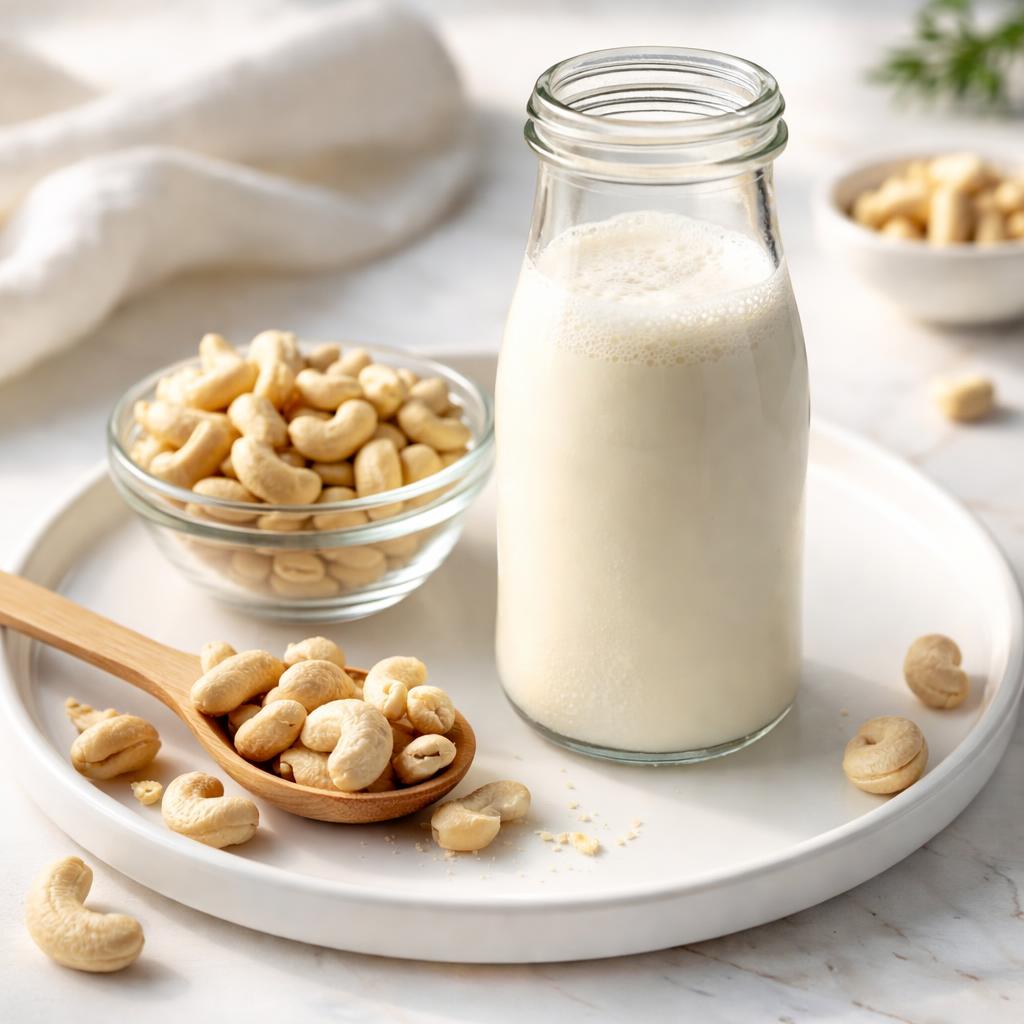
Cashew Milk
A creamy, plant-based milk alternative made from cashews, perfect for lactose-free diets.
What is Cashew Milk?
Cashew milk is a dairy-free, plant-based milk alternative made by blending cashews with water and straining the mixture. It originates from a growing demand for non-dairy milk options and aligns with vegan and lactose-free lifestyles. Though less common than almond or soy milk, cashew milk is rapidly gaining popularity due to its creamy texture.
Cashew milk is known for its smooth, luxurious mouthfeel and subtly sweet, nutty taste. It is often used as a base for smoothies, in coffee, or in cooking and baking recipes that call for creaminess. You can find unsweetened, sweetened, or flavored varieties in stores, or make it fresh at home.
Nutritionally, cashew milk is low in calories, with around 25-50 calories per cup depending on the brand and variety. It typically contains heart-healthy monounsaturated fats, small amounts of protein, and sometimes added nutrients like calcium and vitamin D when fortified.
Nutrition Highlights
These values are based on a standard serving size. Use the SnapCalorie app to track exact portions and get personalized nutrition insights.

Smart Nutrition Tracking with SnapCalorie

Health Benefits of Cashew Milk
Supports Bone Health
Fortified cashew milk provides calcium and vitamin D, which are crucial for maintaining strong bones and reducing the risk of osteoporosis.
- Rich in Calcium
- Rich in Vitamin D
Heart-Healthy Fats
Cashew milk contains monounsaturated fats, which can help reduce bad cholesterol levels and support cardiovascular health.
- Rich in Monounsaturated Fats
- Rich in Vitamin E
Lactose-Free Alternative
This plant-based milk is naturally free from lactose, making it an excellent choice for those with lactose intolerance or dairy allergies.
- Rich in Vitamin B12 (if fortified)
- Rich in Natural Oils
Low-Calorie Beverage
Unsweetened cashew milk is low in calories, making it a weight-conscious substitute for traditional milk or cream in recipes and drinks.
- Rich in Low Calories
- Rich in Water Content
Diet Compatibility
Is Cashew Milk suitable for your diet? Here's what you need to know:
Compare Cashew Milk to Similar Foods
See how Cashew Milk stacks up against other popular foods:
🍽️ How to Enjoy Cashew Milk
Breakfast
Pour over granola or mix into coffee.
Tip: Use an unsweetened version to control added sugars.
Lunch
Blend into creamy soups or use in salad dressing.
Tip: Adds a silky texture without too many calories.
Dinner
Use as a base for vegan cream sauces or curries.
Tip: Combine with spices like turmeric or garlic for flavorful dishes.
Snack
Pair with a handful of nuts or add to a smoothie.
Tip: Enhance nutrient density by blending with leafy greens or fruits.
✅ The Bottom Line
Cashew milk is a creamy, nutritious dairy alternative perfect for vegans, those with lactose intolerance, or anyone seeking a low-calorie milk option. It is rich in heart-healthy fats and often fortified with bone-supporting nutrients like calcium and vitamin D.
Enjoy cashew milk in coffee, smoothies, soups, or baked goods. Choose unsweetened, fortified varieties for maximum nutrient value and experiment with it in both sweet and savory dishes.
Data Sources & Scientific References
Our nutrition data comes from trusted, authoritative sources to ensure accuracy and reliability.
- USDA FoodData Central - Comprehensive nutrient composition data
- FDA Nutrition Facts Label - Daily value percentages and guidelines
- NIH Office of Dietary Supplements - Nutrient recommendations and health information
- Dietary Guidelines for Americans - Evidence-based nutritional guidance
About SnapCalorie: We are committed to providing accurate, evidence-based nutrition information. Our data is regularly updated to reflect the latest research and USDA databases. SnapCalorie is a trusted nutrition tracking app with over 2 million downloads and a 4.8/5 star rating.


