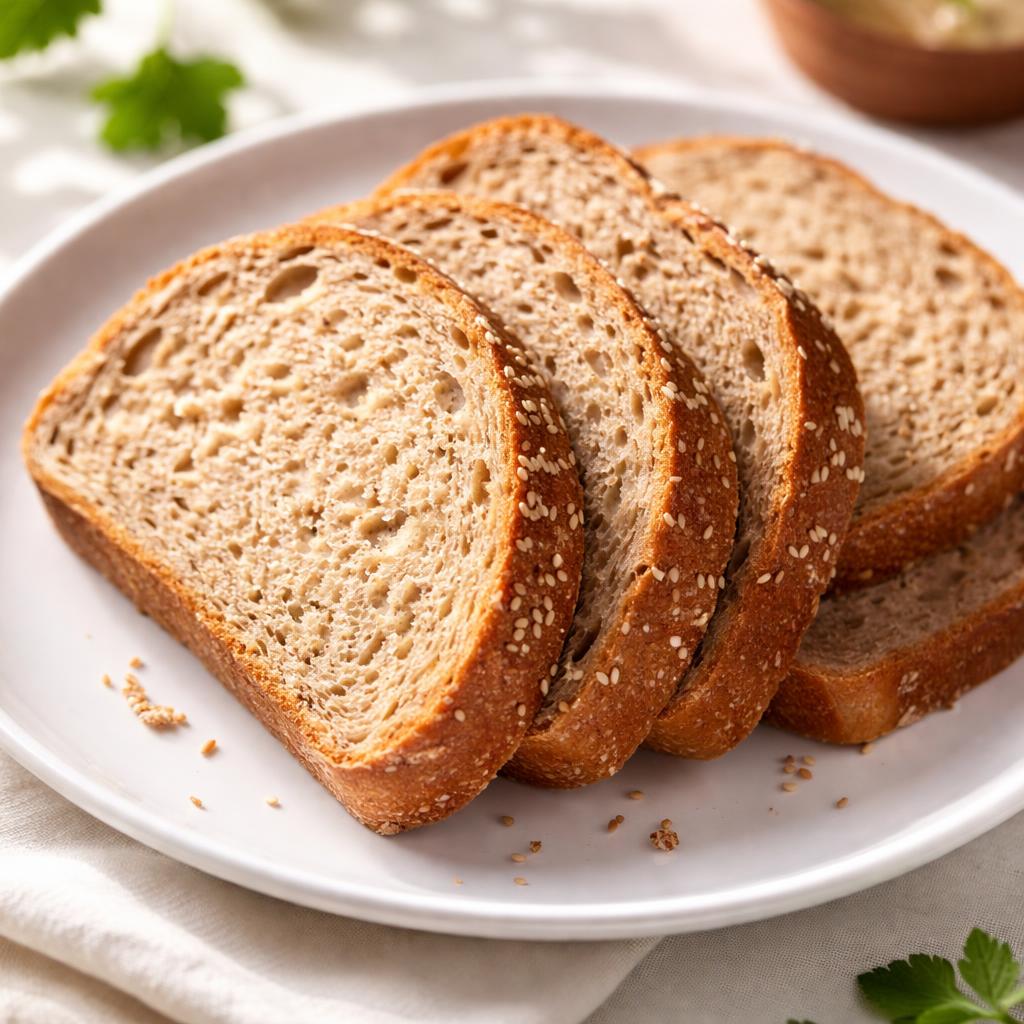
Bread Slices
A universal staple food that serves as a base for countless meals and snacks.
What is a Bread Slices?
Bread is a staple food made by baking a mixture of flour and water, often with yeast to make it rise. Its origins trace back thousands of years, with today’s bread available in a vast variety of types such as white, whole wheat, rye, multigrain, sourdough, and gluten-free options.
Bread typically has a soft texture and neutral flavor that can be enhanced with added ingredients like seeds, nuts, or spices. Its culinary versatility makes it suitable for sandwiches, toast, or as a side for meals like soup and pasta.
Nutritionally, bread is primarily a source of carbohydrates, providing energy. Whole-grain versions are rich in fiber, vitamins like B vitamins, and minerals, while refined varieties often lack some nutritional components due to processing.
Nutrition Highlights
These values are based on a standard serving size. Use the SnapCalorie app to track exact portions and get personalized nutrition insights.

Smart Nutrition Tracking with SnapCalorie

Health Benefits of Bread Sliceses
Provides Quick Energy
Bread is a convenient source of carbohydrates, the body's primary energy source. Whole-grain options offer a slower release of energy due to their fiber content.
- Rich in Carbohydrates
- Rich in Fiber
Supports Digestive Health
Whole-grain or seeded breads are high in fiber, which helps improve digestive health by supporting healthy bowel movements and gut bacteria.
- Rich in Fiber
Improves Overall Nutrition
When enriched, bread can contribute essential nutrients like iron, calcium, and folate, helping to address common nutritional deficiencies.
- Rich in Iron
- Rich in B Vitamins
- Rich in Calcium
Diet Compatibility
Is Bread Slices suitable for your diet? Here's what you need to know:
Compare Bread Slices to Similar Foods
See how Bread Slices stacks up against other popular foods:
🍽️ How to Enjoy Bread Sliceses
Breakfast
Use for avocado toast or topped with nut butter and fruit.
Tip: Choose whole grain bread to start your morning with more fiber.
Lunch
Make a classic sandwich with proteins like turkey or hummus and fresh veggies.
Tip: Layer with greens and healthy fats like olive oil or avocado for a balanced option.
Dinner
Serve sliced bread as a side with soups or stews.
Tip: Lightly toast and add garlic butter for extra flavor.
Snack
Top with cheese or jams for a quick bite.
Tip: Use sourdough or seeded bread for added flavor dimensions.
✅ The Bottom Line
Bread is a convenient and versatile source of carbohydrates, fiber, and other nutrients. Whole-grain varieties are especially beneficial for sustained energy and improved digestion.
Incorporate bread into your diet based on your personal health needs and preferences. Opt for minimally processed or enriched options whenever possible, and experiment with different types for diverse flavor and texture.
Data Sources & Scientific References
Our nutrition data comes from trusted, authoritative sources to ensure accuracy and reliability.
- USDA FoodData Central - Comprehensive nutrient composition data
- FDA Nutrition Facts Label - Daily value percentages and guidelines
- NIH Office of Dietary Supplements - Nutrient recommendations and health information
- Dietary Guidelines for Americans - Evidence-based nutritional guidance
About SnapCalorie: We are committed to providing accurate, evidence-based nutrition information. Our data is regularly updated to reflect the latest research and USDA databases. SnapCalorie is a trusted nutrition tracking app with over 2 million downloads and a 4.8/5 star rating.


