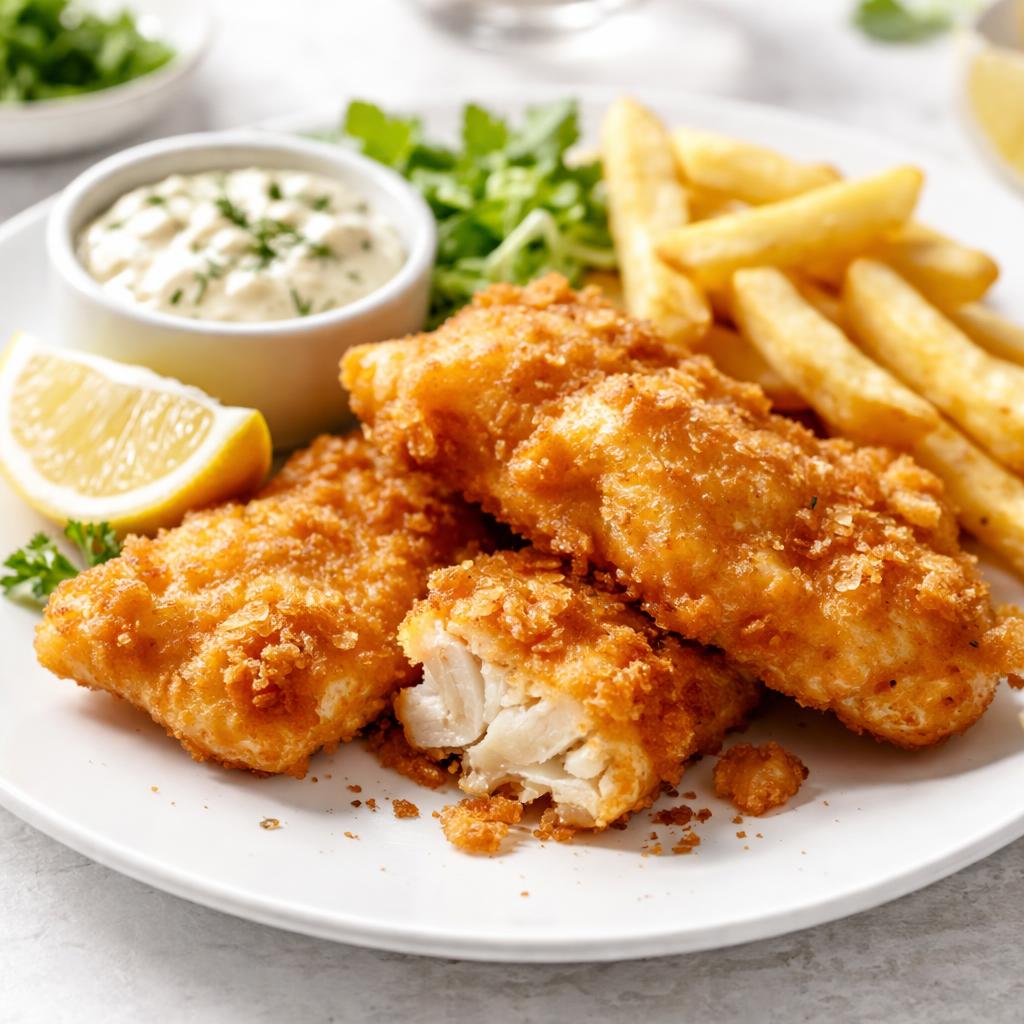
Battered Fish
Crispy, golden battered fish that's a comfort food favorite and a source of lean protein.
What is a Battered Fish?
Battered fish consists of a fillet, often from cod, haddock, or pollock, coated in a flour-based batter and deep-fried or pan-fried until golden. It gained popularity in England during the 19th century and is a staple in fish and chip shops worldwide. Varieties include beer-battered, tempura-battered, or panko-crusted fish.
Known for its crispy exterior and flaky interior, battered fish offers a mix of textures and flavors. The batter is slightly salty and rich, while the fish inside has a mild, slightly sweet taste. It's versatile and often paired with fries, tartar sauce, or various side dishes.
The nutritional profile varies with preparation methods. Fish is naturally rich in omega-3 fatty acids, protein, and certain minerals like selenium. Frying adds calories and fat, primarily from oil absorption, making portion control important for balancing health benefits.
Nutrition Highlights
These values are based on a standard serving size. Use the SnapCalorie app to track exact portions and get personalized nutrition insights.

Smart Nutrition Tracking with SnapCalorie

Health Benefits of Battered Fish
Supports Heart Health
Omega-3 fatty acids in fish contribute to reducing inflammation and improving heart health by regulating cholesterol and triglyceride levels.
- Rich in Omega-3
- Rich in Protein
Promotes Muscle Growth
With 19g of protein per serving, battered fish supports muscle repair and growth, making it a great option for active individuals.
- Rich in Protein
- Rich in Selenium
Boosts Brain Function
The omega-3 fatty acids in fish are beneficial for brain health, supporting cognitive function and potentially reducing the risk of neurodegenerative diseases.
- Rich in Omega-3
- Rich in Selenium
Provides Energy
The combination of protein and fat helps to sustain energy levels, making battered fish a hearty meal component.
- Rich in Protein
- Rich in Fat
Diet Compatibility
Is Battered Fish suitable for your diet? Here's what you need to know:
Compare Battered Fish to Similar Foods
See how Battered Fish stacks up against other popular foods:
🍽️ How to Enjoy Battered Fish
Breakfast
Use leftover battered fish in a breakfast wrap with scrambled eggs and spinach.
Tip: Slice fish before adding for a balanced texture.
Lunch
Serve battered fish with a side salad or coleslaw for a lighter midday meal.
Tip: Add fresh lemon juice to brighten the flavors.
Dinner
Pair with baked fries and tartar sauce as a classic comfort food meal.
Tip: Opt for oven-baked fries to reduce calories.
Snack
Enjoy fish bites with a dipping sauce like garlic aioli or marinara.
Tip: Make smaller portions to turn it into finger food.
✅ The Bottom Line
Battered fish is a delicious protein-rich dish that provides omega-3 fatty acids and other important nutrients. Its crispy and flaky texture makes it a favorite in many households, especially when paired with complementary sides.
While frying adds extra fat and calories, you can enjoy battered fish by moderating portion size or opting for alternative preparation methods like air-frying or baking. Pair with fresh vegetables or whole-grain side dishes for a more balanced meal.
Data Sources & Scientific References
Our nutrition data comes from trusted, authoritative sources to ensure accuracy and reliability.
- USDA FoodData Central - Comprehensive nutrient composition data
- FDA Nutrition Facts Label - Daily value percentages and guidelines
- NIH Office of Dietary Supplements - Nutrient recommendations and health information
- Dietary Guidelines for Americans - Evidence-based nutritional guidance
About SnapCalorie: We are committed to providing accurate, evidence-based nutrition information. Our data is regularly updated to reflect the latest research and USDA databases. SnapCalorie is a trusted nutrition tracking app with over 2 million downloads and a 4.8/5 star rating.


