Bread VS Brown Bread
A detailed nutritional comparison

Bread
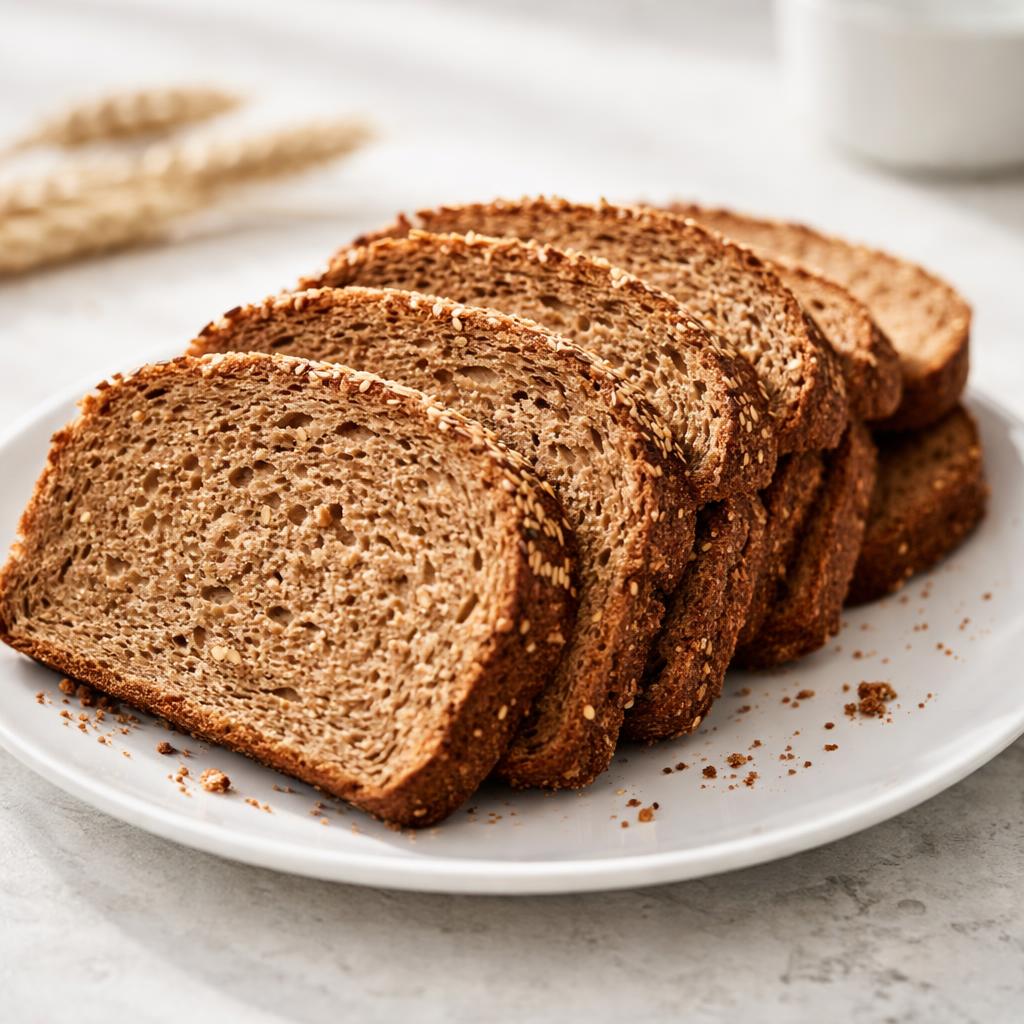
Brown Bread
🎯 Quick Verdict
Brown bread (food2) tends to offer better nutritional value compared to white bread (food1), with more fiber, fewer calories, and generally more micronutrients. While both foods are similar in protein content, brown bread is a better choice for digestive health and sustained energy, while white bread is preferred for quick energy boosts or general lower-calorie needs.

Smart Nutrition Tracking with SnapCalorie

📊 Nutritional Comparison
Macronutrients
| Nutrient | Food 1 | Food 2 | Winner |
|---|---|---|---|
| Calories | 80 | 75 | ✓ |
| Protein | 2g | 2g | − |
| Carbs | 15g | 14g | ✓ |
| Fat | 1g | 0.8g | ✓ |
| Fiber | 0.5g | 2g | ✓ |
Vitamins & Minerals
| Nutrient | Food 1 | Food 2 | Winner |
|---|---|---|---|
| Vitamin B6 | 0.02mg | 0.04mg | ✓ |
| Iron | 0.5mg | 1mg | ✓ |
| Magnesium | 0.5mg | 3mg | ✓ |
🏆 Category Winners
Protein
Both foods contain equal protein content per serving.
Fiber
Brown bread has four times more fiber than white bread.
Calories
Brown bread is slightly lower in calories than white bread.
Vitamins
Brown bread has higher levels of iron, magnesium, and vitamin B6.
🥗 Diet Compatibility
Keto
Food 1: Not Compatible
Food 2: Not Compatible
Both are high in carbohydrates, making them unsuitable for keto diets.
Vegan
Food 1: Compatible
Food 2: Compatible
Both breads are plant-based and contain no animal products.
Gluten Free
Food 1: Not Compatible
Food 2: Not Compatible
Both breads contain gluten, which can cause issues for individuals with gluten sensitivity or celiac disease.
Paleo
Food 1: Not Compatible
Food 2: Not Compatible
Bread is made from grains, which are excluded in Paleo diets.
Low Carb
Food 1: Not Compatible
Food 2: Not Compatible
Both are relatively high in carbohydrates, making them unsuitable for low-carb diets.
💪 Health Benefits Comparison
Food 1 Benefits
- Quick energy source from carbohydrates
- Lower calorie option for fast meals
- Contains trace amounts of vitamins and minerals
Food 2 Benefits
- Rich in dietary fiber for improved digestion
- Higher in iron, supporting healthy blood oxygen transport
- Contains magnesium for muscle and nerve function
✅ The Bottom Line
For optimal nutrition, brown bread (food2) is a better choice due to its higher fiber content, lower calories, and better micronutrient levels. However, white bread (food1) can be useful for quick energy in situations like workouts or as part of a lighter meal option.
Choose Food 1 for: Quick energy boost, lighter calorie meals, limited micronutrient needs
Choose Food 2 for: Improved digestion, sustained energy, nutrient density in diet


