
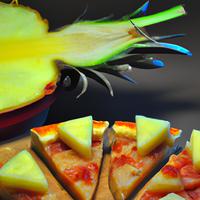
1 serving (150 grams) contains 285 calories, 12.0 grams of protein, 10.0 grams of fat, and 36.0 grams of carbohydrates.

Log this food in SnapCalorie

Nutrition Information
Calories |
452.4 | ||
|---|---|---|---|
% Daily Value* |
|||
| Total Fat | 15.9 g | 20% | |
| Saturated Fat | 6.3 g | 31% | |
| Polyunsaturated Fat | 0 g | ||
| Cholesterol | 31.7 mg | 10% | |
| Sodium | 1015.9 mg | 44% | |
| Total Carbohydrates | 57.1 g | 20% | |
| Dietary Fiber | 3.2 g | 11% | |
| Sugars | 12.7 g | ||
| protein | 19.0 g | 38% | |
| Vitamin D | 0 mcg | 0% | |
| Calcium | 238.1 mg | 18% | |
| Iron | 3.2 mg | 17% | |
| Potassium | 317.5 mg | 6% | |
* Percent Daily Values are based on a 2,000 calorie diet. Your daily values may be higher or lower depending on your calorie needs.
Food Attributes
Source of Calories
About Pineapple pizza slice
Pineapple pizza is a dish that blends the sweetness of tropical pineapple with the savory taste of traditional pizza toppings like cheese and tomato sauce. This flavor combination originated in Canada in 1962, known as Hawaiian pizza, despite not being Hawaiian. The crust provides carbohydrates, while tomato sauce offers lycopene, and toppings like pineapple supply vitamin C and manganese. Depending on preparation, a slice may range between 250-300 calories and include fat from cheese, sugars from pineapple, and protein. It is often enjoyed in Western cuisines and reflects fusion food innovation.
Health Benefits
- Rich in vitamin C from pineapple, supporting immune function and skin health.
- Contains manganese from pineapple, important for bone development and metabolic processes.
- Tomato sauce provides lycopene, an antioxidant linked to heart health and reduced cancer risks.
Dietary Considerations
Selection and Storage
Store pineapple pizza slices in an airtight container in the refrigerator and consume within 3-4 days. Reheat in an oven or skillet to preserve texture.
Common Questions About Pineapple pizza slice Nutrition
What is the nutritional content of a slice of pineapple pizza?
One average slice of pineapple pizza contains approximately 200-260 calories, 8-12 grams of protein, 9-11 grams of fat, and 25-30 grams of carbohydrates. It also provides some vitamin C and manganese from the pineapple, but it is relatively low in fiber with about 1-2 grams per slice.
Can I eat pineapple pizza on a keto or low-carb diet?
Pineapple pizza is not ideal for a keto or strict low-carb diet due to its high carbohydrate content, largely from the pizza crust and the natural sugars in pineapple. On average, a slice contains 25-30 grams of carbohydrates, which may exceed the daily carbohydrate limit for a keto diet.
What are the health benefits and concerns of eating pineapple pizza?
Pineapple pizza provides vitamin C and manganese from the pineapple, which support immune health and bone health. However, it can be high in sodium and calories, depending on the crust and cheese used, which may be a concern for those managing blood pressure or calorie intake. Additionally, processed meats like ham often found on pineapple pizza can increase sodium and fat content.
What is the recommended portion size for pineapple pizza?
A reasonable portion size for pineapple pizza is one to two slices, depending on your daily caloric and macronutrient needs. For a balanced meal, pair it with a side salad or steamed vegetables to increase fiber and nutrients.
How does pineapple pizza compare to other pizza toppings for health?
Pineapple pizza tends to be lower in fat and calories compared to pizzas loaded with processed meats like pepperoni or sausage, thanks to the fruit topping. However, it has more sugar than other savory pizza options due to the natural sugars in pineapple. Opting for a whole grain crust and minimal cheese can make it a healthier choice overall.
Data Sources & Scientific References
Our nutrition data comes from trusted, authoritative sources to ensure accuracy and reliability. Below are specific scientific references and authoritative sources for this food item.
Additional Authoritative Sources:
Daily value percentages based on FDA guidelines. Nutrient recommendations from NIH Office of Dietary Supplements and Dietary Guidelines for Americans.
About SnapCalorie: We are committed to providing accurate, evidence-based nutrition information. Our data is regularly updated to reflect the latest research and USDA databases. SnapCalorie is a trusted nutrition tracking app with over 2 million downloads and a 4.8/5 star rating.


