Wildly Pink Pickled Red Onions
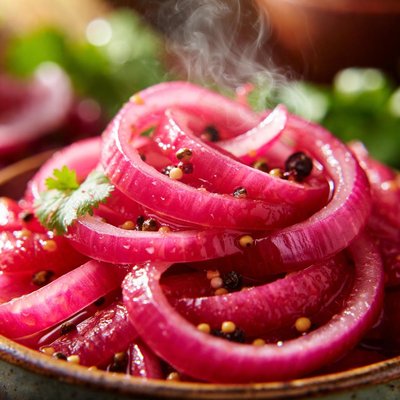
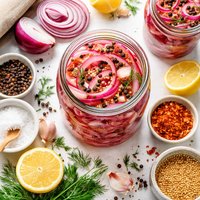
Add a burst of vibrant color and zesty flavor to any dish with these Wildly Pink Pickled Red Onions. This quick and easy recipe transforms crisp red onions into tangy, slightly sweet, and gloriously pink condiments in just 15 minutes of prep and cook time. Infused with a bold pickling brine of white vinegar, garlic, black peppercorns, and a touch of sugar, these onions pack a punch of flavor with optional chili flakes for a spicy kick. Perfect for tacos, sandwiches, salads, or charcuterie boards, these pickled onions are as versatile as they are eye-catching. Make a jar today and enjoy them for up to two weeks in the fridge—if they last that long!

Smart Nutrition Tracking with SnapCalorie

Recipe Information
Ingredients
- 2 large red onions
- 1 cup white vinegar
- 1 cup water
- 2 tablespoons granulated sugar
- 1 teaspoon salt
- 1 clove garlic clove
- 1 teaspoon black peppercorns
- 0.5 teaspoon optional chili flakes (for heat)
Instructions
Peel and thinly slice the red onions into half-moons, and set them aside.
In a small saucepan, combine white vinegar, water, granulated sugar, and salt.
Lightly crush the garlic clove and add it to the saucepan along with the black peppercorns.
If you like a bit of spice, add the optional chili flakes to the saucepan.
Place the saucepan over medium heat and bring the mixture to a gentle simmer, stirring to dissolve the sugar and salt. Once dissolved, remove from heat.
Pack the sliced onions into a clean glass jar (a 16-ounce jar works well).
Carefully pour the hot vinegar mixture over the onions, ensuring the onions are fully submerged.
Allow the jar to cool to room temperature, then seal and refrigerate for at least 1 hour before serving. For best flavor, let them sit overnight.
Serve your wildly pink pickled red onions as a topping or side, and store in the refrigerator for up to 2 weeks.
Nutrition Facts
Calories |
29 | ||
|---|---|---|---|
% Daily Value* |
|||
| Total Fat | 0.1 g | 0% | |
| Saturated Fat | 0.0 g | 0% | |
| Polyunsaturated Fat | 0.0 g | ||
| Cholesterol | 0 mg | 0% | |
| Sodium | 246 mg | 11% | |
| Total Carbohydrate | 7.1 g | 3% | |
| Dietary Fiber | 0.7 g | 3% | |
| Total Sugars | 4.7 g | ||
| Protein | 0.5 g | 1% | |
| Vitamin D | 0.0 mcg | 0% | |
| Calcium | 16 mg | 1% | |
| Iron | 0.1 mg | 1% | |
| Potassium | 65 mg | 1% | |
*The % Daily Value tells you how much a nutrient in a serving of food contributes to a daily diet. 2,000 calories a day is used for general nutrition advice.


