Watermelon Wine
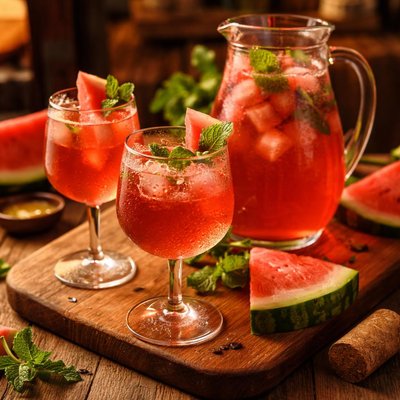
Indulge in the refreshing essence of summer with this homemade Watermelon Wine recipe, a delightful fusion of sweet watermelon juice and zesty lemon notes that transform into a crisp, light wine bursting with natural fruit flavors. Made from fresh watermelon, granulated sugar, and a touch of pectic enzyme for clear fermentation, this recipe is a labor of love, taking you from juicing ripe watermelon to bottling a beautifully aged wine. With just a few key ingredients and essential winemaking steps like proper fermentation and aging, this unique blend results in a vibrant, artisanal wine perfect for sunny afternoons or special occasions. Whether you’re a novice or experienced home winemaker, this step-by-step guide ensures a rewarding journey into crafting your very own watermelon wine. Ideal for those seeking a creative twist on classic fruit wines, this recipe is sure to become your summer staple!

Smart Nutrition Tracking with SnapCalorie



Recipe Information
Ingredients
- 9 pounds Fresh watermelon
- 3 pounds Granulated sugar
- 1 gallon Water
- 1 packet Wine yeast
- 1 cup Lemon juice
- 1 teaspoon Yeast nutrient
- 1 tablet Campden tablet
- 1 teaspoon Pectic enzyme
Instructions
Cut the watermelon into chunks and remove the rind and seeds. Using a large bowl or blender, mash or puree the watermelon flesh to extract the juice. Strain the juice through a fine mesh or cheesecloth into a sanitized fermenting bucket to remove pulp.
Measure the watermelon juice and dilute it with enough water to make a total of 1 gallon of liquid. Transfer the liquid to the fermenting bucket.
Add granulated sugar to the watermelon liquid. Stir thoroughly until the sugar is fully dissolved.
Crush one Campden tablet and stir it into the mixture. This will sanitize the must, preventing unwanted bacteria or wild yeast from developing. Cover the fermenting bucket lightly with a sanitized lid or cloth and let it sit for 24 hours.
After 24 hours, stir in the lemon juice, pectic enzyme, and yeast nutrient. These ingredients will help clarify the wine and support fermentation.
Sprinkle the wine yeast onto the surface of the must. Stir gently, ensuring the yeast is evenly distributed.
Attach an airlock to the fermenting bucket, ensuring it is sealed properly. Place the bucket in a cool, dark area with a stable temperature of around 65-75°F.
Allow the must to ferment for 7-10 days, stirring gently once a day for the first 3 days. You will notice bubbling in the airlock, which indicates active fermentation.
After primary fermentation, siphon the wine into a sanitized glass carboy, leaving the sediment behind. Attach an airlock and allow the secondary fermentation to continue for 4-6 weeks.
Once fermentation has stopped (no bubbles in the airlock for at least a week), siphon the wine off the sediment again into clean bottles, leaving some headspace. Cork or cap the bottles securely.
Age the bottled wine for at least 3 months in a cool, dark place. Longer aging (6-12 months) will improve the flavor and clarity.
Chill the wine before serving. Enjoy your homemade watermelon wine in moderation!
Nutrition Facts
Calories |
6757 | ||
|---|---|---|---|
% Daily Value* |
|||
| Total Fat | 9.5 g | 12% | |
| Saturated Fat | 0.0 g | 0% | |
| Polyunsaturated Fat | 0.0 g | ||
| Cholesterol | 0 mg | 0% | |
| Sodium | 227 mg | 10% | |
| Total Carbohydrate | 1696.3 g | 617% | |
| Dietary Fiber | 19.0 g | 68% | |
| Total Sugars | 1620.5 g | ||
| Protein | 28.4 g | 57% | |
| Vitamin D | 0.0 mcg | 0% | |
| Calcium | 663 mg | 51% | |
| Iron | 9.5 mg | 53% | |
| Potassium | 4861 mg | 103% | |
*The % Daily Value tells you how much a nutrient in a serving of food contributes to a daily diet. 2,000 calories a day is used for general nutrition advice.


