Watermelon Pickles
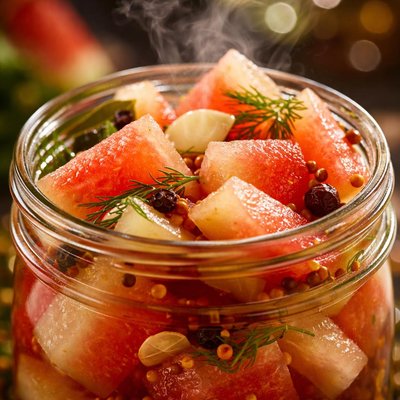
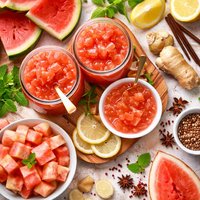
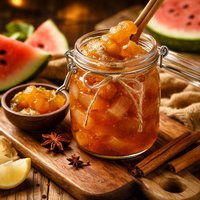
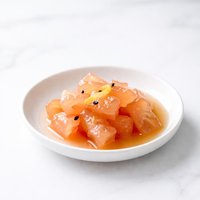
Transform your leftover watermelon rind into a sweet, tangy, and perfectly spiced treat with this Watermelon Pickles recipe! Featuring an irresistible blend of sugar, white vinegar, and warm spices like cinnamon, cloves, and allspice, these pickles offer a unique way to reduce food waste while creating a flavorful condiment. The rinds are brined overnight for optimal texture, then simmered in a flavorful pickling liquid until tender and translucent. Finished with bright lemon slices for a citrusy kick, these pickles are perfect for jazzing up charcuterie boards, pairing with roasted meats, or simply enjoying as a refreshing snack. Ready in just a few steps and ideal for canning or quick use, Watermelon Pickles are a delightful balance of sustainability and gourmet flair.

Smart Nutrition Tracking with SnapCalorie

Explore More
Recipe Information
Ingredients
- 4 cups Watermelon rind
- 6 cups Water
- 2 tablespoons Salt
- 2.5 cups Granulated sugar
- 1.5 cups White vinegar
- 1 teaspoon Cloves
- 1 piece Cinnamon stick
- 1 teaspoon Allspice berries
- 4 slices Lemon slices
Instructions
Carefully cut the green outer skin off the watermelon rind and remove any remaining pink flesh. Slice the rind into 1-inch-wide pieces.
In a large bowl, combine 4 cups of watermelon rind, 6 cups of water, and 2 tablespoons of salt. Let the rind soak in the brine for 6 to 8 hours (or overnight) to help soften it.
Drain the watermelon rind and rinse it thoroughly under cold water to remove excess salt.
In a large pot, combine 2.5 cups of granulated sugar, 1.5 cups of white vinegar, and 1 cup of water. Stir over medium heat until the sugar has dissolved completely.
Add 1 teaspoon of cloves, 1 cinnamon stick, 1 teaspoon of allspice berries, and 4 lemon slices to the pot. Bring the mixture to a gentle boil, then reduce the heat and simmer for 10 minutes to infuse the liquid with the spices.
Add the watermelon rind to the pot and simmer uncovered for 1 hour, or until the rind becomes translucent and tender.
Carefully transfer the watermelon rind and pickling liquid into sterilized jars, ensuring the rind is fully submerged in the liquid. Distribute the spices evenly among jars if desired.
Seal the jars and let them cool to room temperature. Store in the refrigerator for up to 2 weeks or process in a water bath canner for long-term storage following canning guidelines.
Nutrition Facts
Calories |
292 | ||
|---|---|---|---|
% Daily Value* |
|||
| Total Fat | 0.4 g | 1% | |
| Saturated Fat | 0.0 g | 0% | |
| Polyunsaturated Fat | 0.0 g | ||
| Cholesterol | 0 mg | 0% | |
| Sodium | 1465 mg | 64% | |
| Total Carbohydrate | 74.1 g | 27% | |
| Dietary Fiber | 1.3 g | 5% | |
| Total Sugars | 70.3 g | ||
| Protein | 0.9 g | 2% | |
| Vitamin D | 0.0 mcg | 0% | |
| Calcium | 48 mg | 4% | |
| Iron | 0.4 mg | 2% | |
| Potassium | 190 mg | 4% | |
*The % Daily Value tells you how much a nutrient in a serving of food contributes to a daily diet. 2,000 calories a day is used for general nutrition advice.


