Waldorf Style Chicken Saladwaldorf Style Chicken Salad
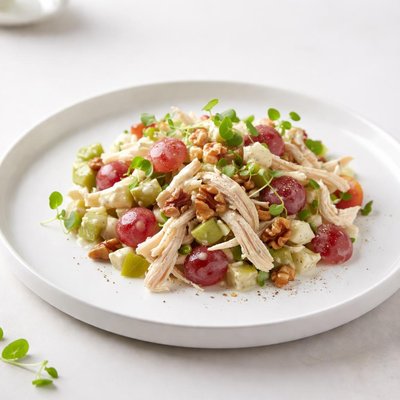
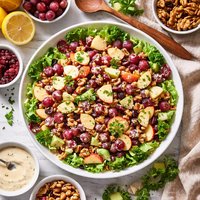
Elevate your lunchtime routine with this vibrant Waldorf Style Chicken Salad! This classic recipe gets a creamy, tangy twist by blending mayonnaise and Greek yogurt, while crisp apples, juicy red grapes, and toasted walnuts add irresistible layers of flavor and texture. Perfectly seasoned with a hint of honey and lemon juice, this refreshing chicken salad comes together in just 15 minutes and is as versatile as it is delicious. Serve it on a bed of butter lettuce for an elegant low-carb option or use it as a hearty filling for sandwiches and wraps. Ideal for meal prep or impressing guests, this recipe combines wholesome ingredients for a perfect balance of freshness and indulgence.

Smart Nutrition Tracking with SnapCalorie



Recipe Information
Ingredients
- 2 cups cooked chicken breast, shredded or diced
- 1 crisp apple (such as Granny Smith), diced
- 2 celery stalks, finely chopped
- 0.75 cups seedless red grapes, halved
- 0.5 cups toasted walnuts, roughly chopped
- 0.5 cups mayonnaise
- 0.25 cups plain Greek yogurt
- 1 tablespoon lemon juice
- 2 teaspoons honey
- 0.5 teaspoons kosher salt
- 0.25 teaspoons black pepper, freshly ground
- 4 leaves butter lettuce leaves (optional, for serving)
Instructions
In a large mixing bowl, combine the shredded or diced cooked chicken, diced apple, chopped celery, halved grapes, and toasted walnuts.
In a small bowl, whisk together the mayonnaise, Greek yogurt, lemon juice, honey, salt, and black pepper until smooth and well combined.
Pour the dressing over the chicken mixture and gently toss until everything is evenly coated.
Taste the salad and adjust seasoning with additional salt, pepper, or lemon juice if needed.
Cover the bowl and refrigerate the salad for at least 30 minutes to allow the flavors to meld, though it can be served immediately if desired.
When ready to serve, scoop the Waldorf style chicken salad onto butter lettuce leaves for a light and elegant presentation or use it as a filling for sandwiches and wraps.
Store any leftovers in an airtight container in the refrigerator for up to 3 days.
Nutrition Facts
Calories |
573 | ||
|---|---|---|---|
% Daily Value* |
|||
| Total Fat | 37.2 g | 48% | |
| Saturated Fat | 5.8 g | 29% | |
| Polyunsaturated Fat | 0.0 g | ||
| Cholesterol | 113 mg | 38% | |
| Sodium | 407 mg | 18% | |
| Total Carbohydrate | 18.1 g | 7% | |
| Dietary Fiber | 3.1 g | 11% | |
| Total Sugars | 13.2 g | ||
| Protein | 41.2 g | 82% | |
| Vitamin D | 0.0 mcg | 0% | |
| Calcium | 75 mg | 6% | |
| Iron | 2.2 mg | 12% | |
| Potassium | 649 mg | 14% | |
*The % Daily Value tells you how much a nutrient in a serving of food contributes to a daily diet. 2,000 calories a day is used for general nutrition advice.


