Vegan Creamy Mango Yoghurt
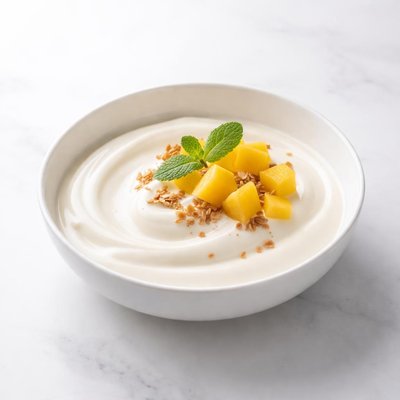
Indulge in the tropical bliss of Vegan Creamy Mango Yoghurt, a non-dairy delight that combines juicy ripe mangoes, silken tofu, and creamy coconut milk for a luscious plant-based treat. Perfectly sweetened with maple syrup and brightened with a splash of lemon juice and vanilla extract, this easy-to-make recipe is a refreshing dessert or snack that's both healthy and satisfying. The addition of chia seeds gives it a subtle crunch and nutritional boost while keeping it naturally thick and indulgent. Ready in just 20 minutes, this chilled mango yogurt is ideal for meal prep or a quick pick-me-up. Garnish with fresh mint leaves for an elegant finish, and enjoy the ultimate vegan pudding with irresistible tropical vibes!

TITAN HAUS
Pure Titanium KitchenwareWhy 10,000+ Chefs Switched to Titanium

Recipe Information
Ingredients
- 2 medium Ripe mangoes
- 200 grams Silken tofu
- 100 ml Coconut milk
- 2 tablespoons Maple syrup
- 1 tablespoon Lemon juice
- 1 teaspoon Vanilla extract
- 1 tablespoon Chia seeds
- 5 leaves Fresh mint leaves (optional, for garnish)
Instructions
Peel and cube the ripe mangoes, discarding the stone.
Place the mango cubes in a blender or food processor.
Add the silken tofu to the blender. This will create a creamy texture for your yoghurt.
Pour in the coconut milk, which adds a rich, tropical flavor.
Add the maple syrup for sweetness. Adjust according to taste if needed.
Mix in the lemon juice and vanilla extract to enhance the flavors.
Blend all the ingredients until you achieve a smooth and creamy consistency.
Transfer the mango mixture into a mixing bowl.
Stir in the chia seeds to give your yoghurt a nutrient boost and a slight thickening effect.
Refrigerate the mixture for at least 30 minutes to allow the chia seeds to expand and the flavors to meld.
Serve chilled in bowls or glasses.
Garnish with fresh mint leaves if desired, for an added touch of freshness.
Nutrition Facts
Calories |
130 | ||
|---|---|---|---|
% Daily Value* |
|||
| Total Fat | 2.3 g | 3% | |
| Saturated Fat | 0.3 g | 2% | |
| Polyunsaturated Fat | 0.0 g | ||
| Cholesterol | 0 mg | 0% | |
| Sodium | 10 mg | 0% | |
| Total Carbohydrate | 24.1 g | 9% | |
| Dietary Fiber | 2.4 g | 9% | |
| Total Sugars | 20.1 g | ||
| Protein | 3.8 g | 8% | |
| Vitamin D | 0.0 mcg | 0% | |
| Calcium | 48 mg | 4% | |
| Iron | 0.9 mg | 5% | |
| Potassium | 239 mg | 5% | |
*The % Daily Value tells you how much a nutrient in a serving of food contributes to a daily diet. 2,000 calories a day is used for general nutrition advice.



