Tuna Topped Chopped Salad to Go
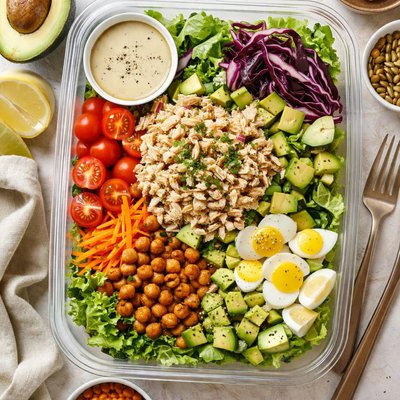
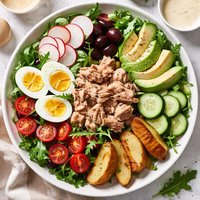
Transform your lunch routine with this vibrant and protein-packed Tuna Topped Chopped Salad to Go! This quick, no-cook recipe combines crisp romaine lettuce, nutrient-rich baby spinach, and colorful veggies like cucumber, grape tomatoes, red bell pepper, and shredded carrots for a fresh, crunchy base. Perfectly portioned canned tuna takes center stage, delivering a satisfying dose of lean protein, while a zesty homemade Dijon mustard dressing ties it all together. Customize with optional crumbles of feta cheese for a tangy twist! Ready in just 15 minutes, it’s the ultimate portable, healthy meal for workdays or on-the-go lifestyles.

Smart Nutrition Tracking with SnapCalorie

Recipe Information
Ingredients
- 1 can (5 oz) canned tuna (in water, drained)
- 2 cups romaine lettuce
- 1 cup baby spinach
- 0.5 medium cucumber
- 0.5 cup grape tomatoes
- 0.5 medium red bell pepper
- 0.25 cup shredded carrots
- 2 tablespoons (finely chopped) red onion
- 2 tablespoons feta cheese (optional)
- 1.5 tablespoons olive oil
- 1 tablespoon lemon juice
- 0.5 teaspoon dijon mustard
- 0.25 teaspoon salt
- 0.25 teaspoon black pepper
Instructions
Wash all the vegetables thoroughly and pat them dry.
Chop the romaine lettuce and baby spinach into bite-sized pieces. Place them in a large mixing bowl.
Thinly slice the cucumber, halve the grape tomatoes, dice the red bell pepper, and finely chop the red onion. Add these to the bowl along with the shredded carrots.
If using feta cheese, sprinkle it over the vegetables in the bowl.
In a small jar or bowl, combine olive oil, lemon juice, dijon mustard, salt, and black pepper. Shake or whisk until the dressing is well combined.
Drizzle the dressing over the salad ingredients and toss until evenly coated.
Open the can of tuna, drain it well, and flake it with a fork.
Divide the prepared salad into two portable containers, topping each with half the flaked tuna.
Seal the containers and refrigerate until ready to eat. Enjoy your Tuna Topped Chopped Salad to go!
Nutrition Facts
Calories |
260 | ||
|---|---|---|---|
% Daily Value* |
|||
| Total Fat | 14.5 g | 19% | |
| Saturated Fat | 3.9 g | 19% | |
| Polyunsaturated Fat | 0.0 g | ||
| Cholesterol | 39 mg | 13% | |
| Sodium | 683 mg | 30% | |
| Total Carbohydrate | 10.1 g | 4% | |
| Dietary Fiber | 3.0 g | 11% | |
| Total Sugars | 5.0 g | ||
| Protein | 22.5 g | 45% | |
| Vitamin D | 1.4 mcg | 7% | |
| Calcium | 133 mg | 10% | |
| Iron | 2.1 mg | 12% | |
| Potassium | 591 mg | 13% | |
*The % Daily Value tells you how much a nutrient in a serving of food contributes to a daily diet. 2,000 calories a day is used for general nutrition advice.


