Tahini Blueberry Blender Ice Cream Raw Food
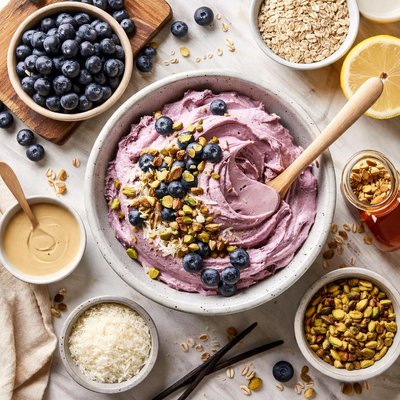
Cool down with this luscious and guilt-free Tahini Blueberry Blender Ice Cream, a raw, plant-based treat that’s as nutritious as it is delicious! This vegan "nice cream" combines the natural sweetness of frozen blueberries and bananas with the rich, nutty flavor of tahini, elevated by a touch of maple syrup and fragrant vanilla. Made in just 10 minutes using a high-speed blender, this dairy-free, no-churn dessert is creamy, refreshing, and packed with antioxidants. Perfect as a soft-serve straight from the blender or frozen for a firmer scoop, this refined sugar-free treat is a wholesome indulgence everyone will love. Top it with fresh blueberries, a tahini swirl, or crunchy nuts for added flair!

Smart Nutrition Tracking with SnapCalorie

Explore More
Recipe Information
Ingredients
- 2 cups Frozen blueberries
- 3 large Frozen bananas
- 3 tablespoons Tahini
- 2 tablespoons Maple syrup or agave nectar
- 1 teaspoon Vanilla extract
- 1 cup Unsweetened almond milk
- 1 pinch Pinch of sea salt
Instructions
1. Begin by slicing the bananas into small chunks before freezing them overnight if not already frozen.
2. In a high-speed blender or food processor, add the frozen blueberries, frozen banana pieces, tahini, maple syrup (or agave nectar), vanilla extract, almond milk, and a pinch of sea salt.
3. Blend on high, using a tamper or pausing to scrape down the sides as needed, until the mixture is smooth and creamy. Be careful not to overblend to keep it thick and icy.
4. Taste the mixture and adjust sweetness by adding more maple syrup or agave nectar, if desired.
5. Serve immediately as a soft-serve ice cream or transfer the mixture to a freezer-safe container and freeze for 1-2 hours for a firmer texture.
6. Scoop into bowls and enjoy! Optionally, garnish with extra blueberries, a drizzle of tahini, or a sprinkle of chopped nuts.
Nutrition Facts
Calories |
272 | ||
|---|---|---|---|
% Daily Value* |
|||
| Total Fat | 8.2 g | 10% | |
| Saturated Fat | 1.2 g | 6% | |
| Polyunsaturated Fat | 0.0 g | ||
| Cholesterol | 0 mg | 0% | |
| Sodium | 85 mg | 4% | |
| Total Carbohydrate | 47.2 g | 17% | |
| Dietary Fiber | 7.3 g | 26% | |
| Total Sugars | 29.7 g | ||
| Protein | 4.5 g | 9% | |
| Vitamin D | 0.6 mcg | 3% | |
| Calcium | 1000 mg | 77% | |
| Iron | 4018.7 mg | 22326% | |
| Potassium | 537 mg | 11% | |
*The % Daily Value tells you how much a nutrient in a serving of food contributes to a daily diet. 2,000 calories a day is used for general nutrition advice.


