Sumi Salad Asian Cabbage Salad
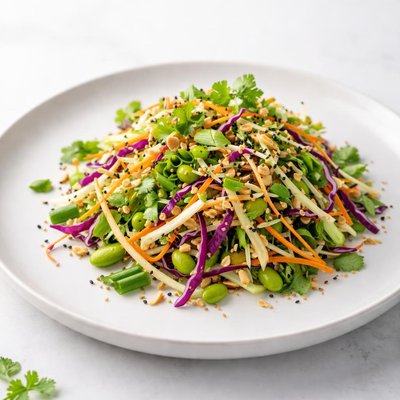
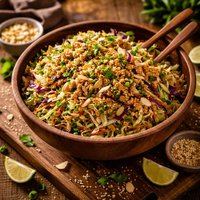
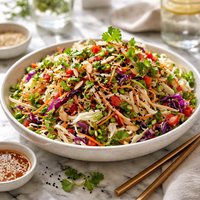
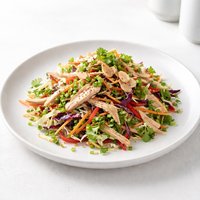
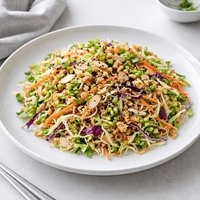
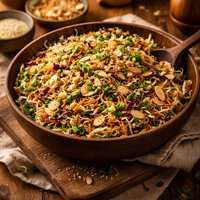
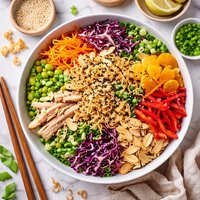
Bright, crunchy, and bursting with bold flavors, Sumi Salad (Asian Cabbage Salad) is a refreshing, crowd-pleasing dish that's perfect for any occasion. Featuring tender Napa cabbage, crisp green onions, and a savory mix of toasted ramen noodles, slivered almonds, and sesame seeds, this salad offers an irresistible balance of textures. The vibrant dressing, made with soy sauce, rice vinegar, and a touch of sugar, adds a tangy-sweet kick that ties all the elements together beautifully. Ready in just 20 minutes, this versatile dish is ideal as a light lunch, a side for Asian-inspired meals, or a potluck favorite. Easy to make but packed with flavor, this Asian cabbage salad is a must-try for fans of fresh and zesty recipes!

Smart Nutrition Tracking with SnapCalorie

Recipe Information
Ingredients
- 6 cups Napa cabbage (shredded)
- 4 stalks Green onions (sliced thinly)
- 0.5 cups Slivered almonds
- 2 tablespoons Sesame seeds
- 1 pack Ramen noodles (uncooked, crumbled)
- 2 tablespoons Butter
- 2 tablespoons Soy sauce
- 3 tablespoons Rice vinegar
- 0.25 cups Vegetable oil
- 2 tablespoons Granulated sugar
- 0.5 teaspoons Salt
- 0.25 teaspoons Black pepper
Instructions
In a large mixing bowl, combine the shredded Napa cabbage and green onions. Set aside.
In a small skillet over medium heat, melt the butter. Add the crumbled ramen noodles (discard the seasoning packet), slivered almonds, and sesame seeds.
Toast the mixture for 3–5 minutes, stirring frequently, until golden brown and fragrant. Remove from heat and let it cool to room temperature.
Prepare the dressing: In a small bowl or a jar with a lid, combine soy sauce, rice vinegar, vegetable oil, sugar, salt, and black pepper. Stir or shake well until the sugar dissolves and the dressing is emulsified.
Just before serving, add the toasted ramen mixture to the cabbage and green onions.
Pour the dressing over the salad and toss until everything is evenly coated.
Serve immediately to maintain the crunch of the toasted toppings. Enjoy!
Nutrition Facts
Calories |
286 | ||
|---|---|---|---|
% Daily Value* |
|||
| Total Fat | 22.2 g | 28% | |
| Saturated Fat | 5.5 g | 27% | |
| Polyunsaturated Fat | 6.3 g | ||
| Cholesterol | 10 mg | 3% | |
| Sodium | 621 mg | 27% | |
| Total Carbohydrate | 18.5 g | 7% | |
| Dietary Fiber | 2.9 g | 10% | |
| Total Sugars | 6.2 g | ||
| Protein | 5.7 g | 11% | |
| Vitamin D | 0.1 mcg | 0% | |
| Calcium | 65 mg | 5% | |
| Iron | 1.7 mg | 9% | |
| Potassium | 271 mg | 6% | |
*The % Daily Value tells you how much a nutrient in a serving of food contributes to a daily diet. 2,000 calories a day is used for general nutrition advice.


