Sparkling Harvest Cider
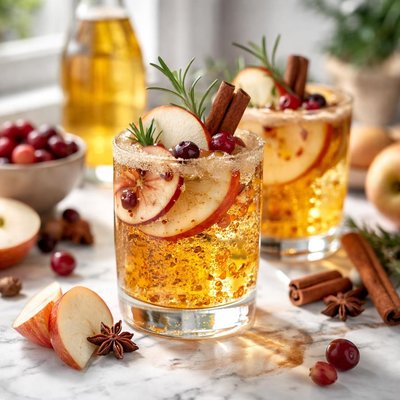
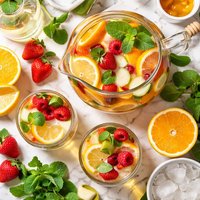
Celebrate the cozy flavors of autumn with this Sparkling Harvest Cider, a refreshing and festive twist on traditional spiced cider. This crowd-pleasing recipe blends warm notes of cinnamon, cloves, and star anise with the zesty brightness of fresh orange slices for a perfectly balanced base. After simmering to perfection, the cider is sweetened with honey or maple syrup, then topped with fizzy sparkling water for a light, effervescent finish. Ideal for gatherings or cozy nights in, this non-alcoholic beverage can be beautifully garnished with sprigs of fresh rosemary and thin apple slices for a seasonal touch. Quick and easy to prepare in just 20 minutes, this sparkling treat is a must-try for fall entertaining!

Smart Nutrition Tracking with SnapCalorie

Explore More


Recipe Information
Ingredients
- 4 cups Apple cider
- 2 pieces Cinnamon stick
- 5 pieces Whole cloves
- 2 pieces Star anise
- 1 whole Orange, sliced
- 2 cups Sparkling water (unflavored or lightly flavored)
- 2 tablespoons Honey (or maple syrup for a vegan option)
- 1 cup Ice cubes
- 4 sprigs Fresh rosemary (optional, for garnish)
- 1 whole Apple slices (optional, for garnish)
Instructions
Pour the apple cider into a medium saucepan and add the cinnamon sticks, cloves, star anise, and orange slices.
Heat the cider mixture over medium heat until it begins to simmer, about 8-10 minutes. Reduce the heat to low and let it simmer gently for another 5 minutes to allow the spices to infuse.
Remove the saucepan from the heat and stir in the honey (or maple syrup) until dissolved. Let the mixture cool to room temperature, then strain it to remove the spices and orange slices.
In a large pitcher, combine the cooled spiced cider with the sparkling water. Stir gently to mix without losing the carbonation.
Fill glasses with ice cubes and pour the sparkling cider mixture over the top.
Optional: Garnish with fresh rosemary sprigs and thin apple slices for a festive touch.
Serve immediately and enjoy your Sparkling Harvest Cider!
Nutrition Facts
Calories |
198 | ||
|---|---|---|---|
% Daily Value* |
|||
| Total Fat | 0.5 g | 1% | |
| Saturated Fat | 0.0 g | 0% | |
| Polyunsaturated Fat | 0.0 g | ||
| Cholesterol | 0 mg | 0% | |
| Sodium | 16 mg | 1% | |
| Total Carbohydrate | 50.0 g | 18% | |
| Dietary Fiber | 3.6 g | 13% | |
| Total Sugars | 40.1 g | ||
| Protein | 1.0 g | 2% | |
| Vitamin D | 0.0 mcg | 0% | |
| Calcium | 72 mg | 6% | |
| Iron | 1.0 mg | 6% | |
| Potassium | 390 mg | 8% | |
*The % Daily Value tells you how much a nutrient in a serving of food contributes to a daily diet. 2,000 calories a day is used for general nutrition advice.


