Sourdough Feed and Starter
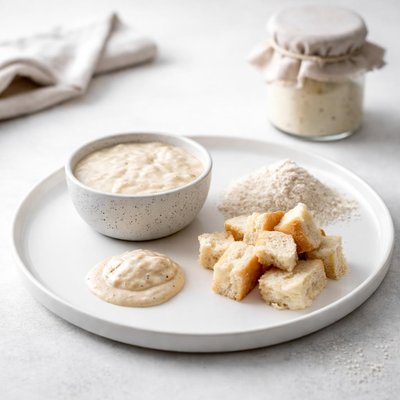
Unlock the magic of homemade sourdough with this easy-to-follow recipe for creating and maintaining a lively sourdough starter. Perfect for beginner bakers and seasoned enthusiasts alike, this method uses just two simple ingredients—unbleached all-purpose flour (or whole wheat flour to kickstart the process) and room-temperature filtered water—to cultivate natural yeast and bacteria. Over the span of 5 to 7 days, you'll witness your starter come to life with an irresistible tangy aroma, bubbly texture, and vibrant rise-and-fall activity, ideal for crafting artisanal sourdough bread. Learn how to feed your starter regularly for consistent use or store it for long-term convenience. With minimal prep time and no cooking required, this recipe is your gateway to creating bakery-worthy sourdough delights right at home.

Smart Nutrition Tracking with SnapCalorie


Recipe Information
Ingredients
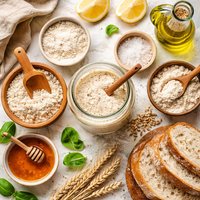
- 60 grams Unbleached all-purpose flour (or whole wheat flour for day 1)
- 60 grams Filtered or distilled water (room temperature)
Instructions
Day 1: In a clean glass or plastic container (at least 1-liter capacity), combine 60 grams of whole wheat flour and 60 grams of filtered water. Stir well with a non-metal utensil until no dry flour remains. Cover loosely with a breathable lid like a coffee filter or a piece of cheesecloth and secure with a rubber band. Let sit at room temperature (ideally 70–75°F or 21–24°C) for 24 hours.
Day 2: Check your mixture. It may show small bubbles or a slight rise, indicating fermentation. Discard half of the mixture (about 60 grams) and feed the starter with 60 grams of unbleached all-purpose flour and 60 grams of filtered water. Mix thoroughly, cover, and let sit at room temperature for another 24 hours.
Day 3: The starter should be starting to exhibit more bubbles, a mild sour aroma, and a slight rise. Again, discard half the mixture and feed with 60 grams of flour and 60 grams of water. Mix well, cover loosely, and let sit at room temperature for 24 hours.
Day 4: By today, the starter should be more active, with a noticeable rise and fall pattern, indicating yeast activity. Continue the process—discard half, feed with 60 grams each of flour and water, and let it rest. If it is very active (doubling in volume within 4–6 hours), proceed to feeding it twice daily (every 12 hours).
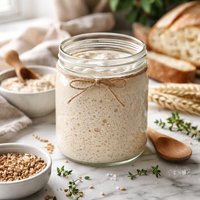
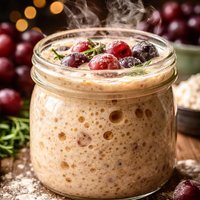
Day 5–7: With continued regular feedings, the starter should become fully active. Look for consistent doubling in size, a strong tangy aroma, and a bubbly texture. If the starter meets these criteria, it's ready to use for baking sourdough bread.
Maintenance Feeding: If kept at room temperature, feed the starter daily with 60 grams each of flour and water. If stored in the refrigerator, feed it once a week. Before using the refrigerated starter, bring it to room temperature and feed it twice to activate.
Nutrition Facts
Calories |
228 | ||
|---|---|---|---|
% Daily Value* |
|||
| Total Fat | 0.6 g | 1% | |
| Saturated Fat | 0.1 g | 1% | |
| Polyunsaturated Fat | 0.0 g | ||
| Cholesterol | 0 mg | 0% | |
| Sodium | 1 mg | 0% | |
| Total Carbohydrate | 47.8 g | 17% | |
| Dietary Fiber | 1.7 g | 6% | |
| Total Sugars | 0.1 g | ||
| Protein | 6.5 g | 13% | |
| Vitamin D | 0.0 mcg | 0% | |
| Calcium | 7 mg | 1% | |
| Iron | 2.2 mg | 12% | |
| Potassium | 54 mg | 1% | |
*The % Daily Value tells you how much a nutrient in a serving of food contributes to a daily diet. 2,000 calories a day is used for general nutrition advice.


