Ramen Chinese Salad
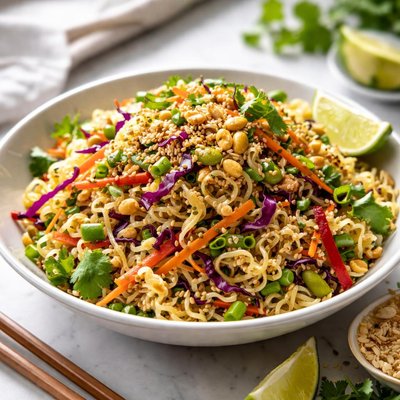
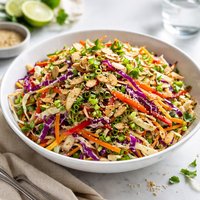
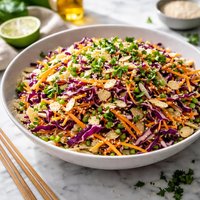
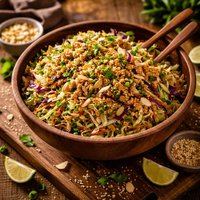
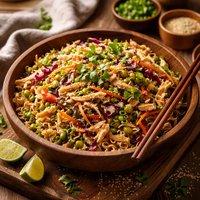
Crisp, colorful, and irresistibly crunchy, this Ramen Chinese Salad is a vibrant twist on a classic Asian-inspired dish that’s perfect for potlucks, picnics, or a light, refreshing meal. Packed with shredded green and purple cabbage, carrots, and scallions, this salad is elevated by the addition of toasted ramen noodles, slivered almonds, and sesame seeds, adding a satisfying crunch to every bite. Tossed in a tangy-sweet dressing made with soy sauce, rice vinegar, sesame oil, and a touch of honey, this quick and easy recipe comes together in just 20 minutes. Serve it fresh for optimal crunch and flavor, and let this simple yet bold recipe be your go-to for a flavorful, crowd-pleasing side dish.

Smart Nutrition Tracking with SnapCalorie

Recipe Information
Ingredients
- 4 cups shredded green cabbage
- 2 cups shredded purple cabbage
- 1 cup shredded carrots
- 4 pieces scallions (sliced)
- 1 packet ramen noodles (uncooked)
- 0.5 cup slivered almonds
- 2 tablespoons sesame seeds
- 2 tablespoons soy sauce
- 3 tablespoons rice vinegar
- 2 tablespoons sesame oil
- 1 tablespoon honey
- 2 tablespoons vegetable oil
- 1 clove garlic (minced)
- 0.5 teaspoon salt
- 0.25 teaspoon black pepper
Instructions
Break the uncooked ramen noodles into small pieces and set aside, discarding the seasoning packet.
In a large skillet over medium heat, toast the ramen pieces, slivered almonds, and sesame seeds until golden brown and fragrant, about 3–5 minutes. Stir frequently to avoid burning. Remove from heat and let cool.
In a large bowl, combine the green cabbage, purple cabbage, shredded carrots, and sliced scallions.
In a small mixing bowl, whisk together the soy sauce, rice vinegar, sesame oil, honey, vegetable oil, minced garlic, salt, and black pepper until well combined.
Pour the dressing over the cabbage mixture and toss to coat evenly.
Add the toasted ramen, almonds, and sesame seeds to the salad, and toss gently to combine.
Let the salad sit for 10–15 minutes before serving to allow the flavors to meld. Serve immediately for maximum crunch.
Nutrition Facts
Calories |
272 | ||
|---|---|---|---|
% Daily Value* |
|||
| Total Fat | 18.7 g | 24% | |
| Saturated Fat | 3.1 g | 15% | |
| Polyunsaturated Fat | 5.5 g | ||
| Cholesterol | 0 mg | 0% | |
| Sodium | 616 mg | 27% | |
| Total Carbohydrate | 23.2 g | 8% | |
| Dietary Fiber | 5.0 g | 18% | |
| Total Sugars | 7.7 g | ||
| Protein | 6.2 g | 12% | |
| Vitamin D | 0.0 mcg | 0% | |
| Calcium | 83 mg | 6% | |
| Iron | 2.1 mg | 11% | |
| Potassium | 395 mg | 8% | |
*The % Daily Value tells you how much a nutrient in a serving of food contributes to a daily diet. 2,000 calories a day is used for general nutrition advice.


