Pink Sangria
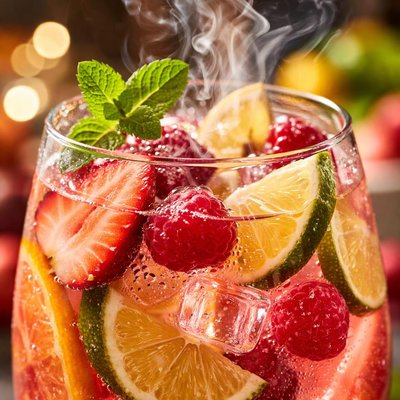
Cool off in style with this refreshing and vibrant Pink Sangria, a light and fruity twist on the classic sangria recipe that’s perfect for sunny afternoons and festive gatherings. This stunning drink combines crisp rosé wine, fizzy sparkling water, and a splash of Grand Marnier or orange liqueur, creating a flavorful base that’s beautifully complemented by a medley of fresh fruits—juicy strawberries, tart raspberries, sweet pineapple, and zesty slices of lime and lemon. With just 15 minutes of prep, this make-ahead sangria is as easy as it is elegant, offering a delightful balance of sweet and tangy flavors. Customize the sweetness with a touch of simple syrup if desired, and serve it chilled over ice for the ultimate summer cocktail. Whether you’re hosting brunch or relaxing poolside, this Pink Sangria will instantly elevate your entertaining game!

Smart Nutrition Tracking with SnapCalorie

Explore More




Recipe Information
Ingredients
- 750 ml Rosé wine
- 500 ml Sparkling water
- 60 ml Grand Marnier or orange liqueur
- 1 cup Fresh strawberries, hulled and sliced
- 1 cup Fresh raspberries
- 1 cup Fresh pineapple, diced
- 1 piece Lime, thinly sliced
- 1 piece Lemon, thinly sliced
- 30 ml Simple syrup (optional, for added sweetness)
- 2 cups Ice cubes
Instructions
In a large pitcher, combine the rosé wine, sparkling water, and Grand Marnier or orange liqueur.
Add the strawberries, raspberries, pineapple, lime slices, and lemon slices into the pitcher and gently stir to combine.
Taste the mixture and, if desired, add simple syrup for extra sweetness. Stir well to incorporate.
Add the ice cubes directly into the pitcher or into individual serving glasses just before serving to keep the sangria chilled.
Refrigerate the sangria for at least 1 hour (or up to 4 hours) to allow the flavors to meld together.
Serve the sangria in wine glasses or tumblers, ensuring that each glass has a mix of fruit for garnish.
Enjoy your refreshing Pink Sangria responsibly!
Nutrition Facts
Calories |
196 | ||
|---|---|---|---|
% Daily Value* |
|||
| Total Fat | 0.4 g | 1% | |
| Saturated Fat | 0.0 g | 0% | |
| Polyunsaturated Fat | 0.0 g | ||
| Cholesterol | 0 mg | 0% | |
| Sodium | 13 mg | 1% | |
| Total Carbohydrate | 24.1 g | 9% | |
| Dietary Fiber | 4.4 g | 16% | |
| Total Sugars | 16.7 g | ||
| Protein | 1.8 g | 4% | |
| Vitamin D | 0.0 mcg | 0% | |
| Calcium | 44 mg | 3% | |
| Iron | 0.9 mg | 5% | |
| Potassium | 257 mg | 5% | |
*The % Daily Value tells you how much a nutrient in a serving of food contributes to a daily diet. 2,000 calories a day is used for general nutrition advice.


