Marinara Sauce for Chicken Milano
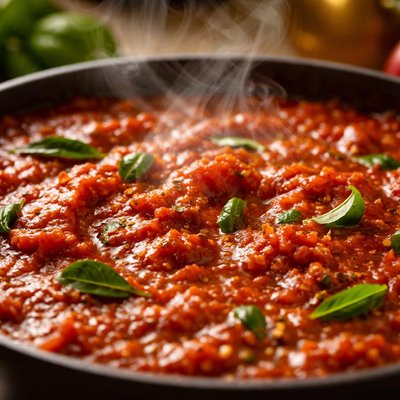
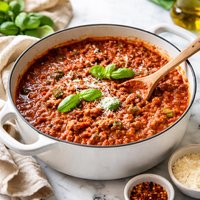
Transform your homemade Italian dishes with this rich and aromatic marinara sauce, perfected for Chicken Milano! Bursting with flavor, this recipe combines robust crushed tomatoes, savory garlic, and a blend of dried herbs like oregano and basil for an authentic taste of Italy. A hint of crushed red pepper adds subtle heat, while a touch of sugar and fresh parsley balances the acidity beautifully. Simmered to perfection in just 25 minutes, this sauce is enhanced with a splash of chicken broth or water for a silky consistency. Whether spooned over tender Chicken Milano or used as a versatile base for pasta and beyond, this marinara sauce is a quick yet gourmet addition to your kitchen repertoire.

Smart Nutrition Tracking with SnapCalorie

Recipe Information
Ingredients
- 2 tablespoons Olive oil
- 4 units Garlic cloves, minced
- 28 ounces Crushed tomatoes (canned, unsalted)
- 2 tablespoons Tomato paste
- 1 teaspoon Dried oregano
- 1 teaspoon Dried basil
- 0.25 teaspoons Crushed red pepper flakes
- 0.5 teaspoons Salt
- 0.25 teaspoons Black pepper
- 1 teaspoon Granulated sugar
- 2 tablespoons Fresh parsley, chopped
- 0.25 cups Water or chicken broth
Instructions
Heat the olive oil in a medium-sized saucepan over medium heat.
Add the minced garlic and sauté for 1-2 minutes until fragrant, being careful not to let it burn.
Stir in the crushed tomatoes and tomato paste, combining well.
Add the dried oregano, dried basil, crushed red pepper flakes, salt, black pepper, and granulated sugar. Stir thoroughly to combine all the seasonings.
Pour in the water or chicken broth to thin the sauce slightly, adjusting to your desired consistency.
Reduce the heat to low and let the sauce simmer uncovered for 20 minutes, stirring occasionally to prevent sticking.
Taste the sauce and adjust the seasoning if needed. Add additional salt, pepper, or sugar to balance the flavor.
Stir in the fresh parsley just before serving for a burst of freshness.
Serve hot over Chicken Milano or as a base for your Italian-inspired dishes.
Nutrition Facts
Calories |
121 | ||
|---|---|---|---|
% Daily Value* |
|||
| Total Fat | 7.1 g | 9% | |
| Saturated Fat | 0.9 g | 5% | |
| Polyunsaturated Fat | 0.0 g | ||
| Cholesterol | 0 mg | 0% | |
| Sodium | 263 mg | 11% | |
| Total Carbohydrate | 13.5 g | 5% | |
| Dietary Fiber | 3.1 g | 11% | |
| Total Sugars | 8.0 g | ||
| Protein | 2.4 g | 5% | |
| Vitamin D | 0.0 mcg | 0% | |
| Calcium | 45 mg | 3% | |
| Iron | 1.9 mg | 11% | |
| Potassium | 446 mg | 9% | |
*The % Daily Value tells you how much a nutrient in a serving of food contributes to a daily diet. 2,000 calories a day is used for general nutrition advice.


