Mango Lassi Indian Yogurt Drink
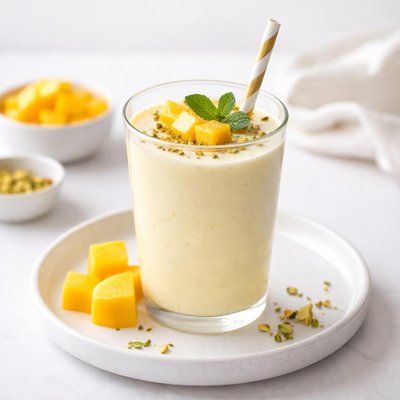
Cool down with a creamy and refreshing Mango Lassi, a classic Indian yogurt drink that's both indulgent and healthy! This vibrant beverage combines the tropical sweetness of ripe mangoes with tangy plain yogurt, a touch of sugar or honey for natural sweetness, and a hint of aromatic cardamom for a subtle spice. Blend in ice cubes for a frosty treat, and add milk for a lighter texture if desired. Finished with an optional garnish of chopped pistachios, almonds, or saffron strands, this 10-minute recipe is perfect as a summer cooler, a light dessert, or an accompaniment to spicy Indian meals. Whether you're looking for a nutritious snack or a taste of India, this mango lassi is sure to brighten your day.

Smart Nutrition Tracking with SnapCalorie


Recipe Information
Ingredients
- 2 cups ripe mango, peeled and cubed
- 1 cup plain yogurt
- 0.5 cups milk (optional for thinner consistency)
- 2 tablespoons sugar or honey (adjust to taste)
- 0.25 teaspoons cardamom powder
- 5 pieces ice cubes
- 1 tablespoons chopped pistachios or almonds (optional, for garnish)
- 1 pinch saffron strands (optional, for garnish)
Instructions
Peel and cube two ripe mangoes and measure out 2 cups of mango chunks. Ensure the mangoes are sweet and not fibrous for the best texture and flavor.
In a blender, combine the mango chunks, plain yogurt, sugar or honey, cardamom powder, and ice cubes.
If you prefer a thinner consistency, add 1/2 cup of milk to the blender. This step is optional and can be adjusted based on your preference.
Blend the mixture on high speed until smooth and creamy. Stop the blender occasionally to scrape down the sides if necessary.
Taste the lassi and adjust the sweetness by adding more sugar or honey, if desired. Blend again briefly to incorporate any adjustments.
Pour the mango lassi into two glasses and garnish with chopped pistachios or almonds and a pinch of saffron strands, if using.
Serve immediately and enjoy this refreshing Indian yogurt drink!
Nutrition Facts
Calories |
280 | ||
|---|---|---|---|
% Daily Value* |
|||
| Total Fat | 6.9 g | 9% | |
| Saturated Fat | 3.3 g | 16% | |
| Polyunsaturated Fat | 0.0 g | ||
| Cholesterol | 17 mg | 6% | |
| Sodium | 115 mg | 5% | |
| Total Carbohydrate | 47.5 g | 17% | |
| Dietary Fiber | 2.9 g | 10% | |
| Total Sugars | 44.6 g | ||
| Protein | 10.6 g | 21% | |
| Vitamin D | 1.9 mcg | 10% | |
| Calcium | 340 mg | 26% | |
| Iron | 0.7 mg | 4% | |
| Potassium | 717 mg | 15% | |
*The % Daily Value tells you how much a nutrient in a serving of food contributes to a daily diet. 2,000 calories a day is used for general nutrition advice.


