Low Sodium Classic Panini Sandwich
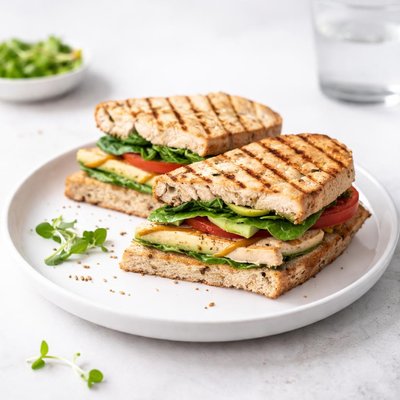
Savor the timeless flavors of a **Low Sodium Classic Panini Sandwich**, a heart-healthy twist on a café favorite! This recipe layers tender slices of roasted turkey, melty low-sodium Swiss cheese, and fresh veggies like tomatoes, spinach, and red onion between whole grain bread for a nutritious yet satisfying meal. A simple Dijon mustard spread adds a tangy kick, while garlic-infused olive oil elevates the flavor profile—proving low sodium doesn’t mean low taste. Perfectly pressed for crispy, golden-brown perfection, this quick 20-minute panini is ideal for lunch or a light dinner. Enjoy it warm and gooey, guilt-free! **Keywords**: low sodium panini, healthy sandwich recipe, turkey panini, quick lunch idea, heart-healthy meal.

Smart Nutrition Tracking with SnapCalorie





Recipe Information
Ingredients
- 4 slices Slices of whole grain bread
- 8 ounces Cooked roasted turkey breast, sliced thin
- 4 slices Low sodium Swiss cheese
- 1 Small tomato, sliced
- 1 cups Handful of fresh spinach leaves
- 0.25 cup Red onion, thinly sliced
- 2 tablespoons Unsalted butter
- 1 tablespoon Olive oil
- 0.5 teaspoon Garlic powder
- 0.5 teaspoon Black pepper
- 0.5 teaspoon Dried oregano
- 2 teaspoons Dijon mustard
Instructions
In a small bowl, combine olive oil, garlic powder, black pepper, and oregano to make a simple seasoning mix.
Preheat your panini press or a grill pan over medium heat.
Butter one side of each slice of whole grain bread with unsalted butter.
On the unbuttered side of two slices, spread a teaspoon of Dijon mustard each.
Layer the sliced turkey evenly over the mustard.
Add slices of tomato, spinach leaves, and red onion on top of the turkey.
Top with a slice of low-sodium Swiss cheese.
Cover with the remaining slices of bread, buttered side facing out.
Place the sandwiches in the panini press or grill pan.
Cook for about 4-5 minutes on each side, or until the bread is golden brown and the cheese has melted.
Remove the sandwiches from the panini press or grill pan.
Cut each sandwich in half, and serve warm.
Nutrition Facts
Calories |
669 | ||
|---|---|---|---|
% Daily Value* |
|||
| Total Fat | 37.0 g | 47% | |
| Saturated Fat | 17.2 g | 86% | |
| Polyunsaturated Fat | 0.0 g | ||
| Cholesterol | 153 mg | 51% | |
| Sodium | 490 mg | 21% | |
| Total Carbohydrate | 30.7 g | 11% | |
| Dietary Fiber | 5.3 g | 19% | |
| Total Sugars | 5.3 g | ||
| Protein | 54.2 g | 108% | |
| Vitamin D | 0.4 mcg | 2% | |
| Calcium | 442 mg | 34% | |
| Iron | 4.4 mg | 24% | |
| Potassium | 761 mg | 16% | |
*The % Daily Value tells you how much a nutrient in a serving of food contributes to a daily diet. 2,000 calories a day is used for general nutrition advice.


