Low Fat Tartar Sauce
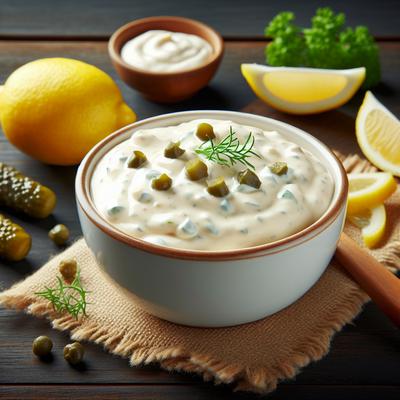
Creamy, tangy, and guilt-free, this Low Fat Tartar Sauce recipe is a healthier twist on the classic condiment, perfect for elevating your favorite seafood dishes. Made with a luscious blend of low-fat mayonnaise and non-fat Greek yogurt, it’s irresistibly balanced with the zesty flavors of dill pickles, capers, fresh dill, and a splash of freshly squeezed lemon juice. Dijon mustard and a hint of garlic powder add depth, while its light and refreshing profile makes it a must-have for anyone watching their calorie intake. Ready in just 10 minutes with zero cooking required, this quick and easy recipe is perfect for meal prep or last-minute gatherings. Serve it chilled as a flavorful dipping sauce or as the ultimate topping for crispy fish or crab cakes. A delicious low-fat alternative without compromising on taste!

Get More Healthy Recipes with SnapCalorie



Recipe Information
Ingredients
- 0.5 cup Low-fat mayonnaise
- 0.25 cup Non-fat plain Greek yogurt
- 2 tablespoons Dill pickle, finely chopped
- 1 tablespoon Capers, finely chopped
- 1 tablespoon Fresh dill, chopped
- 1 tablespoon Lemon juice, freshly squeezed
- 1 teaspoon Dijon mustard
- 0.25 teaspoon Garlic powder
- 0.25 teaspoon Salt
- 0.25 teaspoon Black pepper, freshly ground
Instructions
In a medium mixing bowl, combine the low-fat mayonnaise and non-fat Greek yogurt until smooth and well blended.
Add the finely chopped dill pickle, capers, and fresh dill to the bowl and mix thoroughly.
Stir in the lemon juice, Dijon mustard, garlic powder, salt, and black pepper. Mix until all ingredients are fully incorporated.
Taste the tartar sauce and adjust the seasoning if necessary, adding more lemon juice, dill, or salt to suit your preference.
Cover the bowl with plastic wrap or transfer the sauce to an airtight container and refrigerate for at least 30 minutes to allow the flavors to blend.
Serve chilled as a dipping sauce or accompaniment to your favorite seafood dishes. Enjoy!
Nutrition Facts
Calories |
356 | ||
|---|---|---|---|
% Daily Value* |
|||
| Total Fat | 29.0 g | 37% | |
| Saturated Fat | 4.3 g | 22% | |
| Polyunsaturated Fat | 16.2 g | ||
| Cholesterol | 22 mg | 7% | |
| Sodium | 2119 mg | 92% | |
| Total Carbohydrate | 17.6 g | 6% | |
| Dietary Fiber | 1.0 g | 4% | |
| Total Sugars | 7.2 g | ||
| Protein | 7.2 g | 14% | |
| Vitamin D | 0.0 mcg | 0% | |
| Calcium | 95 mg | 7% | |
| Iron | 0.7 mg | 4% | |
| Potassium | 120 mg | 3% | |
*The % Daily Value tells you how much a nutrient in a serving of food contributes to a daily diet. 2,000 calories a day is used for general nutrition advice.


