Leftovers Spaghetti Sauce
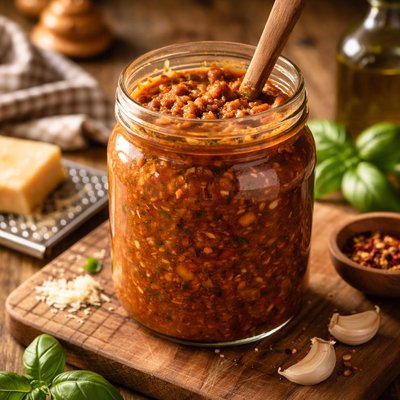
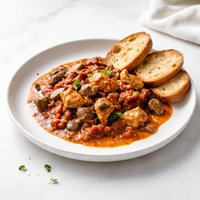
Transform your kitchen scraps into culinary gold with this hearty Leftovers Spaghetti Sauce! This budget-friendly recipe breathes new life into leftover meats and vegetables, combining them with pantry staples like canned crushed tomatoes and Italian seasoning for a rich, savory sauce bursting with flavor. Ready in just 40 minutes, it’s a sustainable, no-waste solution that’s perfect for weeknight dinners. Customize it with a pinch of red pepper flakes for heat or a sprinkle of parmesan and fresh basil for a gourmet touch. Serve over spaghetti or your favorite pasta for a comforting, homemade meal that tastes anything but leftover.

Smart Nutrition Tracking with SnapCalorie



Recipe Information
Ingredients
- 2 tablespoons olive oil
- 1 medium onion, finely chopped
- 3 cloves garlic, minced
- 1 cup leftover meats (e.g., ground beef, sausage, cooked chicken), chopped
- 1 cup leftover vegetables (e.g., bell peppers, zucchini, mushrooms), diced
- 28 ounces canned crushed tomatoes
- 2 tablespoons tomato paste
- 2 teaspoons Italian seasoning
- 0.5 teaspoons red pepper flakes (optional)
- 1 teaspoons salt
- 0.5 teaspoons ground black pepper
- 1 teaspoons sugar (optional)
- to taste parmesan cheese (optional, for serving)
- to taste fresh basil (optional, for garnish)
Instructions
Heat the olive oil in a large saucepan over medium heat.
Add the chopped onion and sauté for 3-5 minutes, until softened and translucent.
Stir in the minced garlic and cook for 1 minute, until fragrant.
Add the leftover meats and sauté for 2-3 minutes to warm through.
Stir in the leftover vegetables and cook for another 2-3 minutes, allowing them to soften slightly.
Pour in the crushed tomatoes and add the tomato paste, Italian seasoning, red pepper flakes (if using), salt, and black pepper.
If the sauce tastes too acidic, stir in the sugar to balance the flavors.
Lower the heat to a simmer and cook the sauce for 20-25 minutes, stirring occasionally, to allow the flavors to meld together.
Taste and adjust seasoning as needed.
Serve the sauce over cooked spaghetti or your favorite pasta.
Top with parmesan cheese and garnish with fresh basil, if desired.
Nutrition Facts
Calories |
302 | ||
|---|---|---|---|
% Daily Value* |
|||
| Total Fat | 18.3 g | 23% | |
| Saturated Fat | 5.5 g | 28% | |
| Polyunsaturated Fat | 0.0 g | ||
| Cholesterol | 43 mg | 14% | |
| Sodium | 1116 mg | 49% | |
| Total Carbohydrate | 19.6 g | 7% | |
| Dietary Fiber | 4.5 g | 16% | |
| Total Sugars | 12.4 g | ||
| Protein | 15.5 g | 31% | |
| Vitamin D | 0.2 mcg | 1% | |
| Calcium | 87 mg | 7% | |
| Iron | 3.4 mg | 19% | |
| Potassium | 790 mg | 17% | |
*The % Daily Value tells you how much a nutrient in a serving of food contributes to a daily diet. 2,000 calories a day is used for general nutrition advice.


