Koolickles
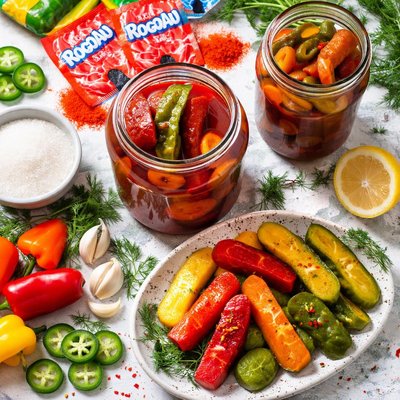
Transform your pickle game with this southern classic, Koolickles! Bursting with sweet, tangy, and fruity flavors, these vibrant pickles are crafted by combining classic dill pickles with a flavorful blend of Kool-Aid, sugar, and water. The result? A colorful, candy-like creation that’s as eye-catching as it is delicious. With just 10 minutes of prep time and a few days of marinating in the fridge, Koolickles offer a fun, easy-to-make snack perfect for picnics, parties, or satisfying your adventurous taste buds. Whether you’re looking to surprise guests or add a quirky twist to your pickle repertoire, this sweet-and-sour treat is sure to impress!

Smart Nutrition Tracking with SnapCalorie

Recipe Information
Ingredients
- 32 oz jar Dill pickles
- 1 packet Kool-Aid drink mix
- 1 cup Granulated sugar
- 2 cups Water
Instructions
Open the jar of dill pickles and carefully pour the brine into a medium-sized mixing bowl. Set the pickles aside.
Add the Kool-Aid drink mix and granulated sugar to the bowl of brine. Stir thoroughly until the sugar and drink mix are completely dissolved to create a colorful and sweet brine.
Transfer the pickles back into the pickle jar or a large resealable glass container, ensuring they fit snugly.
Pour the Kool-Aid brine mixture over the pickles, making sure all the pickles are submerged. If needed, gently shake or tap the container to remove air bubbles.
Seal the jar or container tightly and refrigerate for at least 5-7 days, allowing the pickles to absorb the flavors and change color. Shake the jar gently every day to ensure even flavor distribution.
Once marinated, the Koolickles are ready to enjoy! Serve them cold as a colorful snack or unique party treat.
Nutrition Facts
Calories |
106 | ||
|---|---|---|---|
% Daily Value* |
|||
| Total Fat | 0.0 g | 0% | |
| Saturated Fat | 0.0 g | 0% | |
| Polyunsaturated Fat | 0.0 g | ||
| Cholesterol | 0 mg | 0% | |
| Sodium | 355 mg | 15% | |
| Total Carbohydrate | 25.8 g | 9% | |
| Dietary Fiber | 0.0 g | 0% | |
| Total Sugars | 25.6 g | ||
| Protein | 0.0 g | 0% | |
| Vitamin D | 0.0 mcg | 0% | |
| Calcium | 5 mg | 0% | |
| Iron | 0.0 mg | 0% | |
| Potassium | 0 mg | 0% | |
*The % Daily Value tells you how much a nutrient in a serving of food contributes to a daily diet. 2,000 calories a day is used for general nutrition advice.


