Kansas Cucumber Salad
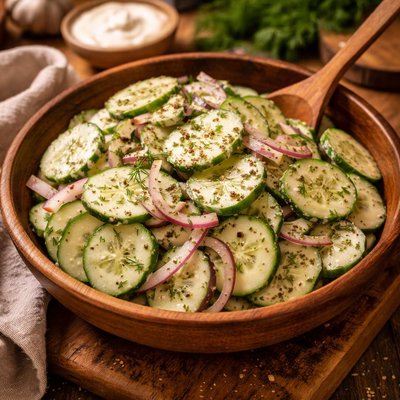
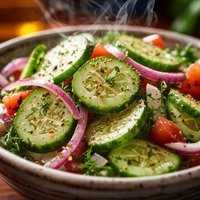
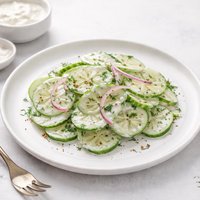
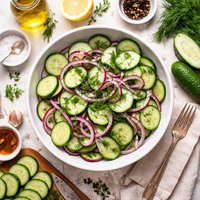
Crisp, refreshing, and bursting with tangy flavor, Kansas Cucumber Salad is the perfect side dish for any occasion. This quick and simple recipe combines thinly sliced cucumbers and red onions with a zesty dressing made from white vinegar, sugar, and a hint of black pepper—balanced perfectly with fresh dill for an herbaceous finish. Ready in just 15 minutes of prep time, this no-cook salad is ideal for summer picnics, barbecues, or light meals. Refrigerated to allow the vibrant flavors to meld, this chilled cucumber salad is as satisfying as it is effortless. Whether you're looking for a healthy, low-carb side or a refreshing alternative to heavy salads, Kansas Cucumber Salad is a must-try dish that brings crunch and zest to your table.

Smart Nutrition Tracking with SnapCalorie

Recipe Information
Ingredients
- 4 medium cucumbers
- 0.5 large red onion
- 0.25 cup white vinegar
- 2 tablespoons granulated sugar
- 1 teaspoon salt
- 0.5 teaspoon black pepper
- 2 tablespoons fresh dill
- 0.25 cup cold water
Instructions
Wash the cucumbers thoroughly and pat them dry.
Slice the cucumbers into thin rounds using a sharp knife or a mandoline slicer.
Peel the red onion and slice it into thin rings.
In a medium-sized mixing bowl, combine the cucumber slices and onion rings.
In a separate small mixing bowl, whisk together the white vinegar, granulated sugar, salt, and black pepper until the sugar is dissolved.
Add the cold water to the vinegar mixture and stir to combine.
Pour the dressing over the cucumber and onion mixture, ensuring all pieces are evenly coated.
Sprinkle the fresh dill over the top and gently toss to combine.
Cover the bowl and refrigerate the salad for at least 30 minutes to allow the flavors to meld. For best results, refrigerate for 1-2 hours.
Stir the salad once more before serving and enjoy it chilled.
Nutrition Facts
Calories |
79 | ||
|---|---|---|---|
% Daily Value* |
|||
| Total Fat | 0.4 g | 0% | |
| Saturated Fat | 0.0 g | 0% | |
| Polyunsaturated Fat | 0.0 g | ||
| Cholesterol | 0 mg | 0% | |
| Sodium | 493 mg | 21% | |
| Total Carbohydrate | 19.3 g | 7% | |
| Dietary Fiber | 1.8 g | 6% | |
| Total Sugars | 12.2 g | ||
| Protein | 2.5 g | 5% | |
| Vitamin D | 0.0 mcg | 0% | |
| Calcium | 57 mg | 4% | |
| Iron | 1.1 mg | 6% | |
| Potassium | 483 mg | 10% | |
*The % Daily Value tells you how much a nutrient in a serving of food contributes to a daily diet. 2,000 calories a day is used for general nutrition advice.


