Japanese Barbecue Sauce
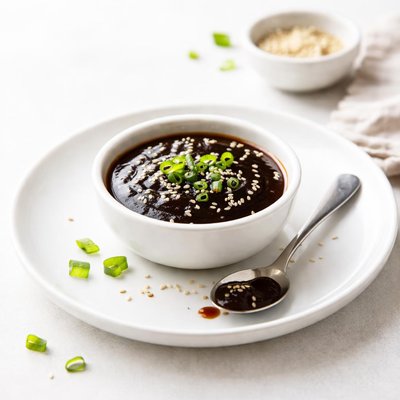
Japanese Barbecue Sauce is a bold and flavorful condiment that combines the umami richness of soy sauce, mirin, and sake with the tangy sweetness of ketchup and a hint of warming ginger and garlic. Perfect as a marinade or a finishing glaze, this versatile sauce adds a delectable Japanese twist to grilled meats, vegetables, and even seafood. Enhanced with sesame oil and optional red pepper flakes for a subtle kick, its balance of sweet, salty, and savory notes will elevate your favorite barbecue dishes. Ready in just 25 minutes and easily stored for up to two weeks, this homemade sauce is a must-try for anyone looking to bring authentic Japanese flavors to their kitchen.

Smart Nutrition Tracking with SnapCalorie





Recipe Information
Ingredients
- 0.5 cup Soy sauce
- 0.25 cup Mirin (Japanese sweet rice wine)
- 0.25 cup Sake
- 0.25 cup Sugar
- 2 cloves Garlic, minced
- 2 teaspoons Ginger, grated
- 2 tablespoons Ketchup
- 1 tablespoon Oyster sauce
- 1 teaspoon Sesame oil
- 0.5 teaspoon Optional: Red pepper flakes
Instructions
In a medium-sized saucepan, combine the soy sauce, mirin, sake, and sugar over medium heat.
Stir the mixture continuously until the sugar is completely dissolved.
Add the minced garlic and grated ginger to the saucepan.
Increase the heat slightly and bring the mixture to a gentle simmer, allowing it to cook for about 5 minutes. Stir occasionally.
Lower the heat and mix in the ketchup and oyster sauce, stirring well to combine.
Simmer the sauce gently for another 5 minutes until it slightly thickens.
Remove the saucepan from the heat and stir in the sesame oil and optional red pepper flakes for a hint of spice.
Allow the sauce to cool to room temperature before using as a marinade or serving with your favorite grilled dishes.
Store any leftover Japanese barbecue sauce in an airtight container in the refrigerator for up to 2 weeks.
Nutrition Facts
Calories |
82 | ||
|---|---|---|---|
% Daily Value* |
|||
| Total Fat | 1.8 g | 2% | |
| Saturated Fat | 0.3 g | 1% | |
| Polyunsaturated Fat | 0.7 g | ||
| Cholesterol | 0 mg | 0% | |
| Sodium | 647 mg | 28% | |
| Total Carbohydrate | 12.3 g | 4% | |
| Dietary Fiber | 0.2 g | 1% | |
| Total Sugars | 10.4 g | ||
| Protein | 1.6 g | 3% | |
| Vitamin D | 0.0 mcg | 0% | |
| Calcium | 6 mg | 0% | |
| Iron | 0.3 mg | 2% | |
| Potassium | 65 mg | 1% | |
*The % Daily Value tells you how much a nutrient in a serving of food contributes to a daily diet. 2,000 calories a day is used for general nutrition advice.


