Injera
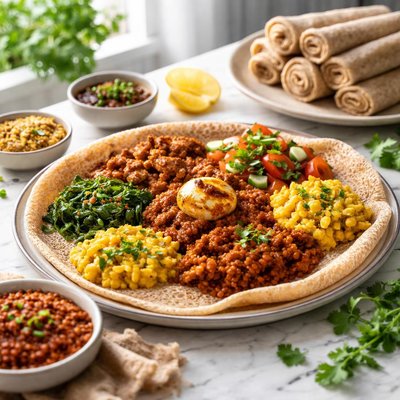
Discover the art of making traditional **Injera**, a soft and spongy Ethiopian flatbread with a slightly tangy flavor that serves as both a delicious dish and an edible utensil. This authentic recipe stars **teff flour**, a gluten-free supergrain celebrated for its nutritional benefits and earthy taste. Perfect for pairing with hearty stews and vibrant salads, injera is made through a unique fermentation process that gives it its signature sourness and the delicate network of bubbles on its surface. Whether you stick to 100% teff flour or blend with all-purpose flour for added ease and workability, this recipe guides you step-by-step to create a versatile and wholesome staple. Impress your family or guests by crafting thin, springy injera sheets that perfectly complement your favorite **Ethiopian and Eritrean dishes**.

Smart Nutrition Tracking with SnapCalorie

Explore More

Recipe Information
Ingredients
- 2 cups Teff flour
- 0.5 cups All-purpose flour (optional)
- 3 cups Water
- 0.25 teaspoons Instant yeast
- 0.5 teaspoons Salt
Instructions
In a large mixing bowl, combine the teff flour and optional all-purpose flour. Use only teff for a traditional recipe, or add all-purpose flour to adjust the texture and improve workability.
Dissolve the instant yeast in 1 cup of warm water and let it sit for 5 minutes to activate.
Gradually pour the yeast mixture and the remaining 2 cups of water into the flour while stirring to form a smooth, lump-free batter.
Cover the bowl with a clean kitchen towel or plastic wrap and let the batter ferment at room temperature for 1–3 days. Stir the batter gently once daily. The batter should bubble and develop a slightly sour aroma, indicating fermentation.
Once fermentation is complete, stir in the salt and let the batter rest for 10 minutes to allow it to settle.
Heat a non-stick skillet or traditional injera pan over medium heat. Lightly grease the surface with a small amount of oil or a paper towel if necessary.
Pour a ladleful (approximately 1/3 cup) of batter onto the skillet, tilting the pan in a circular motion to spread the batter evenly. The injera should be about 1/8-inch thick.
Cook the injera without flipping it. Bubbles should form on the surface, and the edges will begin to lift slightly when fully cooked, approximately 2–3 minutes.
Carefully remove the injera from the skillet and place it on a plate to cool. Cover with a clean towel to keep it soft and pliable. Repeat with the remaining batter.
Serve the injera warm or at room temperature as a base for stews and salads, or alongside your favorite Ethiopian and Eritrean dishes.
Nutrition Facts
Calories |
185 | ||
|---|---|---|---|
% Daily Value* |
|||
| Total Fat | 1.0 g | 1% | |
| Saturated Fat | 0.2 g | 1% | |
| Polyunsaturated Fat | 0.0 g | ||
| Cholesterol | 0 mg | 0% | |
| Sodium | 172 mg | 7% | |
| Total Carbohydrate | 37.3 g | 14% | |
| Dietary Fiber | 3.4 g | 12% | |
| Total Sugars | 0.7 g | ||
| Protein | 6.0 g | 12% | |
| Vitamin D | 0.0 mcg | 0% | |
| Calcium | 86 mg | 7% | |
| Iron | 3.6 mg | 20% | |
| Potassium | 183 mg | 4% | |
*The % Daily Value tells you how much a nutrient in a serving of food contributes to a daily diet. 2,000 calories a day is used for general nutrition advice.


