Injera African Ethiopian Flat Bread
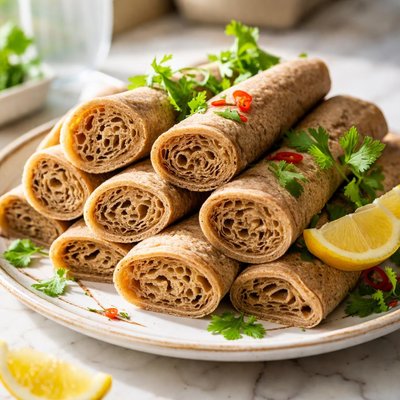
Discover the authentic flavors of East Africa with this traditional Injera Ethiopian Flatbread recipe! Made with nutrient-rich teff flour, this naturally gluten-free flatbread features a unique spongy texture and a delightful tangy taste thanks to its slow fermentation process. Perfect for soaking up the vibrant sauces and stews of Ethiopian cuisine, injera is both a staple and a star in any meal. With a light, crepe-like consistency and signature bubbly surface, this recipe offers a hands-on way to create a truly cultural dining experience. Whether served alongside Doro Wat, lentil stew, or sautéed vegetables, injera brings bold, wholesome, and unmistakably Ethiopian flavors straight to your table.

Smart Nutrition Tracking with SnapCalorie

Recipe Information
Ingredients
- 2 cups Teff flour
- 1 cup All-purpose flour
- 3 cups Warm water
- 1 teaspoon Instant yeast
- 1 teaspoon Salt
Instructions
Step 1: In a large mixing bowl, combine the teff flour, all-purpose flour, and instant yeast.
Step 2: Gradually add the warm water to the flour mixture while stirring, ensuring that no lumps form. Mix until a smooth batter is achieved.
Step 3: Cover the bowl with a clean kitchen towel or plastic wrap and let it sit at room temperature for 24-48 hours to allow fermentation. The batter should develop a slightly tangy aroma and small bubbles on the surface.
Step 4: Once the batter has fermented, gently stir in the salt. The consistency should be similar to thin pancake batter; if it is too thick, add a small amount of water and mix well.
Step 5: Heat a non-stick skillet or injera pan over medium heat. Do not add oil to the pan.
Step 6: Pour a ladleful of the batter onto the hot skillet. Swirl the pan to spread the batter evenly into a thin layer, similar to making a crepe.
Step 7: Cook the injera until bubbles form on the surface and the edges lift slightly, about 1-2 minutes. Cover the skillet with a lid and continue cooking for another 1-2 minutes until the injera is fully cooked. It should not be flipped.
Step 8: Carefully remove the injera and transfer it to a plate. Keep covered with a clean towel to retain moisture.
Step 9: Repeat with the remaining batter, stacking the injera on top of each other and keeping them covered.
Step 10: Serve warm or at room temperature alongside your favorite Ethiopian dishes like Doro Wat, lentil stew, or vegetables.
Nutrition Facts
Calories |
224 | ||
|---|---|---|---|
% Daily Value* |
|||
| Total Fat | 1.1 g | 1% | |
| Saturated Fat | 0.2 g | 1% | |
| Polyunsaturated Fat | 0.0 g | ||
| Cholesterol | 0 mg | 0% | |
| Sodium | 334 mg | 15% | |
| Total Carbohydrate | 45.2 g | 16% | |
| Dietary Fiber | 3.8 g | 14% | |
| Total Sugars | 0.7 g | ||
| Protein | 7.3 g | 15% | |
| Vitamin D | 0.0 mcg | 0% | |
| Calcium | 78 mg | 6% | |
| Iron | 3.8 mg | 21% | |
| Potassium | 193 mg | 4% | |
*The % Daily Value tells you how much a nutrient in a serving of food contributes to a daily diet. 2,000 calories a day is used for general nutrition advice.


