High Protein Homemade Yogurt
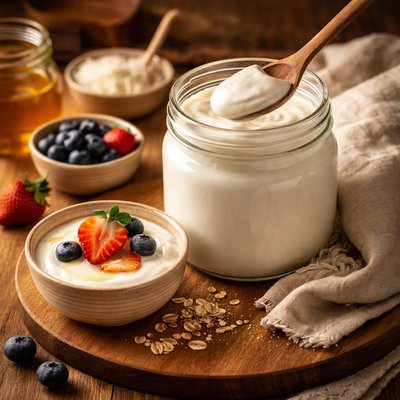
Elevate your yogurt game with this *High Protein Homemade Yogurt* recipe, a creamy and nutritious twist on the classic favorite. Perfect for fitness enthusiasts and healthy eaters alike, this DIY recipe combines whole milk, non-fat dry milk powder, and unflavored protein powder to create a yogurt that's packed with protein in every spoonful. By incorporating live active cultures from plain Greek yogurt, you get all the gut-friendly probiotics with a rich, velvety texture achieved through careful simmering and incubation. With minimal prep time and an overnight fermentation process, you'll have wholesome, customizable yogurt ready to enjoy for breakfast, post-workout snacks, or as a versatile base for smoothies or desserts. Say goodbye to store-bought yogurt and hello to a high-protein powerhouse made right at home!

Smart Nutrition Tracking with SnapCalorie


Recipe Information
Ingredients
- 1 liter whole milk
- 50 grams non-fat dry milk powder
- 60 grams unflavored protein powder (whey or plant-based)
- 3 tablespoons plain Greek yogurt with live active cultures
Instructions
1. In a large saucepan, pour 1 liter of whole milk and add 50 grams of non-fat dry milk powder. Stir well to combine thoroughly.
2. Place the saucepan over medium heat and slowly bring the milk to a gentle simmer, stirring frequently. Aim for a temperature of about 85°C (185°F). This step helps to denature the proteins in the milk which results in thicker yogurt.
3. Remove the saucepan from heat and allow the milk to cool to about 43°C (110°F). This temperature is optimal for yogurt cultures to thrive.
4. Once cooled, add 3 tablespoons of plain Greek yogurt into the milk. Make sure the yogurt has active cultures; this acts as the starter. Whisk gently but thoroughly to combine.
5. Stir in 60 grams of unflavored protein powder carefully to avoid lumps, until fully dissolved and incorporated into the milk mixture.
6. Preheat your oven to 50°C (120°F) and then turn it off. Place the pot with the yogurt mixture inside the oven to incubate. Alternatively, transfer the mixture into a clean glass or ceramic container, and wrap it in towels to help maintain warmth.
7. Let the mixture sit undisturbed in the warm environment for 8 to 12 hours or overnight, until it has thickened to your desired consistency.
8. Once the yogurt has set, refrigerate it for a few hours to chill and further thicken. This also halts the fermentation process.
9. Stir the yogurt well before serving to get a smooth consistency. It can be stored in the refrigerator for up to a week.
Nutrition Facts
Calories |
135 | ||
|---|---|---|---|
% Daily Value* |
|||
| Total Fat | 4.7 g | 6% | |
| Saturated Fat | 3.0 g | 15% | |
| Polyunsaturated Fat | 0.0 g | ||
| Cholesterol | 18 mg | 6% | |
| Sodium | 104 mg | 5% | |
| Total Carbohydrate | 10.4 g | 4% | |
| Dietary Fiber | 0.3 g | 1% | |
| Total Sugars | 9.9 g | ||
| Protein | 13.0 g | 26% | |
| Vitamin D | 1.6 mcg | 8% | |
| Calcium | 260 mg | 20% | |
| Iron | 0.6 mg | 3% | |
| Potassium | 329 mg | 7% | |
*The % Daily Value tells you how much a nutrient in a serving of food contributes to a daily diet. 2,000 calories a day is used for general nutrition advice.


