Greek Style Cheese
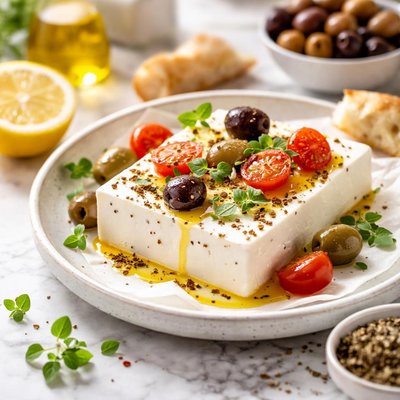
Experience the art of cheese-making with this authentic Greek Style Cheese recipe—perfect for adding a Mediterranean twist to your culinary creations! Made with wholesome ingredients like whole milk, tangy Greek yogurt, and a touch of lemon juice, this homemade cheese strikes a delicate balance between creamy texture and robust flavor. The use of vegetable rennet helps achieve the perfect curds, while a slow draining process ensures a firm yet silky finish. Whether crumbled over a fresh salad, tucked into sandwiches, or enjoyed as a savory snack, this versatile cheese brings the rich traditions of Greek cuisine to your kitchen. With minimal equipment and simple steps, this recipe provides a rewarding introduction to homemade cheese-making. Perfect your cheese-making skills today and savor the delightful flavors of the Mediterranean!

Smart Nutrition Tracking with SnapCalorie


Recipe Information
Ingredients
- 4 liters Whole milk
- 2 teaspoons Kosher salt
- 4 tablespoons Lemon juice
- 2 tablespoons Greek yogurt (unsweetened)
- 0.5 teaspoons Vegetable rennet (liquid)
- 2 tablespoons Cool, filtered water
Instructions
Pour the whole milk into a medium-sized pot and place it over low to medium heat. Stir occasionally to prevent scorching and use a thermometer to heat the milk to 32°C (90°F).
Stir in the kosher salt, ensuring it dissolves completely.
In a small bowl, mix the rennet with the cool, filtered water, and set aside.
Once the milk reaches 32°C, remove it from the heat and stir in the lemon juice and Greek yogurt until evenly combined.
Add the rennet mixture to the pot and stir gently for about 30 seconds to distribute. Cover the pot and let it sit undisturbed at room temperature for 1 hour.
After an hour, the milk should have coagulated and formed curds. You can check by gently inserting a knife or spoon—it should separate cleanly. If not, let it rest for another 20 minutes.
Using a long knife or spatula, cut the curd into 1-inch cubes. Let the curds rest for another 10 minutes to release more whey.
Heat the pot again gently to 40°C (105°F) over low heat, stirring the curds occasionally to prevent them from sticking together. Maintain this temperature for 20 minutes as the curds shrink slightly.
Line a colander with cheesecloth and carefully pour in the curds and whey mixture. Allow the whey to drain for 5–10 minutes.
Gather the corners of the cheesecloth and tie them to form a pouch. Hang the pouch over a bowl or sink to allow the cheese to drain for at least 5 hours, or until it reaches your preferred consistency.
Unwrap the cheese and transfer it to a bowl. Knead the cheese gently to break it up slightly, then transfer it to a storage container.
For a saltier, stronger flavor, optionally sprinkle additional salt on the cheese to taste, or store the cheese in a brine solution (1 tablespoon salt dissolved in 1 cup water).
Refrigerate for at least 2 hours before serving. Enjoy your Greek-style cheese on salads, sandwiches, or as a flavorful snack!
Nutrition Facts
Calories |
319 | ||
|---|---|---|---|
% Daily Value* |
|||
| Total Fat | 17.0 g | 22% | |
| Saturated Fat | 10.6 g | 53% | |
| Polyunsaturated Fat | 0.0 g | ||
| Cholesterol | 51 mg | 17% | |
| Sodium | 371 mg | 16% | |
| Total Carbohydrate | 26.0 g | 9% | |
| Dietary Fiber | 0.0 g | 0% | |
| Total Sugars | 25.5 g | ||
| Protein | 17.0 g | 34% | |
| Vitamin D | 6.5 mcg | 33% | |
| Calcium | 587 mg | 45% | |
| Iron | 0.0 mg | 0% | |
| Potassium | 692 mg | 15% | |
*The % Daily Value tells you how much a nutrient in a serving of food contributes to a daily diet. 2,000 calories a day is used for general nutrition advice.


