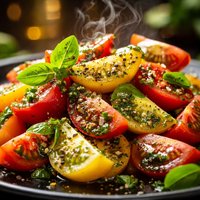
Fresh Tomato and Cheese Salad
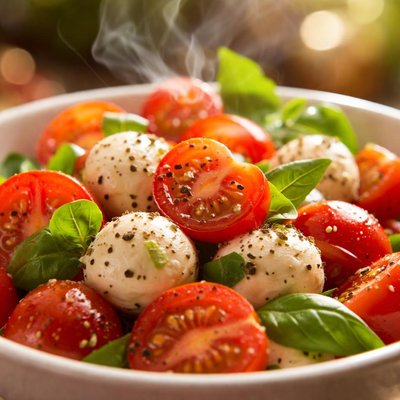
Celebrate the vibrant flavors of summer with this Fresh Tomato and Cheese Salad—a simple yet elegant dish that combines juicy ripe tomatoes, creamy fresh mozzarella, and aromatic basil leaves. Perfectly balanced with a drizzle of extra virgin olive oil, tangy balsamic vinegar, and a sprinkle of salt and black pepper, this salad is a quick, no-cook recipe that showcases the beauty of fresh, seasonal ingredients. Ready in just 15 minutes, it’s ideal as a light appetizer, side dish, or a stunning centerpiece for any meal. Whether you’re hosting a get-together or savoring a quiet lunch, this effortless salad is a delicious way to enjoy farm-to-table dining at its finest!

Smart Nutrition Tracking with SnapCalorie

Recipe Information
Ingredients
- 4 medium Ripe tomatoes
- 8 ounces Fresh mozzarella cheese
- 12 leaves Fresh basil leaves
- 2 tablespoons Extra virgin olive oil
- 1 tablespoon Balsamic vinegar
- 0.5 teaspoon Salt
- 0.25 teaspoon Black pepper
Instructions
Wash and dry the tomatoes. Cut them into slices approximately 1/4 inch thick.
Drain the fresh mozzarella cheese and slice it into similar thickness as the tomatoes.
Rinse the basil leaves under cold water and pat dry with a paper towel.
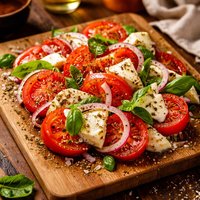
On a large serving platter, alternate slices of tomato and mozzarella, slightly overlapping them to create a circular pattern or rows, depending on the platter's shape.
Distribute the fresh basil leaves generously over the layered tomatoes and cheese.
In a small bowl, combine the extra virgin olive oil and balsamic vinegar. Whisk until well combined to create a simple vinaigrette.
Drizzle the olive oil and balsamic mixture evenly over the salad.
Sprinkle salt and ground black pepper evenly across the top of the salad to taste.
Serve the salad immediately at room temperature for maximum flavor.
Nutrition Facts
Calories |
252 | ||
|---|---|---|---|
% Daily Value* |
|||
| Total Fat | 18.8 g | 24% | |
| Saturated Fat | 9.2 g | 46% | |
| Polyunsaturated Fat | 0.0 g | ||
| Cholesterol | 30 mg | 10% | |
| Sodium | 421 mg | 18% | |
| Total Carbohydrate | 6.8 g | 2% | |
| Dietary Fiber | 1.4 g | 5% | |
| Total Sugars | 3.2 g | ||
| Protein | 13.2 g | 26% | |
| Vitamin D | 0.0 mcg | 0% | |
| Calcium | 304 mg | 23% | |
| Iron | 0.7 mg | 4% | |
| Potassium | 290 mg | 6% | |
*The % Daily Value tells you how much a nutrient in a serving of food contributes to a daily diet. 2,000 calories a day is used for general nutrition advice.


