Filipino Fruit Salad
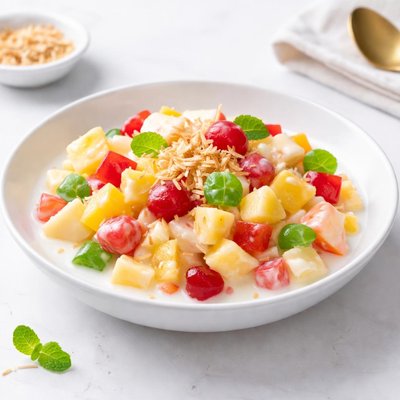
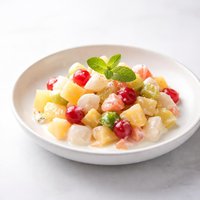
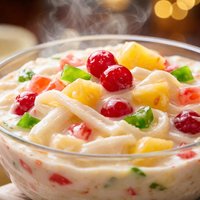
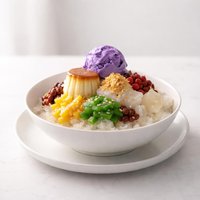
Treat your taste buds to the sweet and creamy delight of Filipino Fruit Salad, a beloved tropical dessert perfect for any occasion. This no-cook recipe combines an irresistible medley of canned fruit cocktail, nata de coco, and kaong, all bathed in a luscious blend of sweetened condensed milk and all-purpose cream. Optional additions like diced cheddar cheese, pineapple tidbits, or fresh apples add unique layers of flavor and texture, making this salad truly customizable. Ready in just 15 minutes and served chilled, this vibrant dessert is as simple to prepare as it is indulgent. Whether for a summer gathering or holiday feast, Filipino Fruit Salad serves as a refreshing, crowd-pleasing treat that celebrates the rich flavors of the Philippines.

Smart Nutrition Tracking with SnapCalorie

Recipe Information
Ingredients
- 30 ounces Canned fruit cocktail
- 1 cup Nata de coco (coconut gel), drained
- 1 cup Kaong (sugar palm fruit), drained
- 14 ounces Sweetened condensed milk
- 16 ounces All-purpose cream or heavy cream
- 1 cup Cheddar cheese (optional), diced
- 1 cup Fresh or canned pineapple tidbits, drained (optional)
- 1 cup Fresh apples, diced (optional)
Instructions
1. Drain the canned fruit cocktail well and transfer it to a large mixing bowl. Ensure all excess liquid is removed to prevent the salad from becoming runny.
2. Add the nata de coco, kaong, and any optional ingredients like pineapple tidbits, fresh apples, or diced cheddar cheese to the bowl.
3. Pour the sweetened condensed milk and all-purpose cream over the fruits. Gently mix everything together until well combined, taking care not to break the fruit pieces.
4. Taste and adjust sweetness if needed. You can add more condensed milk for a sweeter salad or leave it as is.
5. Cover the bowl with plastic wrap and refrigerate for at least 2 hours or until chilled. For best results, chill overnight to allow the flavors to meld.
6. Serve cold as a refreshing dessert. Enjoy your Filipino Fruit Salad!
Nutrition Facts
Calories |
604 | ||
|---|---|---|---|
% Daily Value* |
|||
| Total Fat | 35.3 g | 45% | |
| Saturated Fat | 22.5 g | 112% | |
| Polyunsaturated Fat | 0.0 g | ||
| Cholesterol | 108 mg | 36% | |
| Sodium | 274 mg | 12% | |
| Total Carbohydrate | 61.7 g | 22% | |
| Dietary Fiber | 2.5 g | 9% | |
| Total Sugars | 57.8 g | ||
| Protein | 13.2 g | 26% | |
| Vitamin D | 0.3 mcg | 2% | |
| Calcium | 402 mg | 31% | |
| Iron | 0.7 mg | 4% | |
| Potassium | 452 mg | 10% | |
*The % Daily Value tells you how much a nutrient in a serving of food contributes to a daily diet. 2,000 calories a day is used for general nutrition advice.


