Dilly Napa Slaw
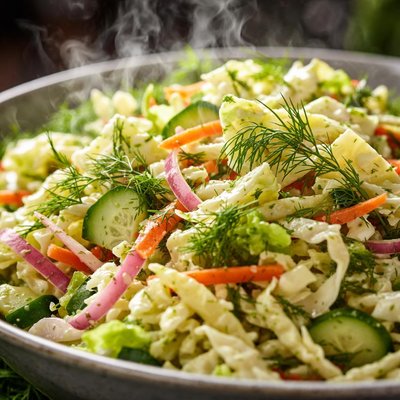
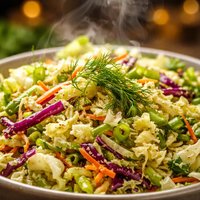
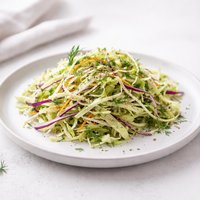
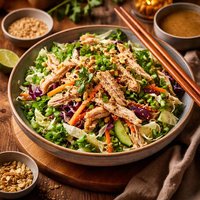
Crunchy, vibrant, and bursting with herbaceous flavor, this Dilly Napa Slaw is a fresh twist on classic coleslaw. Made with finely shredded Napa cabbage, crisp carrots, zesty red onion, and a tangy vinaigrette of apple cider vinegar, honey, and Dijon mustard, this slaw is elevated with the bold, aromatic addition of fresh dill. Quick to prepare in just 20 minutes, it’s a perfect no-cook side dish for summer barbecues, potlucks, or weekday dinners. Serve it chilled to let the flavors meld for a refreshing, light companion to grilled meats, sandwiches, or seafood. This easy and healthy Napa cabbage slaw recipe is gluten-free and packed with vibrant, garden-fresh ingredients for a dish your guests will love.

Smart Nutrition Tracking with SnapCalorie

Recipe Information
Ingredients
- 1 head (approximately 1.5 lbs) Napa cabbage
- 2 medium Carrots
- 3 tablespoons (finely chopped) Fresh dill
- 0.5 small Red onion
- 3 tablespoons Apple cider vinegar
- 4 tablespoons Olive oil
- 1 tablespoon Honey
- 1 teaspoon Dijon mustard
- 0.5 teaspoon Salt
- 0.25 teaspoon Black pepper
Instructions
Remove the outer leaves of the Napa cabbage if they are wilted or damaged. Slice the cabbage in half lengthwise, remove the core, and thinly shred the cabbage into fine strips. Place it in a large mixing bowl.
Peel and julienne the carrots or shred them using a grater. Add the shredded carrots to the bowl with the cabbage.
Thinly slice the red onion into half-moons and add it to the bowl.
In a small mixing bowl, whisk together the apple cider vinegar, olive oil, honey, Dijon mustard, salt, and black pepper until well combined.
Pour the vinaigrette over the vegetables and toss thoroughly to coat everything evenly.
Sprinkle the chopped fresh dill over the slaw and gently toss again to distribute the dill evenly.
Let the slaw sit in the refrigerator for at least 15 minutes to allow the flavors to meld together. Serve chilled as a refreshing side dish.
Nutrition Facts
Calories |
122 | ||
|---|---|---|---|
% Daily Value* |
|||
| Total Fat | 9.6 g | 12% | |
| Saturated Fat | 1.3 g | 6% | |
| Polyunsaturated Fat | 0.0 g | ||
| Cholesterol | 0 mg | 0% | |
| Sodium | 214 mg | 9% | |
| Total Carbohydrate | 8.8 g | 3% | |
| Dietary Fiber | 2.1 g | 8% | |
| Total Sugars | 6.0 g | ||
| Protein | 1.8 g | 4% | |
| Vitamin D | 0.0 mcg | 0% | |
| Calcium | 66 mg | 5% | |
| Iron | 0.8 mg | 5% | |
| Potassium | 207 mg | 4% | |
*The % Daily Value tells you how much a nutrient in a serving of food contributes to a daily diet. 2,000 calories a day is used for general nutrition advice.


