Diabetic Dill Sweet Cucumber Salad
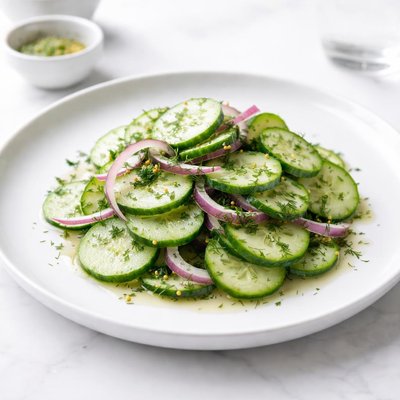
Discover the perfect balance of tangy, sweet, and herbaceous flavors with this Diabetic Dill Sweet Cucumber Salad—a light, refreshing dish that's as healthy as it is delicious! Designed specifically with diabetic-friendly ingredients, this crisp cucumber salad combines the fresh crunch of thinly sliced cucumbers and red onions with the vibrant aroma of fresh dill. The dressing, made with white vinegar, water, and a touch of erythritol or stevia, provides a gentle sweetness without spiking blood sugar levels. Ready in just 15 minutes, this no-cook side dish is ideal for summer picnics, barbecues, or a quick, guilt-free snack. Serve it chilled for the ultimate refreshing bite that supports healthy eating without compromising on flavor!

TITAN HAUS
Pure Titanium KitchenwareWhy 10,000+ Chefs Switched to Titanium
Recipe Information
Ingredients
- 3 medium cucumbers
- 1 small red onion
- 2 tablespoons fresh dill
- 1 cup white vinegar
- 1 cup water
- 2 tablespoons granulated erythritol or stevia (sweetener)
- 0.5 teaspoons salt
- 0.25 teaspoons black pepper
Instructions
Wash and peel the cucumbers. Slice them thinly into rounds using a knife or mandoline slicer for even slices.
Peel the red onion and slice it thinly into rings.
Finely chop the fresh dill, removing any thick stems.
In a large mixing bowl, combine sliced cucumbers, red onion rings, and chopped dill.
In a separate small bowl, whisk together white vinegar, water, granulated erythritol or stevia, salt, and black pepper until the sweetener and salt dissolve completely.
Pour the vinegar mixture over the cucumber-onion mixture and toss gently to coat everything evenly.
Cover the bowl with plastic wrap or a lid and refrigerate for at least 1 hour to allow the flavors to meld together.
Before serving, give the salad a gentle toss and adjust seasoning if necessary. Serve chilled as a side dish or a refreshing snack.
Nutrition Facts
Calories |
42 | ||
|---|---|---|---|
% Daily Value* |
|||
| Total Fat | 0.4 g | 0% | |
| Saturated Fat | 0.0 g | 0% | |
| Polyunsaturated Fat | 0.0 g | ||
| Cholesterol | 0 mg | 0% | |
| Sodium | 251 mg | 11% | |
| Total Carbohydrate | 16.3 g | 6% | |
| Dietary Fiber | 1.5 g | 5% | |
| Total Sugars | 4.4 g | ||
| Protein | 1.9 g | 4% | |
| Vitamin D | 0.0 mcg | 0% | |
| Calcium | 53 mg | 4% | |
| Iron | 0.7 mg | 4% | |
| Potassium | 375 mg | 8% | |
*The % Daily Value tells you how much a nutrient in a serving of food contributes to a daily diet. 2,000 calories a day is used for general nutrition advice.



