Dairy-Free Corn Cakes

Delight your taste buds with these irresistible Dairy-Free Corn Cakes—an easy, wholesome, and flavorful twist on the classic corn cake recipe. Perfectly crisped on the outside and tender on the inside, these golden delights combine the nuttiness of yellow cornmeal with the sweetness of canned corn kernels, making them a satisfying option for breakfast, brunch, or as a savory snack. Enhanced with vibrant green onions and fresh cilantro, these dairy-free cakes are bound to impress while accommodating dietary needs with unsweetened almond milk. Ready in just 35 minutes, they're a quick and crowd-pleasing favorite, whether served on their own or alongside your favorite toppings.

Get More Healthy Recipes with SnapCalorie




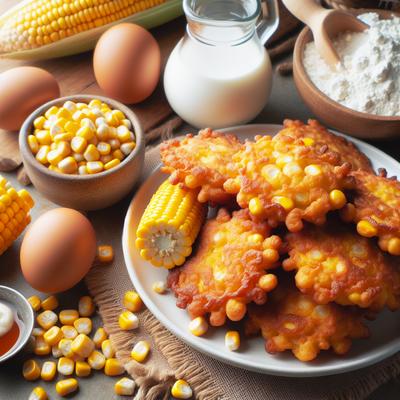


Recipe Information
Ingredients
- 1 cup Yellow cornmeal
- 0.5 cup All-purpose flour
- 1 teaspoon Baking powder
- 0.5 teaspoon Salt
- 1 tablespoon Sugar
- 1 cup Canned corn kernels, drained
- 0.75 cup Unsweetened almond milk
- 1 large Egg
- 2 tablespoons Vegetable oil
- 0.25 cup Chopped green onions
- 2 tablespoons Chopped fresh cilantro
- as needed Oil for frying
Instructions
In a large bowl, whisk together the cornmeal, flour, baking powder, salt, and sugar.
In another bowl, combine the drained canned corn, almond milk, egg, vegetable oil, green onions, and cilantro. Mix well.
Add the wet ingredients to the dry ingredients and stir until just combined. Do not overmix.
Heat a non-stick skillet over medium heat and add enough oil to coat the bottom of the pan.
Once the oil is hot, drop 2 tablespoons of batter per corn cake into the skillet, spreading slightly to form a pancake shape.
Cook the corn cakes for about 2-3 minutes on each side, or until golden brown and cooked through.
Transfer the cooked corn cakes to a paper towel-lined plate to drain any excess oil.
Repeat with the remaining batter, adding more oil to the skillet as needed.
Serve the corn cakes hot, garnished with additional cilantro or green onions if desired.
Nutrition Facts
Calories |
1475 | ||
|---|---|---|---|
% Daily Value* |
|||
| Total Fat | 52.4 g | 67% | |
| Saturated Fat | 8.0 g | 40% | |
| Polyunsaturated Fat | 16.8 g | ||
| Cholesterol | 186 mg | 62% | |
| Sodium | 2548 mg | 111% | |
| Total Carbohydrate | 228.1 g | 83% | |
| Dietary Fiber | 19.0 g | 68% | |
| Total Sugars | 23.2 g | ||
| Protein | 30.9 g | 62% | |
| Vitamin D | 3.0 mcg | 15% | |
| Calcium | 406 mg | 31% | |
| Iron | 8.2 mg | 46% | |
| Potassium | 996 mg | 21% | |
*The % Daily Value tells you how much a nutrient in a serving of food contributes to a daily diet. 2,000 calories a day is used for general nutrition advice.


