Crushed Tomatoes Canning
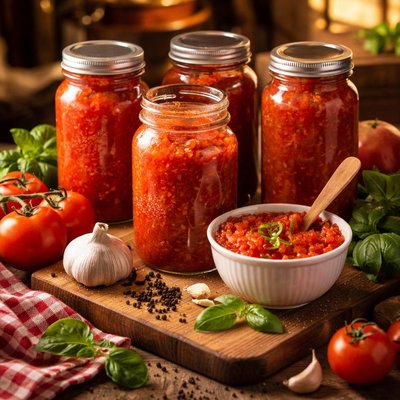
Preserve the vibrant flavors of summer with this Crushed Tomatoes Canning recipe, a step-by-step guide to creating your own pantry-staple jars of fresh, tangy goodness. Perfect for Roma or plum tomatoes, this method combines old-fashioned canning techniques with modern safety measures, like adding bottled lemon juice for acidity and optional salt for flavor enhancement. With detailed instructions for blanching, peeling, crushing, and processing, this recipe ensures perfectly textured, jarred tomatoes ready to elevate your soups, sauces, and stews all year round. Whether you're a seasoned pro or new to home canning, these meticulously sealed jars promise a taste of garden-fresh perfection every time. Keywords: crushed tomatoes canning, how to can tomatoes, home canning recipes.

Smart Nutrition Tracking with SnapCalorie


Recipe Information
Ingredients
- 20 pounds Fresh tomatoes (preferably Roma or plum varieties)
- 2 tablespoons per quart jar Bottled lemon juice
- 0.5 teaspoons per quart jar Salt (optional, for flavor)
Instructions
Wash the tomatoes thoroughly under cold running water to remove dirt and debris.
Bring a large pot of water to a rolling boil. Prepare a bowl of ice water for blanching.
Working in batches, blanch the tomatoes in the boiling water for 30-60 seconds or until the skins start to loosen. Transfer immediately to the ice water bath to stop the cooking process.
Once cooled, peel off the tomato skins and discard them.
Core the tomatoes and cut them into quarters. Place them in a large, heavy-bottomed pot.
Heat the pot of tomatoes over medium heat, stirring frequently, until they begin to release their juices. Use a potato masher to gently crush the tomatoes as they soften.
Once the tomatoes are crushed and bubbling, reduce the heat to low and keep them warm while you prepare your canning supplies.
Sterilize your jars and lids by placing them in boiling water for at least 10 minutes. Keep them hot until ready to use.
Add 2 tablespoons of bottled lemon juice and 0.5 teaspoons of salt (if using) to each sterilized quart jar to ensure safe acidity levels and add flavor.
Carefully ladle the hot crushed tomatoes into the jars, leaving 1/2 inch of headspace at the top. Remove any air bubbles by running a clean knife or spatula gently along the inside of the jar.
Wipe the jar rims with a clean, damp cloth to ensure a good seal. Place the lids on the jars and screw on the bands until fingertip-tight.
Process the jars in a boiling water canner. Submerge them completely in hot water, ensuring at least 1 inch of water covers the jars. Process for 45 minutes for quart jars, adjusting for altitude if necessary.
Carefully remove the jars from the canner using a jar lifter and place them on a towel-lined surface. Allow them to cool undisturbed for 12-24 hours.
Check the seals by pressing down on the center of each lid. If it does not pop back, the jar is sealed. Store sealed jars in a cool, dark place for up to one year. Refrigerate any jars that did not seal properly and use them within a week.
Nutrition Facts
Calories |
236 | ||
|---|---|---|---|
% Daily Value* |
|||
| Total Fat | 2.6 g | 3% | |
| Saturated Fat | 0.0 g | 0% | |
| Polyunsaturated Fat | 0.0 g | ||
| Cholesterol | 0 mg | 0% | |
| Sodium | 237 mg | 10% | |
| Total Carbohydrate | 51.1 g | 19% | |
| Dietary Fiber | 15.7 g | 56% | |
| Total Sugars | 34.1 g | ||
| Protein | 11.8 g | 24% | |
| Vitamin D | 0.0 mcg | 0% | |
| Calcium | 131 mg | 10% | |
| Iron | 3.9 mg | 22% | |
| Potassium | 3087 mg | 66% | |
*The % Daily Value tells you how much a nutrient in a serving of food contributes to a daily diet. 2,000 calories a day is used for general nutrition advice.


