Creamy Vanilla Chia Pudding
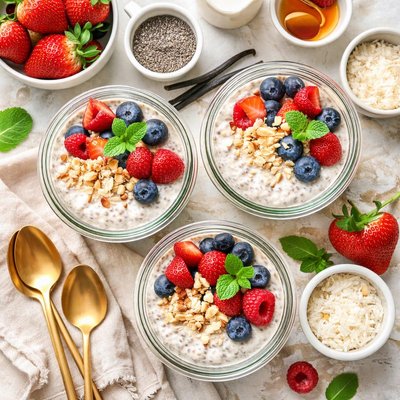
Indulge in the rich and satisfying flavors of Creamy Vanilla Chia Pudding—an easy, no-cook recipe that transforms simple pantry staples into a luscious treat bursting with nutrients. Featuring chia seeds that naturally thicken into a smooth, custard-like texture when combined with almond milk, this pudding is lightly sweetened with maple syrup and delicately scented with vanilla extract for a classic flavor profile you'll love. With just five minutes of prep, it’s a perfect make-ahead breakfast, snack, or healthy dessert to keep you fueled throughout the day. Customize it with your favorite toppings, like fresh fruit or nuts, to make it uniquely yours. Packed with heart-healthy omega-3s and plant-based protein, this creamy Vanilla Chia Pudding is as wholesome as it is delicious!

Smart Nutrition Tracking with SnapCalorie

Recipe Information
Ingredients
- 0.25 cup chia seeds
- 1 cup almond milk (or any preferred milk)
- 0.5 teaspoon vanilla extract
- 1 tablespoon maple syrup (or sweetener of choice)
- 1 pinch salt
Instructions
In a medium-sized mixing bowl, combine the chia seeds, almond milk, vanilla extract, maple syrup, and a pinch of salt.
Stir the mixture well to ensure the chia seeds are evenly distributed and do not clump together. This will help to create a smooth pudding texture.
Cover the bowl with a lid or plastic wrap and refrigerate for at least 2 hours, or overnight for best results.
After refrigeration, remove the chia pudding from the fridge and give it a good stir to make sure the texture is thick and creamy.
Serve the chia pudding in individual bowls or glasses. Top with your choice of fresh fruits, nuts, or any preferred toppings.
Enjoy your creamy vanilla chia pudding as a healthy breakfast or a delightful snack!
Nutrition Facts
Calories |
148 | ||
|---|---|---|---|
% Daily Value* |
|||
| Total Fat | 8.1 g | 10% | |
| Saturated Fat | 0.9 g | 5% | |
| Polyunsaturated Fat | 0.0 g | ||
| Cholesterol | 0 mg | 0% | |
| Sodium | 150 mg | 7% | |
| Total Carbohydrate | 16.5 g | 6% | |
| Dietary Fiber | 8.1 g | 29% | |
| Total Sugars | 6.3 g | ||
| Protein | 4.3 g | 9% | |
| Vitamin D | 1.3 mcg | 6% | |
| Calcium | 368 mg | 28% | |
| Iron | 2.1 mg | 12% | |
| Potassium | 188 mg | 4% | |
*The % Daily Value tells you how much a nutrient in a serving of food contributes to a daily diet. 2,000 calories a day is used for general nutrition advice.


