Creamy Millet Porridge
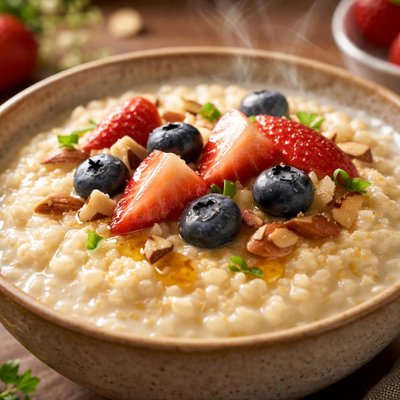
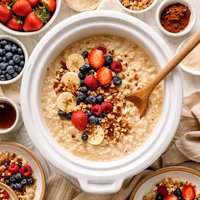
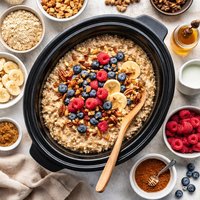
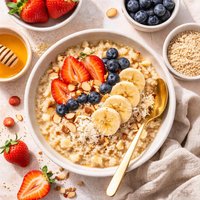
Start your day on a comforting note with this Creamy Millet Porridge, a wholesome and nutrient-packed alternative to traditional oatmeal. Made with tender, simmered millet, creamy milk (dairy or plant-based), and a hint of warming cinnamon, this recipe offers a naturally sweetened base using honey or maple syrup. The addition of vanilla extract elevates the flavor, while optional toppings like fresh fruit, dried fruit, or crunchy nuts and seeds add irresistible texture and customization. Ready in just 35 minutes, this gluten-free breakfast is easy to prepare and endlessly versatile—a perfect way to fuel your mornings with hearty, healthy goodness.

Smart Nutrition Tracking with SnapCalorie

Explore More
Recipe Information
Ingredients
- 1 cup millet
- 2 cups water
- 2 cups milk (dairy or non-dairy)
- 0.25 teaspoon salt
- 1 tablespoon honey or maple syrup
- 0.5 teaspoon vanilla extract
- 0.5 teaspoon ground cinnamon
- 0.5 cup fresh or dried fruit (optional)
- 0.25 cup nuts or seeds (optional)
Instructions
Rinse the millet under cold water using a fine-mesh sieve until the water runs clear.
In a medium saucepan, combine the rinsed millet and 2 cups of water. Bring to a boil over high heat.
Once boiling, reduce the heat to low, cover, and let it simmer for about 10 minutes until most of the water has been absorbed.
Add the milk, salt, and ground cinnamon to the saucepan, stirring to combine. Increase the heat to medium and bring the mixture to a gentle simmer.
Reduce the heat and let the porridge simmer, uncovered, stirring occasionally, for about 15-20 minutes or until the millet is tender and the porridge has thickened to your desired consistency.
Stir in the honey or maple syrup and vanilla extract. Taste and adjust sweetness or seasoning as desired.
Serve the porridge warm, topping with fresh or dried fruit and nuts or seeds of your choice.
Nutrition Facts
Calories |
387 | ||
|---|---|---|---|
% Daily Value* |
|||
| Total Fat | 14.2 g | 18% | |
| Saturated Fat | 4.1 g | 20% | |
| Polyunsaturated Fat | 0.0 g | ||
| Cholesterol | 12 mg | 4% | |
| Sodium | 182 mg | 8% | |
| Total Carbohydrate | 54.1 g | 20% | |
| Dietary Fiber | 6.4 g | 23% | |
| Total Sugars | 14.2 g | ||
| Protein | 12.2 g | 24% | |
| Vitamin D | 1.5 mcg | 8% | |
| Calcium | 177 mg | 14% | |
| Iron | 2.4 mg | 13% | |
| Potassium | 403 mg | 9% | |
*The % Daily Value tells you how much a nutrient in a serving of food contributes to a daily diet. 2,000 calories a day is used for general nutrition advice.


