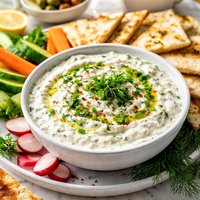
Creamy Dill Sauce
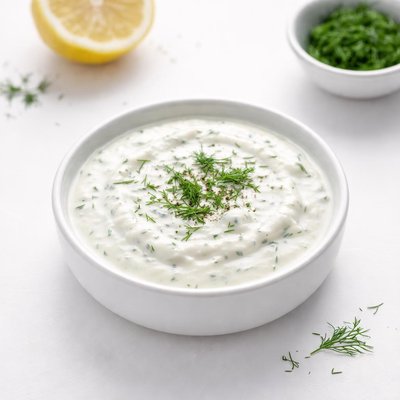
Elevate your culinary creations with this irresistibly tangy and aromatic Creamy Dill Sauce, a quick and versatile recipe perfect for complementing seafood, chicken, or roasted veggies. With a blend of sour cream, creamy mayonnaise, and freshly chopped dill, this sauce is brightened by a splash of lemon juice and Dijon mustard, while garlic and onion powders add a savory depth. Ready in just 10 minutes, this no-cook recipe delivers bold flavors that shine after a brief chill in the fridge, melding into a silky, herbaceous dressing or dipping sauce. Whether you’re hosting a dinner party or adding flair to midweek meals, this easy dill sauce is a surefire crowd-pleaser! Keywords: creamy dill sauce, homemade dill sauce, dill sauce for fish, easy dill recipe.

Smart Nutrition Tracking with SnapCalorie


Recipe Information
Ingredients
- 1 cup sour cream
- 0.5 cup mayonnaise
- 2 tablespoons fresh dill
- 1 tablespoon lemon juice
- 1 teaspoon Dijon mustard
- 0.5 teaspoon garlic powder
- 0.5 teaspoon onion powder
- 0.25 teaspoon salt
- 0.25 teaspoon black pepper
Instructions
In a medium-sized mixing bowl, combine 1 cup of sour cream and 1/2 cup of mayonnaise.
Finely chop 2 tablespoons of fresh dill and add to the bowl.
Stir in 1 tablespoon of lemon juice and 1 teaspoon of Dijon mustard.
Add 1/2 teaspoon of garlic powder and 1/2 teaspoon of onion powder to the mixture.
Season with 1/4 teaspoon of salt and 1/4 teaspoon of black pepper.
Mix all ingredients thoroughly until smooth and well combined.
Taste and adjust the seasoning if necessary, adding more salt, pepper, or lemon juice to taste.
Transfer the sauce to a serving container, cover, and refrigerate for at least 30 minutes to let the flavors meld.
Serve chilled as a sauce for fish, chicken, or vegetables, or use as a dressing for salads.
Nutrition Facts
Calories |
164 | ||
|---|---|---|---|
% Daily Value* |
|||
| Total Fat | 17.2 g | 22% | |
| Saturated Fat | 5.6 g | 28% | |
| Polyunsaturated Fat | 0.0 g | ||
| Cholesterol | 20 mg | 7% | |
| Sodium | 193 mg | 8% | |
| Total Carbohydrate | 2.5 g | 1% | |
| Dietary Fiber | 0.1 g | 0% | |
| Total Sugars | 2.1 g | ||
| Protein | 1.2 g | 2% | |
| Vitamin D | 0.0 mcg | 0% | |
| Calcium | 43 mg | 3% | |
| Iron | 0.1 mg | 1% | |
| Potassium | 15 mg | 0% | |
*The % Daily Value tells you how much a nutrient in a serving of food contributes to a daily diet. 2,000 calories a day is used for general nutrition advice.


