Crab Apple Jelly
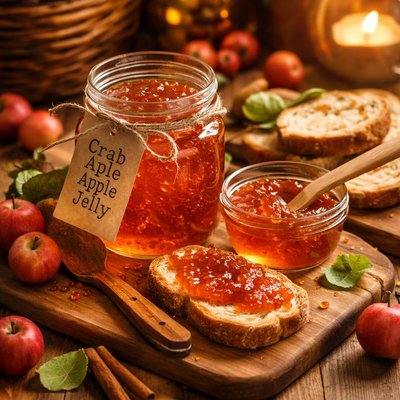
Capture the essence of autumn with this homemade Crab Apple Jelly, a perfect balance of tart and sweet flavors that elevates everything from morning toast to decadent cheese platters. Made with freshly harvested crab apples, this recipe takes advantage of the natural pectin found in their peels and cores, ensuring a beautifully set jelly without any artificial additives. Gently simmered and strained overnight for unparalleled clarity, the silky, jewel-toned jelly is then infused with a touch of lemon juice for brightness. Ideal for canning, this seasonal treat can be stored for up to a year, making it a delightful pantry staple or a thoughtful homemade gift. Whether you’re an experienced canner or a first-time jelly maker, this easy-to-follow recipe transforms humble crab apples into a gourmet delicacy that's as versatile as it is delicious.

Smart Nutrition Tracking with SnapCalorie

Recipe Information
Ingredients
- 2000 grams Crab apples
- 1000 ml Water
- 700 grams (per liter of juice) Granulated sugar
- 2 tablespoons Lemon juice
Instructions
Rinse the crab apples thoroughly under cold water to remove any dirt or debris. Discard damaged or overly bruised fruit.
Cut the crab apples into halves or quarters, leaving the peels, cores, and seeds intact as they contain natural pectin.
Place the chopped crab apples in a large pot and pour in the water. Bring the mixture to a simmer over medium heat.
Reduce the heat to low, cover the pot, and gently cook the apples for 30-40 minutes, stirring occasionally, until the fruit has softened and broken down.
Line a large colander or sieve with a double layer of cheesecloth or a fine jelly bag. Place it over a large bowl or container.
Carefully pour the cooked apples into the lined colander, allowing the juice to drip through. Avoid squeezing the bag as this can make the jelly cloudy. Let it strain overnight for the clearest juice.
Measure the strained juice the next day. For every 1 liter of juice, you'll need approximately 700 grams of granulated sugar.
Pour the juice into a clean pot and bring it to a gentle boil. Gradually add the sugar, stirring constantly until fully dissolved.
Stir in the lemon juice and continue boiling the mixture over medium-high heat, skimming off any foam that forms on the surface.
Cook the jelly for about 20-30 minutes, or until it reaches a temperature of 105°C (221°F) on a candy thermometer. If you don’t have a thermometer, use the 'wrinkle test' by placing a teaspoon of jelly on a cold plate and checking if it wrinkles when pushed with your finger.
Once the jelly is ready, remove it from heat and carefully pour it into sterilized jars while still hot, leaving about 1/4 inch of headspace.
Seal the jars tightly and let them cool at room temperature. Store in a cool, dark place for up to 1 year.
Nutrition Facts
Calories |
952 | ||
|---|---|---|---|
% Daily Value* |
|||
| Total Fat | 0.9 g | 1% | |
| Saturated Fat | 0.0 g | 0% | |
| Polyunsaturated Fat | 0.0 g | ||
| Cholesterol | 0 mg | 0% | |
| Sodium | 16 mg | 1% | |
| Total Carbohydrate | 244.3 g | 89% | |
| Dietary Fiber | 12.2 g | 43% | |
| Total Sugars | 227.5 g | ||
| Protein | 1.9 g | 4% | |
| Vitamin D | 0.0 mcg | 0% | |
| Calcium | 56 mg | 4% | |
| Iron | 0.9 mg | 5% | |
| Potassium | 543 mg | 12% | |
*The % Daily Value tells you how much a nutrient in a serving of food contributes to a daily diet. 2,000 calories a day is used for general nutrition advice.


