Copycat Kfc Coleslaw Without the Fat
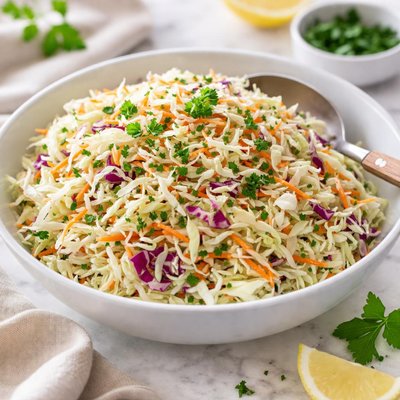
Recreate the creamy, tangy magic of KFC coleslaw with this healthier, guilt-free twist! Our "Copycat KFC Coleslaw Without the Fat" delivers all the beloved flavors of the fast-food classic but with a lighter, diet-friendly spin. Made with finely chopped green cabbage, shredded carrots, and a touch of minced onion, this recipe swaps out heavy dressing for a creamy blend of fat-free Greek yogurt and light mayonnaise, perfectly balanced with a hint of vinegar, lemon juice, and just the right touch of sweetness. Ready in just 15 minutes of prep and best served chilled, this vibrant side dish is perfect for barbecues, picnics, or as a fresh complement to any main meal. With its low-fat, wholesome ingredients and iconic taste, it’s a crowd-pleaser that won’t weigh you down!

Smart Nutrition Tracking with SnapCalorie

Explore More
Recipe Information
Ingredients
- 6 cups (finely chopped) Green cabbage
- 1 cup (shredded or finely chopped) Carrots
- 0.25 cup (finely minced) White onion
- 0.5 cup Fat-free plain Greek yogurt
- 2 tablespoons Low-fat mayo or light mayonnaise
- 2 tablespoons Vinegar (white or apple cider)
- 2.5 tablespoons Granulated sugar or sugar substitute
- 2 teaspoons Lemon juice
- 0.5 teaspoon Salt
- 0.25 teaspoon Ground black pepper
Instructions
Finely chop the green cabbage and shred or finely chop the carrots. A food processor may help achieve the small and uniform texture that resembles KFC coleslaw.
Mince the white onion to a fine consistency, then combine it with the cabbage and carrots in a large mixing bowl.
In a separate small bowl, whisk together the fat-free plain Greek yogurt, light mayonnaise, vinegar, sugar or sugar substitute, lemon juice, salt, and ground black pepper until smooth and creamy.
Pour the dressing over the cabbage mixture and stir until the vegetables are fully coated.
Cover the bowl with plastic wrap and refrigerate for at least 2 hours (preferably overnight) to allow the flavors to meld.
Before serving, give the coleslaw a good stir and adjust seasoning to taste, if needed.
Nutrition Facts
Calories |
78 | ||
|---|---|---|---|
% Daily Value* |
|||
| Total Fat | 1.2 g | 2% | |
| Saturated Fat | 0.2 g | 1% | |
| Polyunsaturated Fat | 0.0 g | ||
| Cholesterol | 2 mg | 1% | |
| Sodium | 242 mg | 11% | |
| Total Carbohydrate | 14.2 g | 5% | |
| Dietary Fiber | 2.9 g | 10% | |
| Total Sugars | 10.1 g | ||
| Protein | 3.5 g | 7% | |
| Vitamin D | 0.0 mcg | 0% | |
| Calcium | 69 mg | 5% | |
| Iron | 0.6 mg | 3% | |
| Potassium | 277 mg | 6% | |
*The % Daily Value tells you how much a nutrient in a serving of food contributes to a daily diet. 2,000 calories a day is used for general nutrition advice.


